
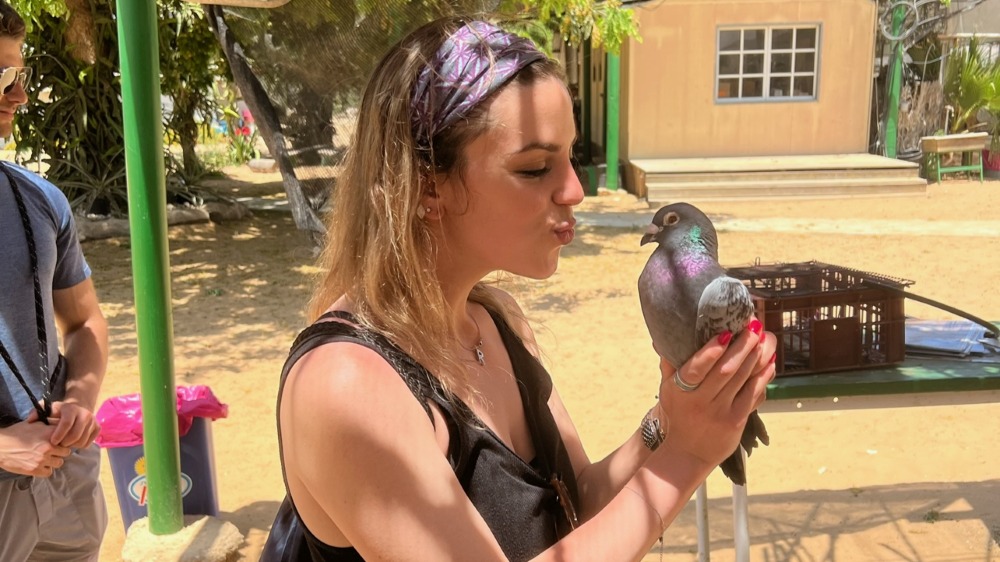
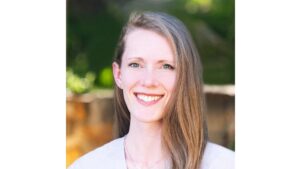
Rayut Berkowitz is no stranger to Israel. She has visited the Jewish state a dozen times.
But her most recent trip might be the most unique and unforgettable.
That’s because Berkowitz, a Pikesville native who is a nurse in Washington, D.C., was there last month during what’s been called the “Twelve Day War” between Israel and Iran.
Berkowitz, 26, was staffing a trip for Birthright Israel, which takes groups of young Jewish adults on tours there. Birthright Israel is typically structured as a “once-in-a-lifetime” educational group experience without a lot of surprises.
But Berkowitz said the trip didn’t go as planned, to say the least. Participants did not expect to hear sirens sound off in the middle of the night. Or to hide in bomb shelters, or to flee Israel by an evacuation ship.
Berkowitz was staffing her fourth Birthright trip, along with a co-staffer from the United States, an Israeli tour educator, an Israeli security guard and a bus driver.
“I was excited to give young Jewish teenagers and college students the opportunity to go to Israel the first time and — even during the war — show them what real life in Israel looks like,” she said.
Berkowitz described the group as a collection of “amazing participants getting along so well, and an amazing co-staff.”
She said the trip got off to a strong start. They toured the Nova Music Festival massacre site in southern Israel, as well as a destroyed police station in the western Negev city of Sderot.
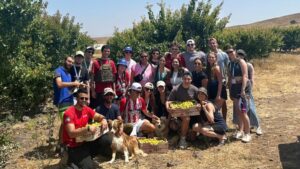
“It was an incredible trip in that we were able to see so much of the war’s impact and the strength of Israel,” she said.
The group was also able to enjoy nature hikes and water sports on the Sea of Galilee.
“Everything was almost too perfect,” Berkowitz said.
But all of that changed during the group’s first night in Jerusalem at the tail end of the trip.
“It was 2:30 in the morning,” recalled Berkowitz, who had never heard sirens or visited a bomb shelter during her previous visits to Israel. “I’m fast asleep, and my co-staff tries to wake me up. ‘Rayut, there’s a siren! We have to go to the shelter! Come as fast as you can.’ I didn’t even put on my shoes. I was in my pajamas and ran out the door.”
She and her co-staffer went door to door waking up all of the participants and bringing them to a safe room.
“The news started coming that Israel had taken action against Iran,” Berkowitz said. “We went back to sleep and the sirens happened again. I felt so shocked.”
For the next three nights, this pattern continued. Participants and staff relied on each other for support and comfort. Berkowitz said they occasionally sang songs and savored joyful moments in the shelters, but there was also a great deal of anxiety and disappointment.
“We realized we weren’t going to see Jerusalem and weren’t going to be leaving Israel on our flight out that upcoming Monday,” she said. “I got nervous. Would the participants be able to get home? What would my next steps as a staff look like? I had participants with vital medication, which was my first thought as a nurse. I take this as a huge responsibility. But I never felt unsafe.”
Birthright Israel organizational coordinators came to the Jerusalem hotel to brief the participants and staff. Everyone was told they were moving from the hotel to the Dead Sea area, where they would join other busloads of Birthright groups. Unfortunately, they would not get to tour the holy sites in Jerusalem.
Once relocated at the Dead Sea, the participants experienced more sirens, shelters, sleepless nights and travel restrictions.
“This was becoming a habit,” said Berkowitz.
Then, the Birthright leadership shared a top-secret plan: participants and staff would leave Israel via a ship bound for the eastern Mediterranean island of Cyprus.
“I’m like, ‘What?!’” said Berkowitz. “That was never something I even considered. I’ve never been on a cruise. I get very seasick. But I knew we were past what I signed up for, that this was my responsibility. It was our duty to get everyone home. I had to step up and put other people before myself and be that source of support and strength.”
On Tuesday, June 17, approximately 1,500 Birthright participants and staff got up at 4 a.m. at the Dead Sea and took buses to the port of the coastal city of Ashdod, where they boarded a ship with Israeli naval escorts.
With their luggage in tow, they boarded the Crown Iris, a luxury Israeli cruise ship operated by Mano Maritime, which set sail for Cyprus.
Once they reached Cyprus hours later, Berkowitz said, “It was a source of relief but also disbelief. My brain and heart were very much still in Israel and very nervous about what would happen next.”
From there, they took a U.S. Army evacuation flight, which refueled in Lisbon before touching down in Tampa.
Despite the tension and adversity, Berkowitz said her group grew incredibly close. She hopes that the experience will instill an even stronger love for Israel and understanding of the country’s situation.
“Israelis kept telling us ‘This isn’t the trip you planned. You have to squeeze really hard to make lemonade out of the worst circumstances,'” she said. “This experience brought everyone together and created lasting relationships. It grew the participants’ love for Israel, and I pray that they return.”
Anna Lippe is a Washington, D.C.-based freelance writer.
A Norfolk native, Frankle worked at Sinai Hospital, Camp Airy and privately for five decades.
Esther Greenberg, Leora Match, Kathlleen St. Villier Hill and Ben Gershowitz will be recognized for the contributions to the community.

For more than five decades, Dr. Rosenstein was known by local families as a trusted and caring physician for their children.
Jewish Community Services' upcoming "Future-Ready Workplace" event will feature a keynote address from workplace expert and bestselling author Liz Fosslien.