

By Gefen Miller
In the charming university town of Leiden in the Dutch province of South Holland, a select cohort of approximately 20 young Jewish American scholars gathered last month for 18 days as part of the prestigious Abarbanel Summer Seminar program.
Among them was Jerry Flombaum, a rising junior at Pikesville’s Beth Tfiloh Community Day School.
Jerry — who heard about the program through a family connection to a trip chaperone — says he found the experience highly rewarding and thought-provoking.

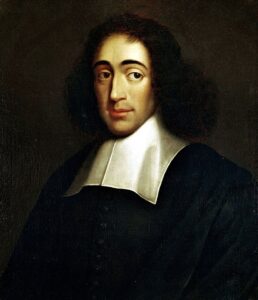
Sponsored by the Austin, Texas-based Abarbanel Institute, the program is an annual summer seminar for “intellectually ambitious high school students” to explore the topic of Judaism and modernity while living in the hometown of celebrated Dutch artist Rembrandt and the homeland of excommunicated Jewish philosopher Baruch Spinoza.
The institute is named in honor of Isaac ben Judah Abarbanel (1437-1508), a Lisbon-born Jewish statesman, philosopher, biblical scholar and financier who fled the Inquisition and became a Jewish communal leader in Italy.
Divided into two seminars of 10 sessions each, the program delved into the history of Dutch Jews, their relationships with non-Jewish neighbors and their standing as one of the oldest Jewish communities in Europe.
The first seminar, “A Most Unusual Exchange: The Dutch, The Jews, And the Modern World,” explored the complex history between Jews and non-Jews in The Netherlands, ranging from the birth of western messianism to the creation of the first Jewish communities in the New World of the Americas.
The second seminar was “Spinoza Between Judaism and Philosophy,” examining the life and teachings of the controversial Dutch-Jewish philosopher.
In addition to a heavy reading list, students were expected to frequently discuss philosophical and academic issues while meeting and socializing.
“[One] cannot understand philosophy unless [they] discuss it with others,” says Jerry, recalling many late-night conversations about complex and esoteric matters with newfound friends.
Among the program’s extracurricular activities were visiting the Van Gogh Museum in Amsterdam, touring botanical gardens and observatories, and enjoying three-hour biking trips along beaches in The Netherlands.
The cohort also spent a day in Belgium, observing a more vulnerable Jewish community where Chasidic members frequently deal with antisemitism.
During their time in The Netherlands and Belgium, the Abarbanel teens were strongly advised not to display any outward manifestations of their Jewishness, such as kippot or tzitzit, for safety purposes. Jerry says this was an eye-opening experience for him and the other participants.
Nonetheless, he says the students and their host communities observed Shabbat during all three weeks of the program. They also met with Jewish day school students in The Netherlands and visited such historic Jewish sites as the Esnoga, the Portuguese Synagogue of Amsterdam.
“Spending Shabbat at the Amsterdam Chabad, we had this really amazing rabbi, Dovie,” recalls Jerry. “He really brought the ruach [spirit] to the table, and everyone had a great time.”
For the program’s final project — in which students were asked to document their favorite takeaway from the Abarbanel experience — Jerry wrote a paper titled “’Pulp Fiction’ and Spinoza,” connecting the themes of the 1994 Quentin Tarantino crime film with Spinoza’s rejection of an interventionist God.

An avid film buff, Jerry referenced a scene in which hitman protagonist Jules Winnfield (played by Samuel L. Jackson) survives a gunshot and views it an act of God, a claim immediately rejected by his partner in crime Vincent Vega, as portrayed by John Travolta.
In his paper, Jerry contends that Jules’ assertion closely relates to Spinoza’s contention that all things in life are direct manifestations of God’s power, rather than miraculous instances of intervention. His conclusion is that every minute, every human action and interaction, is a genuine miracle to be savored.
“We survive,” says Jerry. “I know it sounds corny, but despite everything, the Jewish community has always been there, and they have always been resilient.”
For information about the Abarbanel Summer Seminar, visit abarbanelinstitute.org/abarbanel-summer-seminar.
Gefen Miller is a Jmore editorial intern.

A former college campus activist, Veksler will speak at Chizuk Amuno on June 8 at the Ruth and Jay Lenrow Visiting Scholar-in-Residence for Combating Antisemitism.

A lifelong Baltimorean, Judge Rosenberg served as a U.S. magistrate judge from 1973 to 1998.
A former resident of Baltimore and central Florida, Ritt was active in the Soviet Jewry movement of the 1970s and 1980s.
For more than four decades, Goldman played a vital role in the supervision of elections in the city.