

By Susan Barocas
In 1971, after my freshman year of college, I spent my summer as a counselor to pre-teen girls at an overnight camp in the high plains of Colorado, south of Denver.
The J Bar Double C Ranch Camp was sponsored by the Jewish Community Center, and that summer, most of the staff gathered around the flagpole each morning looked like the bunch of almost-hippies we were. “Almost” because none of us were dropping out of college or joining communes.
But we did proudly wear cut-off jean shorts and skirts made from old worn, faded jeans, often bought used. Lots of rips and patches added to our very of-the-moment style along with cheap embroidered peasant blouses, and faded t-shirts picturing the Grateful Dead and anti-war slogans. Vietnam still raged half a world away from our pine-filled retreat.
The flagpole was in front of the mess hall, so every morning and evening before eating, staff and campers gathered to raise and lower the flag and sing that summer’s camp favorites like Three Dog Night’s “Joy to the World” (talk about an ear-worm) and CSNY’s “Ohio” (which was somehow deemed appropriate a year after Kent State). Then we headed into the large, noisy mess hall for camp food eaten at rows of picnic tables grouped by cabin.
The food was kosher, which seemed to make it even less appealing than the typical bland, overcooked camp food. Thankfully, on Friday nights, there was a challah on every table, and grape juice took the place of “bug” juice (as we called the watered-down pitchers of Kool Aid served at every other meal).
Still, the fresh air and physical activity (Swimming! Hiking! Horseback riding!) produced healthy appetites.
But not for me. That summer I was well on my way to becoming a full-fledged vegetarian, so my mealtime options were limited. Let’s just say I ate a lot of processed cheese and peanut butter.
But what really kept me going food-wise? In a word, granola.
Lucky for me, there was one other staff member who was vegetarian. I don’t remember her name or where she came from, but I can picture her in a skinny-striped white and red t-shirt under her oversized, well-worn denim overalls. She had kind blue eyes, a sincerely sweet smile and wild, almost white-blond hair that, in the right light, created a sort of halo around her head, making her look like the angel she became to me because she saved me with her granola.
My granola angel shared my mealtime vegetarian pain and also some of the granola “stash” she brought with her to camp. It became my food obsession that summer. I wrote down her recipe and began making it every time I headed home to my parents’ house in Denver for a day off.
Such satisfaction from a simple mixture of warm honey and oil coating the different grains that were baked until golden, cooled and eaten with nuts, seeds and raisins added. I brought back big batches of granola to share around camp, always saving enough for my angel and to get me through until my next day off.

It’s hard to believe with all the shelves of granola choices in stores today, but in 1971 granola hadn’t achieved mass production, recognition or consumption even though it had been around as a breakfast cereal for over a century.
It was first created in 1863 as “granula” at a health spa in upstate New York. A few years later, when entrepreneur and inventor Dr. John Harvey Kellogg looked at the mixture and saw dollar signs, he changed the name to “granola” to avoid any legal issues for his marketing campaign. So granola was around under the public’s radar for quite a while.
But then came the hippies.
To quote Wikipedia: “The food and name were revived in the 1960s. … A health food popular with the health and nature-oriented hippie movement.” And so, we have the hippie movement to thank for all the granola choices today along with the wonderfully descriptive term “crunchy-granola.”
After camp ended in August, I went back to college in Boston. I continued to make large batches of granola in borrowed ovens, always trying to keep a stash for myself and for friends because dorm food wasn’t much better than camp food. Added to my vegetarian options of overcooked vegetables, peanut butter and processed cheese, however, was pineapple cottage cheese, which tasted great with some of my healthy granola.
These days, when I make my granola still using the same recipe, I see myself standing at the camp flag pole with long dark hair waving down my back, faded bell-bottom jeans sitting low on my hips, singing my heart out, secure knowing that I would get through coming mealtime with the small bag of survival granola tucked into my pocket.
Craving granola now? Check out Adeena Sussman’s recipe for tahini and olive oil granola, or try this pina colada granola recipe by Vicky Cohen and Ruth Fox.
For more articles like this, visit MyJewishLearning.com/The-Nosher/

Susan Barocas is a writer, cook, speaker and teacher of cooking to all ages. She proudly introduced several Sephardic dishes when serving as guest chef for three seders at the Obama White House. She served as founding director of the Jewish Food Experience and co-chaired the 2018 Hazon Food Conference. She lives in Washington, D.C., and is working on her first cookbook.
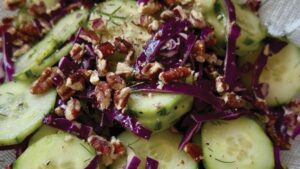
It doesn't get much easier than this cucumber and purple cabbage salad from Elite Jakob, perfect for a warm spring day.

Dara Bunjon talks sustainable farming, chocolate, and more with farmer, chef, educator and chocolatier Mark Mills of Chocolates and Tomatoes Farm in Middletown.

Dara Bunjon talks with cook, writer and television host Monti Carlo about her new cookbook, "Spanglish: Recipes & Stories," and more.
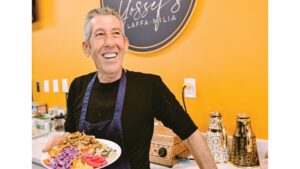
At a time of economic uncertainty, Yossef's Laffa-Milia, a new kosher restaurant in Owings Mills is thriving.