
By Shira Li Bartov
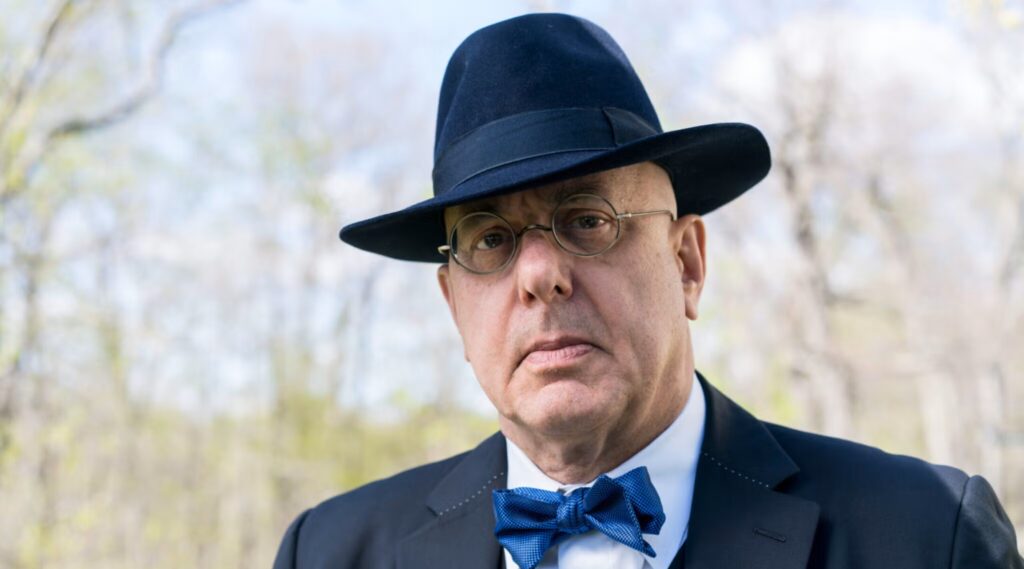
Dr. Leon Botstein, who for the past half-century has served as president of Bard College in New York’s Dutchess County, has seen many crises shake up American colleges.
But none, he says, have stripped campuses of their leadership and students more than the present moment.
The second Trump administration has gone to war against elite universities, citing an urgency to root out antisemitism and left-wing indoctrination. In a bid to ideologically reshape academia, the White House has severed billions of dollars in federal funding, attempted to block the enrollment of international students and pushed out college presidents.
University of Virginia President James E. Ryan resigned in June under pressure from the Justice Department over the school’s diversity, equity and inclusion practices. In March, Columbia University’s interim president, Katrina Armstrong, stepped down amid the school’s concessions to Trump for allegedly tolerating antisemitism. Before Trump’s return to power, turmoil over the way that colleges handled pro-Palestinian protests toppled Armstrong’s predecessor, Minouche Shafik, along with presidents at the University of Pennslvania, Harvard and Cornell.
Since Trump was sworn in, students who participated in those protests have faced government retaliation, including high-profile arrests and detention, while hundreds more have had their visas revoked as part of the administration’s crackdown on immigrants.
Brown, Columbia and Penn recently cut deals with the Trump administration to free research funding by agreeing to steps like renewing partnerships with Israeli academics, codifying an Israel-related definition of antisemitism and excluding transgender people from athletic programs. Harvard is still embroiled in negotiations, but has already dismantled diversity offices, cut ties with a Palestinian university and adopted ties with Israeli ones, according to the Crimson.
In Dr. Botstein’s view, the government’s demands of these schools do the opposite of fighting antisemitism.
“I actually think the government is playing out a classic antisemitic routine,” he said. “Blame it on the Jews — ‘The reason that all the research funding is gone is because of the Jews.’”
In this era of fragile and sometimes conspicuously short-lived college presidencies, Dr. Botstein’s 50-year tenure at Bard stands out. Born in a devastated Europe in 1946 to Polish-Russian Jews who survived the Holocaust, he arrived in New York in 1949 as a stateless person.
He was trained as a historian, musicologist and orchestral conductor, becoming Bard’s president at age 29. Dr. Botstein steadily raised the private liberal arts college’s national profile and shaped it in the image of his own beliefs, among them that “the performing and visual arts are not a luxury in a free and democratic society but symptoms of its existence.”
He has also forged cultural alliances in Israel and Palestine, directing the Jerusalem Symphony Orchestra for eight years and founding an ongoing partnership between Bard College and Al-Quds University in East Jerusalem.
Dr. Botstein recently spoke with JTA during a trip to Germany with The Orchestra Now, or TŌN, a Bard graduate program he founded and leads as its conductor.
How did you get into the college administration field?
I never wanted to be a college or university administrator. I had a dual ambition: to be a scholar on the intersection between music and history, and to be a performer. And when I entered the job market, there were no jobs.
A career as a conductor is a hazardous business, so you have to have a day job. I had friends who were waiters or did office work, and I stumbled on a kind of office work in the New York City government. That’s what led me to be recruited to take over Franconia, a very unusual, bankrupt college in New Hampshire, which was protected by Dartmouth. I did it, and it was a lark. I was 23 — what could go wrong?
That led to my being recruited by Bard, which was desperate to find someone because the people they wanted to have as a president turned them down. Bard had an intellectual history from the 19th century. It had a real commitment to the arts and writing, and it had a board that wasn’t alumni-driven. After World War II, it struggled, but it developed a kind of intellectual cache and had a long tradition of hiring emigrés. It was very high-risk, didn’t have an endowment and wasn’t very visible.
What’s the key to your long tenure at Bard, especially given the current climate on campuses?
I learned a lot from very good business people who were my friends. They told me, ‘If you want to achieve anything of quality, you need two things: You have to have a good idea, and you have to stick to it through thick and thin.’
When I was in my 20s, I thought, ‘What’s thick and thin? Maybe 10 years.’ Then 10 years go by, and you realize that you really haven’t gotten started yet — it’s going to need another 10 years. Now you’re 20 years in, and you realize you’ve paved five blocks, but you have to pave another 40 blocks.
I’m an outlier in terms of length of tenure, but I’m not doing the same job as an Ivy League president — and those places wouldn’t hire anybody like me. Since Israel’s war in Gaza, presidents at five Ivy League universities have stepped down, some of them after being called into Congress to account for their handling of campus protests and alleged antisemitism. What mistake do you think these presidents made? They didn’t speak with a voice of authority. People in a university should have the authority of knowledge, principle and the power of language. They should have answered their congressional interrogators and met fire with fire. The best defense is a good offense.
What’s your view on the Trump administration’s war with Harvard?
It’s completely preposterous, in my view, to defend the attack on Harvard because you’re fighting antisemitism. There’s nothing more hypocritical than that position.
I actually think the government is playing out a classic antisemitic routine. Blame it on the Jews — the reason that all the research funding is gone is because of the Jews.
The fact is that antisemitism has always been a problem. Now, Americans have discovered, ‘Oh, there’s antisemitism.’ Well, I’m a European Jew who came as a child to the United States. My parents were survivors of the remnant of Polish-Russian Jews. They landed in the United States with deep gratitude, but they didn’t believe it was a place without antisemitism.
I’m not surprised that there’s antisemitism, and the universities didn’t invent it. The punishment that the president is trying to wreak on these research universities is catastrophic and uncalled for, and has nothing to do with antisemitism. I disagree with many of my fellow American Jews who think this is a good thing. It’s not. We’ve always benefited from the rule of law and the protection of dissent, and not the use of government power to protect us. Spare me.
Do you feel obligated to speak about the politics of the present?
Absolutely. … We have a new president who has no interest in the Atlantic alliance and seems to show nothing but contempt for Europe, and has cozied up to a truly tyrannical autocrat, Vladimir Putin. His violation of the fundamental tenets of American democracy is unprecedented in our lifetime.
How did your parents, and the world of your childhood, influence your approach to music and leading a college?
I remember my naturalization ceremony — I was 10 years old. We developed an unbelievable deep-seated patriotism to the idea of America. America was a kind of promised land, where we as Jews had some measure of equality and opportunity that never existed in Europe. I always felt that I had a civic obligation to make a contribution to the well-being of my fellow citizens. That’s one residue of being an immigrant.
On the music side, there is a psychological and linguistic reason. Like many young children who switched languages, I was a stutterer. I still am a stutterer — it’s a lifelong affliction. I’ve managed to conquer it, but it took me a long time, until my early 20s, and I stuttered in every language. Music seemed natural. It was a communicative system that I didn’t get stuck in. As a result of that, I developed an emotional attachment to making music.
That combined with the experience of being from a family where most of the discussion, and most of the photographs, were of people who were dead. What I discovered by having so many pictures of dead people is that we erase the memory of more people than deserve to be erased, especially in the art form I became interested in.
Music isn’t just Mozart and Beethoven and Brahms and Wagner and Debussy. No! I would go to the library and sit in the stacks and browse, and I saw names I’d never heard of before, and I’d pull out their scores.
Partly because of growing up in the family I did, I found myself defending the unfairly forgotten. It definitely had something to do with being part of a family that, through storytelling, kept alive a world that had been obliterated.
Shira Li Bartov wrote this article for the JTA global Jewish news source.

For 35 years, the late Deborah Brodie, aka Bubbie Cookie, amassed a collection of over 200 Jewish ritual objects, which she used to teach her Hebrew school students with special needs.
Presented by Jews United for Justice and a consortium of local synagogues, "Beyond Welcoming the Stranger" offered a Jewish approach to helping immigrants.
Steve Hofstetter, who will perform at Soundstage next week, recently made headlines for his social media post ridiculing some fans' warnings about Charm City's safety.

The nonprofit OneTable is reimagining its programming amid fiscal constraints and responding to what it sees as important shifts in how Jews gather.