

Community leader Larry Plant talks about why he joined Jmore’s mission.
Despite a hectic professional life as vice president of Trading at Dynamic Metal Services, Larry Plant always finds time to help a nonprofit in need. Whether it’s serving on the board of directors of The Associated: Jewish Federation of Baltimore, as past board chair for the Jewish Community Center or volunteering with the Maryland Food Bank, Plant’s skills in business development, budget and finance, and team leadership are a boon for all of his endeavors.
Jmore recently spoke with Plant about his new role as a board member for Maryland Jewish Media’s Jmore nonprofit initiative.
How did you get involved with Jmore’s new board?
[Former Associated President and CEO] Marc Terrill and I have been friends for many, many years. When he approached me, as I’m now coming off my current role as chair of the board of the JCC, he pretty much knew I would have some free time on my hands.
We chatted about what the board was looking for, what the initiatives would be, and it really struck a good note. It sounded like it would be a nice transition, and helping to get something off the ground seemed exciting.
Why do you think this is an important mission?
Schools are failing our children. I believe that wholeheartedly. The education system in general has gone awry as far as teaching.
I think if through this initiative we can provide teens and kids [with] basic skills in communication, I can’t imagine a better purpose. COVID was devastating in general, and coming out of it, that cohort of 4- or 5-year-olds as well as teenagers didn’t get to socialize and just missed out on so much.
What do you see as the Jewish community’s primary challenges today?
The Jewish culture is in crisis. I see more kids marrying out of the religion, which I don’t necessarily have problems with as long as they’re going into it knowing that their household needs to be raised Jewish and should have that influence.
But I’ve seen too many that don’t have that sense of urgency to remain Jewish. When it comes to Israel, there are serious issues, with the government and some of their policies. There needs to be an understanding of who we are, what we are and why we need to stay strong together, and allow for the differences within all of that.
Why would you like to see the community continue to support Jmore as a nonprofit media company?
You need to have an opinion and a voice that provides the facts without having to kowtow to any one group. I think [we need] a good journalistic nonprofit group that can give all sides whether people want to hear them or not.
Without that kind of integrity and backbone of a publication, the community loses something, and I think it has lost something over the years. I think it’s important, and I think it can spread the word to non-Jewish people and they can see what’s going on [in the Jewish community.]
What skills do you bring to the table to help with the initiative?
I try to be as open-minded as I can. I don’t like asking people for money, but I like asking people for ideas. Hopefully, through a thoughtful process in working with people who I truly admire and respect, I can be a good voice in trying to get us to the place that the board wants to get to and take Jmore where it needs to go.
I was born and raised in this community and I’m friends with a relatively wide group of people, so I can navigate different situations. I think my experience on the JCC board, especially having to manage both Orthodox and secular in two buildings in two different places, has opened my eyes about how to do it.
Where do you envision Jmore in a decade?
First and foremost, I hope it’s a thriving, widespread publication. Certainly, I would love to see continual cohorts of kids coming through programs that provide opportunities for them to learn conversation, to learn communication.
I was honored to be asked. I think it’s great and I think it can get better.
Donate to Jmore and help support local Jewish journalism and strengthen community programming for the next generation.
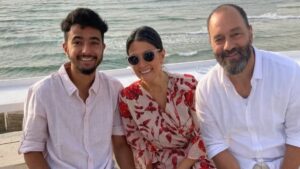
Israeli-Americans Rachel Goldberg-Polin and Jon Polin talked about the pain of losing their 23-year-old son, who was kidnapped and later murdered in the Oct. 7th tragedy.
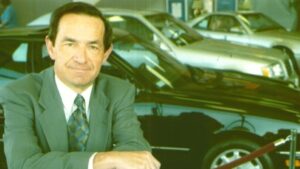
A committed philanthropist and community leader, Russel was president of R&H Motors.
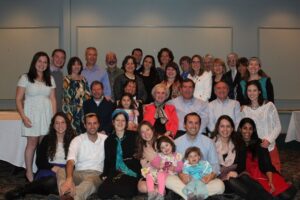
The mother of four was a native of Winchester, Virginia, who spent most of her life in Northwest Baltimore.
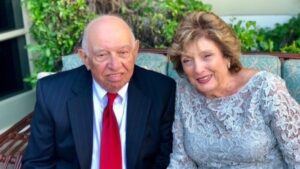
The Columbia resident worked on the Gemini and Apollo space missions.