

On the night Cal Ripken Jr. broke Lou Gehrig’s consecutive game record, I sat somewhere behind home plate and felt a hand tapping my shoulder as the record-breaking number — 2,131 — flashed on the big warehouse wall at Oriole Park.
The man behind the tap was Baltimore defense attorney Richard Karceski, among whose clients was the legendary eastside bookmaker Albert Carmine Isella.
Pointing to the big “2,131,” Karceski puckishly inquired, “How come they’re flashing the number of times Al’s been arrested?”
He was exaggerating, but only slightly. At that point, on Sept. 6, 1995, professional gamblers such as Isella were colorful Runyonesque figures who might have been straight out of Broadway’s “Guys and Dolls,” but found themselves dodging cops at every turn.
Their crime was taking bets on ballgames, horse races, three-digit numbers. The gambling, and the arrests, went on for years, until the deep thinkers in state governments all over America came to a stunning revelation: Why are we chasing these guys around when we could take over the whole gambling market ourselves?
Thus came the state lottery, and then state-run casinos, and more currently we have the absolute marriage of legalized gambling and entire sports. They drove the bookmakers out of business but made gambling a far more intrinsic part of ballgames — and American life.
And last week, we had the thing many have been anticipating: a scandal linking pro basketball with gangsters allegedly changing the outcome of games.
One pro basketball star and one coach were indicted and placed on immediate leave by the National Basketball Association. Many others were indicted. And this might be just the tip of the iceberg.
On Oct. 17, ESPN reported that “sportsbooks flagged dozens of suspicious bets made by gamblers repeatedly wagering against the same small-conference teams in at least 11 men’s college basketball games over six weeks last season.”
Here’s a good bet: more scandal is on its way.
There was a time when sports leagues made it a point to keep their games as distant as possible from any gambling connections. They wanted no public suspicion of foul play.
Now, you turn on the TV and they’re advertising where to place your bets while we’re in the middle of games. Sports and gambling are part of the same culture now — not criminal, just another diversion to get ourselves through the day and throw in a few bucks to stimulate our juices.
Back in the late Al Isella’s time, the bookmakers were fringe players. The cops called them criminals and kept arresting them. If you placed a bet with them, you knew you were taking part in a criminal activity, however small it was.
Today, it’s all out there in the open. The professional gambling operations get their money, and they send some of it back to the states and the cities and counties. It’s practically your civic duty to contribute to such an arrangement.
Except that there’s so much money involved, and it’s so easy to taint the games, that we wind up with some real scandals, enough of them that millions who bet on ballgames are wondering if the whole enterprise is on the level.
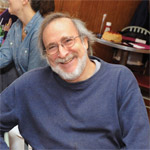
A former Baltimore Sun columnist and WJZ-TV commentator, Michael Olesker is the author of six books, including “Journeys to the Heart of Baltimore” (Johns Hopkins University Press) and “Michael Olesker’s Baltimore: If You Live Here, You’re Home” (Johns Hopkins University).

Proposed legislation in Israel would transfer authority of the entire Kotel to the Chief Rabbinate, writes Rabbi Robyn Fryer Bodzin.

In Italy, the Jewish Brigade's flag has unfairly become a flashpoint in today’s battles over Zionism and anti-fascism, writes Dr. Ginaluca Fantoni.

At its annual meeting this year, the Baltimore Jewish Council will honor the late Harford County educator and longtime Holocaust education champion.
The former Colt, who passed away on May 25 at age 93, achieved immortality during a cold December day in 1958, writes Michael Olesker.