
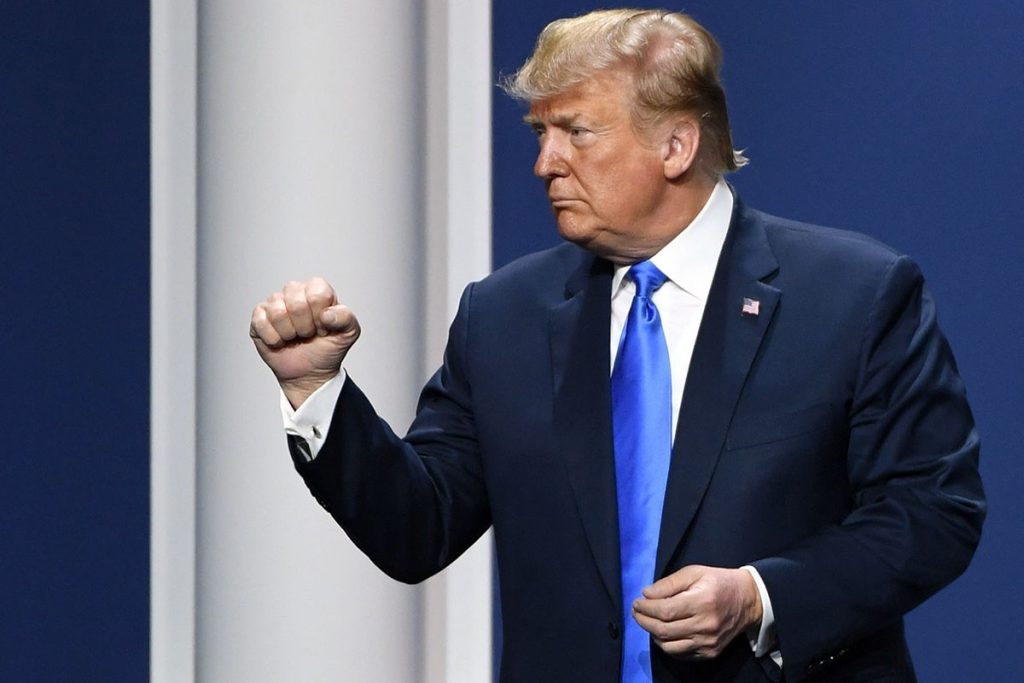
In the latest installment of “Donald Trump vs. The Truth,” the president of the United States now wishes to appear magnanimous.
He says he has nothing to hide, and he’ll okay his Justice Department’s release of the so-called Jeffrey Epstein files. This is a complete reversal of his previous desperation efforts to keep those files hidden.
Trump changes his mind because he has no choice.
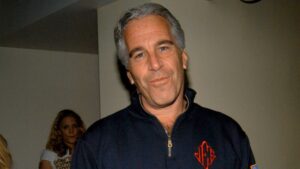
The House and Senate are ready to vote against him. In their belated revulsion over the Jeffrey Epstein sex crimes, even Republicans who normally tremble before Trump are ready to vote for the release of the files.
In his naked attempt to hide all connections to the convicted sex offender Epstein, Trump would be the last one standing if he didn’t allow freeing the files.
Trump’s change of mind is the latest development in what he calls “The Jeffrey Epstein Hoax” — “to distinguish it from all the other alleged hoaxes to which his various tormentors over the years have previously subjected him,” as Susan B. Glasser wrote the other day in The New Yorker.
If you haven’t read Glasser’s piece, you should. It’s headlined, “The Epstein Scandal Is Now a Chronic Disease of the Trump Presidency.”
It’s a response to the 20,000 pages of Epstein documents released last week, not from the trove now held by the Justice Department but from a separate batch subpoenaed by Congress from Epstein’s estate.
That’s the batch that includes Epstein’s e-mail saying Trump “knew about the girls.”
But as Glasser points out, “That’s not the stunning one.”
Epstein was a great networker. Glasser’s reporting here takes us back to the early days of Trump’s first administration, when he went to Helsinki to meet with Russian leader Vladimir Putin.
Remember that breathtaking moment?
With Putin sitting beside him, Trump was asked if he believed Putin interfered with the last presidential election, which was the belief of the U.S. intelligence community.
Trump sided with Putin.
And the question echoed around the world was: What does Putin have on Trump?
Glasser offers a fascinating possibility, which comes out of last week’s uncovered Epstein messages. In advance of the Helsinki summit, Epstein reached out to Russia’s foreign minister, Sergei Lavrov, and then to Vitaly Churkin, Russia’s ambassador to the United Nations.
Glasser writes, “It was, in effect, an invitation to get the scoop on the American president.”
“I think you might suggest to Putin that Lavrov can get insight talking to me,” Epstein wrote to an intermediary.
Glasser writes, “In the same email exchange, [Epstein] said he had previously talked with Churkin.”
Epstein wrote, “Churkin was great. He understood trump after our conversations. it is not complex. he must be seen to get something its that simple.”
The Russians “got something”?
What could they possibly “get” from Jeffrey Epstein?
Glasser writes, “I was not the only one stunned by this … Sheldon Whitehouse, Democrat of Rhode Island, wrote, ‘All of the times I’ve wondered what Putin had on Trump, and now we find out Jeffrey Epstein was talking to Putin’s ambassador about Trump.’”
And Epstein’s the one declaring Trump “knew about the girls.”

A former Baltimore Sun columnist and WJZ-TV commentator, Michael Olesker is the author of six books, including “Journeys to the Heart of Baltimore” (Johns Hopkins University Press) and “Michael Olesker’s Baltimore: If You Live Here, You’re Home” (Johns Hopkins University).

As he gets ready to leave for California, Rabbi Daniel Cotzin Burg looks back on his time in Baltimore and his 10 years writing for Jmore.

Michael Olesker pays tribute to WJZ’s retiring Marty Bass, a longtime fixture on local TV screens.

The Orioles' weak defense plays a major role in the nightly carnage, writes Michael Olesker.