
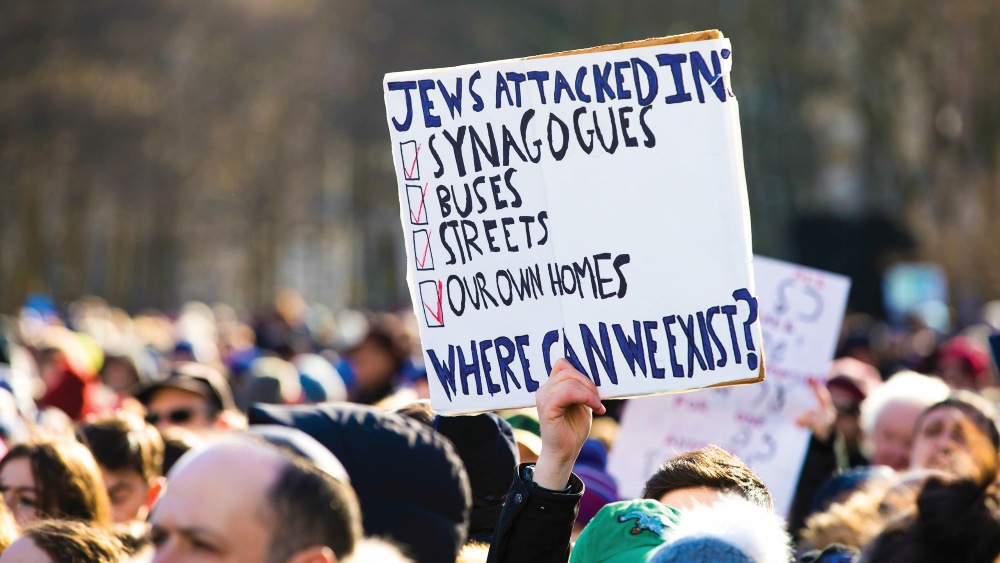
At a time when antisemitism and hate have become alarmingly normalized, The Associated: Jewish Federation of Baltimore is taking action through the creation of its Center for Countering Antisemitism and Hate. The center aims to unite organizations, strengthen security, educate communities and counter misinformation.
For co-chairs Harriette Wienner and Jason Reitberger, both longtime leaders within The Associated network, this effort feels especially meaningful.
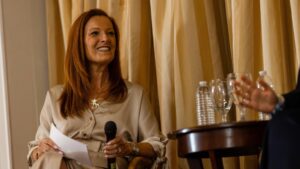
“We’ve each worn many hats within The Associated,” Wienner says, “but this one feels different — and more urgent than any before.”
A Baltimore native, Wienner recently spoke about the center’s mission, its priorities for the year ahead, and what gives her hope amid rising antisemitism locally and around the world.
What inspired you to take on this new role as co-chair of the center?
I was asked to get involved, given some of the roles I’ve held in the past. But truly, in a post–Oct. 7 world and even now, as hostages recently returned home, antisemitism has become the defining challenge of our time. It demands our full, organized commitment as a community.
And really, when you think about The Associated’s mission — to take care of those in need and strengthen Jewish life — if addressing antisemitism and hate isn’t part of that, then what is?
Why is The Associated uniquely positioned to lead this effort?
The Associated already has the relationships and infrastructure in place, especially through the Baltimore Jewish Council, which has been tirelessly led by Howard Libit. They’ve been on the frontlines of this work for years, responding to incidents, building partnerships and educating the community.
The new center builds on that foundation. It gives us a more coordinated structure to expand what’s already being done — to be proactive instead of just reactive.
What are the center’s top priorities?
We’re focused on these main pillars: safety, education, collaboration and advocacy.
On safety, we’ve already made major progress. We brought on David Folderauer as director of safety and security, and he’s done a phenomenal job shoring up security across JCC campuses, synagogues and schools. He’s helped ensure that we have a zero-tolerance approach to hate and a strong network for immediate response.

Then there’s education. We’re prioritizing outreach to Baltimore City and County schools to make sure antisemitism education is accurate and accessible. The good news is that the schools are receptive. They see what’s happening, too.
Finally, collaboration is key. We’re working to build meaningful relationships with civic leaders, government officials and interfaith communities. It’s not about performative gestures; it’s about sitting down together and having the hard conversations.
You mentioned your own experiences growing up. How has that shaped how you approach this work?
I grew up in that ‘Pikesville bubble,’ and I think my kids did, too. They didn’t really experience antisemitism until college. When they encountered it, it was a shock, and I realized I hadn’t prepared them for it. That’s why education is so important to me. We must equip the next generation to recognize and respond to hate.
What do you think people misunderstand most about antisemitism today?
I think there are two big misconceptions. First, that antisemitism is a relic of the past, or that it only exists on the far right or far left. It’s not. It’s moved from the fringes into the mainstream. It’s become part of everyday discourse, whether it’s online, in academia or in politics.
The second is that antisemitism is just a Jewish problem. It’s not. It’s the canary in the coalmine. When hate and scapegoating against Jews spread, it threatens everyone.
With so much happening globally and locally, how do you stay optimistic?
Because I see it — the connection, the unity. We feel more together than ever before.
People are showing up for one another, in our synagogues, our friend groups and through The Associated. Everyone wants to be part of the conversation because we all want to know we’re not alone.
And we’re not. As long as we continue to show the good and the light in the world, that’s what people will see.
The Center for Countering Antisemitism and Hate is building a safer, stronger and more united Baltimore. But it takes all of us to make a difference.
Learn more at associated.org/antisemitismcenter.
Duke Zimmerman and Lori Gale will talk at Towson University about their new book "People Get Ready" and the role played by Globe Posters in the civil rights movement.

The new exhibition revisits and updates a previous show about ritual hair covering in the observant community.
One of the most competitive local races for public office this political season is for Baltimore County Executive. Jmore recently spoke with four of the candidates about their views on how they hope to enhance life in the county.

The Pikesville resident's latest offering "There's a Dragon in the Tree House and He Won't Come out!" was co-written with her grandsons.