
By Rabbi Sharon Kleinbaum and Rabbi Mike Moskowitz
The holiday of Purim – observed this Monday night, Mar. 2, and Tuesday, Mar. 3 — is not only a celebration of Jewish survival and resilience.
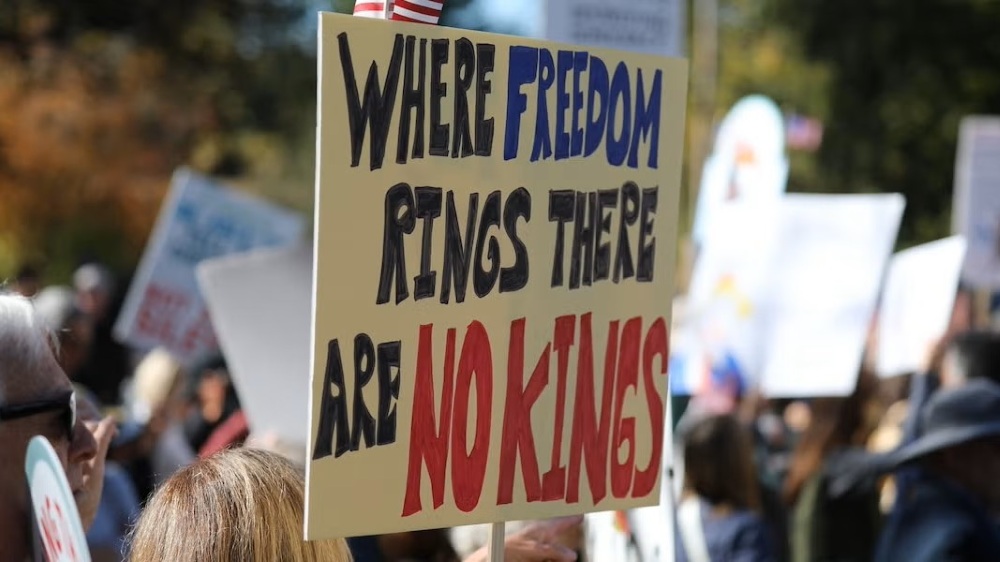
It is a political handbook.
The Book of Esther reads less like ancient folklore and more like a case study in how to endure — and outmaneuver — authoritarian power. It is a story about fear, propaganda, strongman politics and the dangerous illusion that silence will keep us safe.
When Mordecai urges Queen Esther to confront the king about Haman’s plan to annihilate Persian Jewry, she hesitates.
She understands the threat. She sees the injustice.
But she is afraid. Speaking out could cost her status, safety — even her life.
Silence feels safer. Familiar. Rational.
Mordecai’s reply cuts through the comfort of quiet compliance:
“If you keep silent in this crisis, relief and deliverance will come from another place — but you and your father’s house will perish. And who knows? Perhaps you have attained this royal position for just such a crisis.”
His message is bracing. Privilege is not protection. In an unjust system, no one is truly insulated.
The question is not whether history will move. It is whether we will move it.
Haman, the regime’s xenophobe-in-chief, persuades King Ahasuerus to legalize genocide with a bribe and a narrative. He describes the Jews as “a certain people, scattered and dispersed.”
Outsiders. A threat to stability. Different.
Dangerous.

The decree is chillingly bureaucratic: destroy, massacre, exterminate — men, women, children — and plunder their property.
History shows us that authoritarianism rarely begins with chaos; it begins with paperwork.
But Haman misreads what he sees. “Am echad” — he calls them one people, intending it as an accusation.
Yet the phrase carries another meaning: a unified people. What he labels as vulnerability becomes a protective strength. What he frames as difference becomes a solidarity of holiness.
Esther’s answer to the decree is not despair. It is organization: “Go, gather everyone together.”
Autocracy depends on fragmentation. Resistance begins with connection and grows by reinforcing them.
Meanwhile, King Ahasuerus embodies the fragility and hubris of the infallible strongman. When he regrets his decision, he refuses to revoke it. An edict sealed with the king’s signet ring, he insists, cannot be undone.
Rather than admit error, he issues a second decree allowing Jews to defend themselves.
The result? Preventable bloodshed. Throughout the empire, 75,000 of the Jews’ enemies are killed.
Pride proves deadlier than policy.
Purim does not romanticize power. It exposes its absurdity — the gaudy displays of wealth, the drunken banquets, the performative masculinity.
The holiday reminds us that authoritarian pageantry is designed to inspire obedience and nationalist fervor, not moral clarity.
And then it does something radical.
It commands joy.
We are instructed to celebrate, to send gifts to one another, and give to the poor. These are not sentimental rituals. They are social strategies.
Joy builds resilience. Generosity builds trust. Mutual aid builds networks that outlast regimes and totalitarian systems.

Where authoritarianism thrives on isolation and fear, Purim insists on community and courage.
The story’s lesson is neither naïve nor partisan. It is enduring. Silence does not save us. Unity does. Power rooted in cruelty collapses. Power rooted in collective responsibility endures.
Esther stepped forward not because she was fearless, but because she understood that fear could not be her master.
Perhaps that is the deepest teaching of Purim: We are alive in this moment for a reason. History has placed us here.
The question is whether we will gather, speak, give, love and choose joy together.
Rabbi Sharon Kleinbaum is the senior rabbi emerita of Congregation Beit Simchat Torah in New York City and director of The Beacon.
Rabbi Mike Moskowitz is director of scholarship and multi-faith engagement at The Beacon.
The views and opinions expressed in this article are those of the author and do not necessarily reflect the views of JTA or its parent company, 70 Faces Media.

Jmore Publisher Scott Rifkin, M.D., reacts to President Donald Trump's latest poll numbers and the real force behind the growing decline of the Trump movement.

Last weekend's Flower Mart once again demonstrated that there's nothing to fear about downtown Baltimore, writes Michael Olesker.

A junior at Roland Park Country School, Katie Grossman writes about a recent experience that spurred her to take action to fight antisemitism.

At a time when many Jews fear appearing Jewish in public, seeing Judaism depicted correctly onscreen is reassuring, writes Jewish content creator Rabbi Yael Buechler.