
Leftover slices of pizza in a Ziploc. A catered lunch from a meeting that ended early.
Across the Baltimore region — in front yards and alleyways, beside community gardens and church doors — a network of volunteer run refrigerators hums quietly. Neighbors and volunteers stock them with food that otherwise would end up in the trash.
“Most people think if they can’t do something big, it doesn’t matter,” said Marci Yankelov, co-founder of the Bmore Community Fridge Network. “But anybody can help. It doesn’t have to be 20 meals. It can be one meal at a time.”
BCFN is a grassroots initiative supporting more than 30 community fridges and neighborhood pantries across the city and county. Residents don’t need ID or paperwork to access a BCFN fridge; they can simply come by and take what they need.
The network receives a wide range of donations from leftover meals, bagged salads and pre-made sandwiches to groceries, fresh produce, dairy and meat, as well as supplies like storage bags, containers and other items.
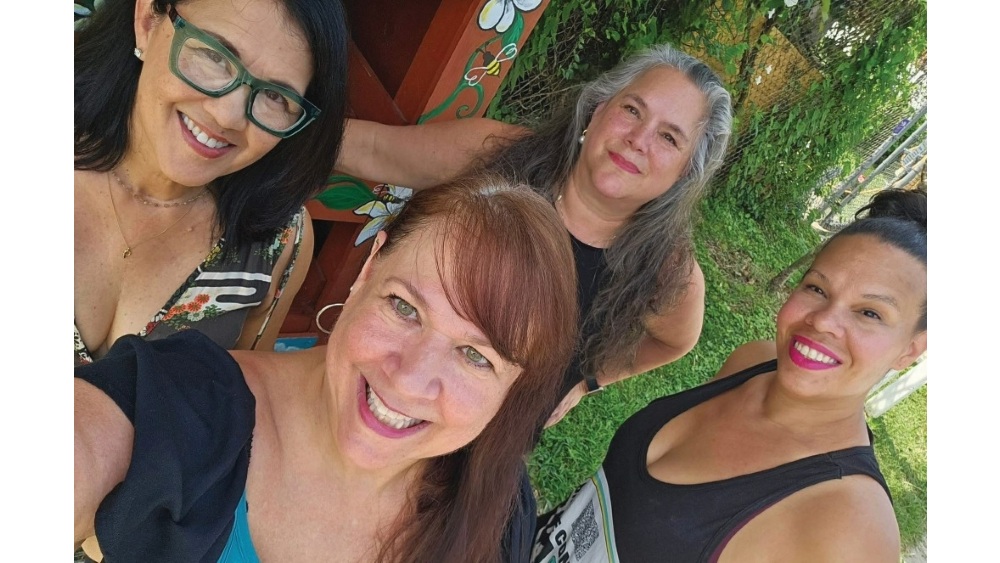
Four local women — Yankelov, Julie Kichline, Elizabeth Miller and Lila Perilloux — founded BCFN in February of 2025. BCFN grew out of pandemic-era aid efforts when neighbors began placing refrigerators outside their homes and community spaces to share food freely and anonymously.
But without a coordinated system to move food, repair equipment or connect donors to sites that needed supplies, many fridges became overstuffed and empty or disappeared.
Yankelov saw the problem and the potential solution. Over her 23 years as a realtor, she regularly encountered usable refrigerators discarded during home renovations.
While working as a food rescue coordinator during the pandemic for Bmore Community Food, a food-access initiative, Yankelov noticed large amounts of edible food left behind at traditional giveaways.
“Individual households waste more food than restaurants and farms,” Yankelov said. “Once you see that, you can’t unsee it.”
Last year, she teamed up with Kichline, Miller and Perilloux to launch BCFN. They first studied models in New Orleans, Philadelphia and other cities.
“We didn’t want to reinvent the wheel,” Yankelov said. “We wanted to see what worked elsewhere and adapt it to Baltimore’s neighborhoods, streets and schedules.”
Today, BCFN runs a Facebook page with more than 10,000 members, functioning as an informal command center. Members use it to post alerts about surplus food, fridges running low, or appliances that need to be moved or repaired.
“People want to give,” Yankelov said. “They just don’t always know how.”
Rather than centralizing control, the founders leaned into decentralization. Each fridge is assigned a local steward for basic upkeep, while BCFN links donors, food rescue organizations, cooks and neighbors.
One of BCFN’s collaborators is FutureThink Hub, a West Baltimore-based nonprofit addressing food insecurity, workforce development and mental health needs.
FutureThink Hub has hosted grocery giveaways every Saturday for the past three years and maintains walk-in coolers and freezers inside the former Stratford University building in East Baltimore. Through that partnership, BCFN volunteers regularly pick up rescued food and redistribute it to community fridges.
“Feeding people is a very powerful statement,” said Brandon M. Phillips, FutureThink Hub’s executive director. “It can stop someone from being at the end of an edge and saying, ‘I’m going to go rob somebody so I can feed my kids.’ Instead, just stop at the fridge and get something.”
In addition to food, the hub provides commercial kitchen space, packaging supplies and refrigeration, allowing BCFN to respond quickly when surplus food becomes available.
That same responsiveness extends to volunteers like Susan Siegel Katz, an Owings Mills resident who organizes Costco food pickups several mornings a week.
“If you have kindness in your heart to help people who have a little less than you, that’s the ultimate goal in life,” she said.
At Catherine’s Family and Youth Services, a nonprofit in Northwest Baltimore, the flow of food has become a daily resource. After learning about BCFN last summer, executive director Valarie Matthews jumped at the chance to install a fridge in partnership with LifeBridge Health.
The refrigerator, across from Sinai Hospital, is opened about 100 times daily. “Folks aren’t being greedy,” Matthews said. “They’re just hungry, sometimes just for tonight.”
BCFN’s founders chose not to formalize their group as a standalone nonprofit. They believe remaining grassroots allows them to avoid bureaucratic constraints and respond to needs in real-time.
“We don’t have to follow certain rules, so we can do things a little differently,” said Elizabeth Miller. “This grassroots kind of situation has made us protected, but also unstoppable.”
Carney resident Susan Allen learned about BCFN through its Facebook page. Each week, Allen participates in food rescues with the nonprofit Leftover Love, a BCFN partner.
“It’s great so many people are willing to help those with food insecurity,” she said. “Everyone should try to participate in their own way, whether it’s food rescue or even saving containers for those who support the network, whatever they feel in their heart to do.”
For information, visit facebook.com/groups/642135508518868
Karuga Koinange is a local freelance writer.
The German-born rabbi, scholar and activist, who served Temple Emanuel from 1963 to 2000 , was a prominent figure in the local Jewish community for more than six decades.
A lifelong Baltimorean, Hirsh was the owner and CEO of Ottenheimer Publishers, a multi-generational family publishing business that operated for more than a century.
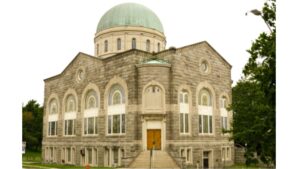
On its "Five Minute Histories" series, the preservation group recently looked at the historic "Shul in the Park," now and then.
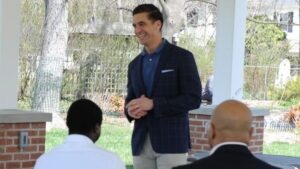
Stewart, a business attorney, believes trust and affordability are the county's biggest obstacles.