
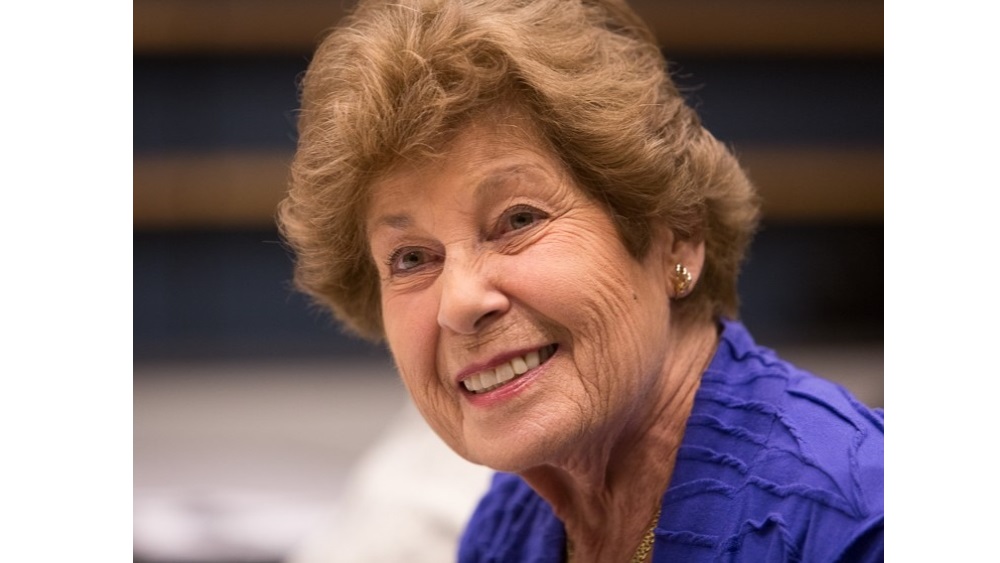
Herta G. Baitch, a local Holocaust survivor, speaker and educator, passed away on Tuesday, Jan. 30. The Pikesville resident and Chizuk Amuno congregant was 90.
A Vienna native, Baitch was born to Beila Nagel Griffel and Wolf Griffel. The Griffel family lost their grocery store during Kristallnacht, the Nov. 1938 “night of shattered glass” throughout Germany and Austria viewed as the precursor to the Holocaust. Wolf Griffel died in a labor day camp the following year.
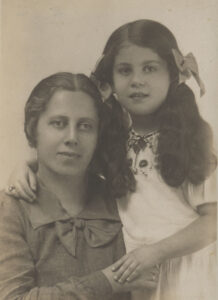
In November of 1940, Beila Griffel made the heart-wrenching decision to send her only child — who was only 7 years old — out of Austria on a Kindertransport through the German Jewish Children’s Aid organization. Baitch was one of only nine children from Vienna’s Jewish community selected to move to the United States, and she never saw her mother again.
“My most vivid memory is of my mother and me going to the streets for a parade,” Baitch said in an oral testimony to the U.S Holocaust Memorial Museum. “And it was an immense parade, and all the Nazi banners were — and bunting, were all over the place. And I remember the sound of the boots of the soldiers, and loud music, and a lot of sieg heils. And I didn’t know anything about what was going on, and my mother just held — I remember her squeezing my hand, and I said, ‘What is this?’ And she said, ‘It’s going to be very bad.’ That is the only vivid memory that I have. …
“Even leaving, I remember that she told me I was coming to the United States, and that another Jewish mother would take care of me, and — and that I had to be very healthy. And these are the things that I remember being in a shul. I think it was a shul, and people were crying, and she made me leave.”
(In 2003, she learned through Yad Vashem, Israel’s Holocaust memorial and museum, that her mother was deported to Minsk in 1940 with thousands of Viennese Jews and died at the Maly Trostinets concentration camp on Sept. 14, 1942. )
Baitch sailed to the U.S. from the Portuguese capital of Lisbon aboard the SS Excambion. After arriving in New York on the first night of Chanukah in 1940, she was escorted by social worker Rose Beser to her first foster family, the Baers, in Baltimore.
Baitch later lived with a second foster family, the Friedlanders, from 1941 until she married to Dr. Arthur Baitch in 1952. The previous year, she graduated from Forest Park Senior High School.
Later in life, Baitch became a noted Holocaust educator, speaking to schools and universities, houses of worship, museums and organizations throughout the region. She was also among the Holocaust survivors featured prominently in the Jewish Museum of Maryland’s 2004-2005 exhibition, “Lives Lost, Lives Found: Baltimore’s German Jewish Refugees 1939-1945.”
In her self-published 2009 memoir “Lucky Girl,” Baitch wrote, “I will always be grateful that I have been privileged to live the life for which my mother so obviously prayed.”
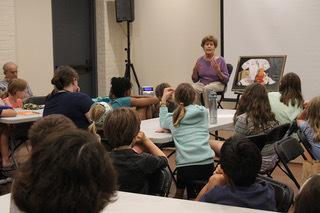
“Her message about the devastating effects of hatred have touched countless people,” Baitch’s family wrote on the website of Sol Levinson & Bros. “Most of all, Herta was a treasured wife, mother, grandmother, and great-grandmother.”
In his tribute on the Levinson website, Dr. Moshe Shualy, Chizuk Amuno’s longtime ritual director, wrote of Baitch, “Her courage to live with courage, love and power despite the trauma of the past, inspires us all. Herta’s nobility and majesty is her gift to us all. It opens a door to the divine potential within us. … These are gifts that retain their power forever.

Herta Baitch is survived by her husband; three children, Larry Baitch (Sara), Daniel Baitch (Shelley Kramer) and Karen (Jules) Rosenberg; seven grandchildren, SFC. Colten Baitch (Shayna Baitch), Rabbi Asa Baitch, Adam Baitch, Casey Rosenberg, Evan Baitch, Ryan Baitch and Carly Rosenberg; and three great-grandchildren Bayla Baitch, Naomi Baitch, and Matisyahu Baitch.
Services were held at Sol Levinson’s Chapel, 8900 Reisterstown Road in Pikesville on Thursday, Feb. 1. Interment was at Arlington Cemetery-Chizuk Amuno Congregation, 4300 N. Rogers Ave.
Contributions in Baitch’s memory may be sent to the U.S. Holocaust Memorial Museum, the Jewish Museum of Maryland or the charity of your choice.
To view a 2016 testimony by the U.S. Holocaust Memorial Museum, visit collections.ushmm.org/search/catalog/irn539329
The 16-year-old sophomore succumbed to injuries sustained in a car crash last week in Cockeysville.
Schools in Montgomery County have recently experienced a wave of antisemitic incidents.
CCBC Honors scholars are discovering a level of academic rigor and opportunity typically associated with elite four-year institutions.
Filmmaker Justin Schein looks at wealth and inequality through the very real story of his late father.