
By Asaf Elia-Shalev
The revelation that President Donald Trump intends to accept a $400 million airplane from the government of Qatar to replace Air Force One has dominated news headlines and generated widespread outcry.
Scores of journalists and critics are pointing to a pattern of alleged Qatari influence-buying in the United States. But these allegations are not new. One of the earliest and most prominent voices to raise alarm about Qatari donations in the United States is Canadian-born scholar Dr, Charles Asher Small.
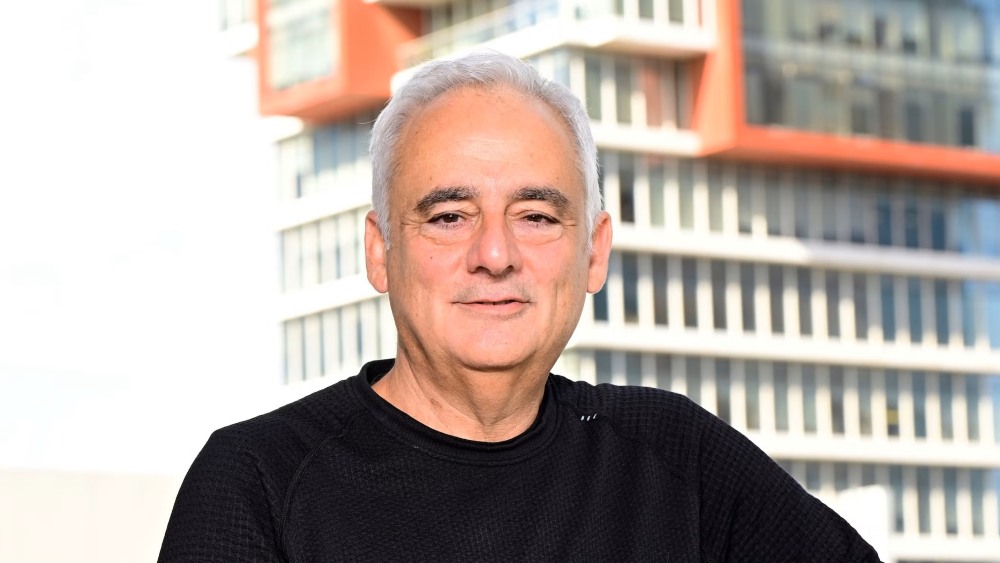
Small is the founder and executive director of the Institute for the Study of Global Antisemitism and Policy, an American organization that works with academics around the world.
Since as early as 2012, Small and ISGAP have been exposing and trying to draw public attention to the flow of undisclosed donations from Qatar to American higher educational institutions. Small argues that this money is at the root of the reported increase in campus antisemitism.
In 2019, during Trump’s first term, ISGAP’s findings prompted the Department of Education to open an investigation into several major universities, which ultimately uncovered significant failures to report foreign funding.
Qatar has also been condemned by pro-Israel advocates for the country’s role in funding Hamas, especially after the massacre and kidnapping of Israelis on Oct. 7, 2023. Several staunch Jewish supporters of Trump offered rare criticism of the president over the Qatari airplane gift proposal.
“Taking sacks of goodies from people who support Hamas, Muslim Brotherhood, Al Jazeera, all the rest, that’s not America First,” right-wing pundit Ben Shapiro said on his podcast. “I think if we switched the names to Hunter Biden and Joe Biden, we’d all be freaking out on the right.”
With Qatar in the news, Jewish Telegraphic Agency recently spoke with Small to discuss his view of the airplane gift and the pressure the federal government is putting on universities in the name of combating antisemitism.
What is your view on the Qataris buying an airplane for Trump?
I don’t know what they are doing. I don’t know what the rationale is. I don’t know if they’re feeling a little bit of pressure, especially after October 7th, a bit in the spotlight. Are they overstepping and just trying to just influence and buy as many people as they can?
This is really outrageous and extraordinary and very symbolic of a problem that the president of the United States would be flying around on this gift from a regime that has a spiritual oath to the Muslim Brotherhood.
I think it’s extraordinary that they’re buying a gift for the president of the United States. It’s very problematic that Qatar is able to buy influence now in the White House, in the Senate, in Congress, in our most sacred institutions.
Is Trump allowing himself to be bought?
I think for the president of the United States to take this gift from the Muslim Brotherhood-inspired regime is really an insult to democracy. But it’s not just the president. This has been going on for many, many years. We estimate $100 billion has gone into higher education from the Qataris as well as into law firms, PR firms, real estate companies, investment companies.
The United States really needs to do some soul-searching and at least consider the implications of taking money from regimes that want to murder Jews and destroy democracy.
But Qatar is officially classified as one of our closest allies, and we have a massive military base there.
It’s very problematic. I think what Americans really need to understand … antisemitism is deeply rooted now in the United States of America. It’s in our cultural institutions. It’s in our education. It’s in K-12. People on the right of the political spectrum need to fight antisemitism and anti-democratic culture. People on the left also really need to look at the antisemitism and the anti-democratic culture on their side of the aisle. We really need to come together in the middle and defend basic, basic democratic principles.
Many universities are saying higher education is under attack by the federal government. Your thoughts?
On the one hand, the federal government cannot give money to educational institutions that discriminate. It’s against the law. What they’re doing now is putting universities on notice that they have to deal with their issues of discrimination. It’s absolutely correct. There is a responsibility to our citizens and to our society and to our democracy to ensure that our young people are getting a proper education and are not dealing in hatred.
Do the Trump administration and certain conservative elements in this country want to use this issue to smash down liberal institutions? I have no doubt. I have no doubt that that’s simultaneously true in some places.
Are you a conservative or a liberal?
So I grew up in a place called Canada, where education, health care, transportation, and housing were kind of understood as human rights. I went to McGill University for $200 a year. I would consider myself kind of a social democrat.
I was active in the anti-apartheid movement. I’ve been very active on indigenous issues in Canada, also Ethiopian Jewry and Soviet Jewry. I was the chairperson of the African National Congress solidarity committee. I worked with the leadership of the ANC in the ‘80s and ‘90s, and I really kind of come out of that background, and it’s outrageous that some people parade themselves as being progressive when they’re calling for things that are anything but progressive or social democratic. So yes, I would consider myself on the left.
Do you think that’s how you’re perceived?
I think that people dealing with issues surrounding the Muslim Brotherhood and radical Islam are often dismissed as being kind of right-wing or other things. And to me, this is actually an expression of antisemitism when nobody takes the time to sort of ask where we’re coming from, what we’re fighting for.
How exactly does Qatari money buy influence and contribute to antisemitism?
OK, so let’s take one example. Take [the late Muslim Brotherhood spiritual leader] Yusuf al-Qaradawi. When I was part of the anti-apartheid movement, I had this professor … he was one of the founders of the Black consciousness movement, and he said to me with this sort of a grin, ‘If you want to fight for human rights and fight racism and fight antisemitism, you have to know the mind of your enemy.’
That’s lesson number one and in this country, we don’t take the time. We don’t think we need to take the time to understand the other perspective. But the Muslim Brotherhood, they know our languages, they know our culture. They’ve mastered our system, our political system. They know us. So we don’t take the time to even know them. And we think that if we’re nice or accommodating, that everything will be OK.
Qaradawi, who was the spiritual head of the Brotherhood, always preached his entire life that the true believer is obligated to finish the work of Hitler. The Brotherhood takes the Protocols of the Elders of Zion and even Nazism and fuses it with what I would call the perversion of Islam. Antisemitism is a core element of the ideology. It’s the raison d’être of the Brotherhood, and this is why, if you take the Palestinian chapter of the Muslim Brotherhood, Hamas, and you read their covenants, they’ve basically plagiarized the protocols. This is their worldview.
And the Qatari regime has a spiritual oath to this ideology.
But how does donating to a university help them accomplish what you say is their objective?
Well, they can fund Middle East Studies, which in many universities is not a friendly place to any kind of conservative, liberal, post-modern, whatever you want. The discourse coming from Middle East Studies really moves to other social sciences and the humanities.
On another level, take for example we’re at Cambridge and we have a center on antisemitism and our budget is probably half a million dollars a year. We have some soft power because it’s Cambridge. Imagine if I came in with $10 billion — I would get red carpet treatment. I could fund hospitals and cancer research and engineering, but I’m also going to be able to influence the culture of the institution.
In one of our reports called the ‘Networks of Hate,’ we show that universities that are taking money from Qatar have 300% more instances of antisemitism on their campus compared to universities that are not taking their money. It’s a good indicator. The methodology, it’s not perfect, but it gives a good picture.
What should we do to fight this external influence?
I think journalists, scholars — the role of the intellectual, the role of a good journalist is to shed light where there’s darkness. And, yeah, I think there should be investigations.
Asaf Elia-Shalev wrote this article for the JTA global Jewish news source.
John Singer wants to help Marylanders of all economic backgrounds to afford ankle foot orthoses.
Steve Hofstetter, who will perform at Soundstage next week, recently made headlines for his social media post ridiculing some fans' warnings about Charm City's safety.
Marc Terrill talks with Maryland State Delegate Samuel "Sandy" Rosenberg (D-41st), one of the longest serving lawmakers in state history, about the recently completed Maryland legislative session.
Israeli-Americans Rachel Goldberg-Polin and Jon Polin talked about the pain of losing their 23-year-old son, who was kidnapped and later murdered in the Oct. 7th tragedy.