

By Barbara Edelston Peterson
There’s no better time than the summer to embrace an ancient Jewish practice that could transform how we all connect with each other: kvelling.
Kvell — the Yiddish word meaning to burst with pride and joy over someone else’s accomplishments — has quietly sustained and enriched Jewish families for generations.
Yet this concept has remained largely unknown outside of Jewish circles. I think it’s high time for that to change.
That’s why I wrote my new book “Kvell: A Word You Should Know” (Post Hill Press), to share our people’s best-kept secret for health and happiness.
From my experience and backed up by the latest psychological research, it holds the key to happiness at home, in the workplace and in our communities.
Summer naturally creates opportunities for kvelling: Parents spend extended time with their kids, witnessing daily moments of growth and achievement.
Whether it’s a child mastering a new swimming stroke at the local pool, showing courage on their first day at sleepaway camp or simply helping a neighbor carry groceries or mow the lawn, this season provides countless moments to soak it all in.
The slower pace allows us to truly see and celebrate small victories that during the school year’s hectic schedule might pass unnoticed.
Of course, the idea extends far beyond family. Unlike other positive psychology concepts that focus inward, this one is fundamentally about others — celebrating their efforts, recognizing their potential and expressing genuine delight in their success.
Consider the grocery store cashier who remembers customers’ names and warmly greets their visits, creating such positive energy that people line up for that register even when other lanes are empty.
Think of lifeguards who go above and beyond the call of duty to warn beach-goers about potential hazards, earning heartfelt appreciation from grateful swimmers.
These moments of mutual recognition, empathy and celebration create ripples of positivity that extend far beyond the initial interaction.
The science supports what Jewish grandparents have long known intuitively for centuries. Research published in the monthly journal Social Cognitive and Affective Neuroscience shows that receiving affirmation activates the brain’s reward centers — the same areas that light up when individuals experience pleasure. Neuroscientists Andrew Newberg and Mark Robert Waldman found that positive language strengthens areas in the frontal lobes, promoting cognitive function and building resilience. A single encouraging word can influence gene expression related to stress regulation.
For the person doing the kvelling, the benefits are equally profound. The act releases endorphins, boosts immune function, reduces stress and increases empathy. It creates what researchers call a “helper’s high,” a neurological reward for lifting others up.
It is a practice that builds bridges rather than walls, that seeks to elevate rather than diminish.
When we gush over a neighbor’s garden, a colleague’s presentation or a stranger’s random act of kindness, we contribute to what psychologists call “positive contagion,” the spread of good feelings and pro-social behavior.
This month, in celebration of the American ideals of liberty and pursuit of happiness, we might consider how such words embody these very principles. The freedom to express joy in others’ successes, the pursuit of collective happiness through individual recognition, reflects democracy’s highest aspirations.
Summer camps, where children from diverse backgrounds come together, offer perfect laboratories for kvelling. When counselors celebrate each child’s singular talents — the shy kid who finally speaks up, the athletic child who helps a struggling teammate, the artistic camper who shares their creativity — that’s what they are doing. These experiences shape young people’s understanding of community and mutual support.
Unlike kvetching, which is so negative, kvelling represents our people’s wisdom for the world at its best. It costs nothing but attention and genuine care. It requires no special training, just the willingness to notice and celebrate human potential and achievement.
In our current world, such verbal kindness also offers a path toward love, healing and reconciliation — one moment of recognition, one burst of pride in another’s bounty, one heartfelt celebration at a time.
This ancient Jewish wisdom could be exactly what modern America needs right now.

Barbara Edelston Peterson holds master’s degrees in clinical psychology and eastern philosophy. She is the author of six books and a motivational speaker and sports psychologist. In 2016, she founded the Whole Champion Foundation, a nonprofit dedicated to personal, social and environmental responsibility. She lives in Santa Barbara, California, and is the mother of two grown daughters.

Jmore Publisher Scott Rifkin, M.D., reacts to President Donald Trump's latest poll numbers and the real force behind the growing decline of the Trump movement.
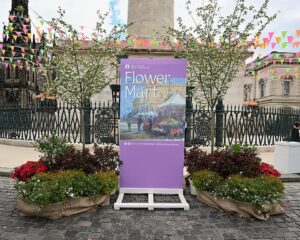
Last weekend's Flower Mart once again demonstrated that there's nothing to fear about downtown Baltimore, writes Michael Olesker.

A junior at Roland Park Country School, Katie Grossman writes about a recent experience that spurred her to take action to fight antisemitism.

John Singer wants to help Marylanders of all economic backgrounds to afford ankle foot orthoses.