

You’ve probably heard the rumor, “Journalism is dead.” If the rumor is true, where does that leave Jewish journalism? Oy vey, right?
Yet paradoxically, since we launched Jmore a year ago, our publisher and staff have been tremendously gratified by the Baltimore Jewish community’s enthusiastic response to our print publication, website and social media platforms.
In Baltimore at least, Jewish journalism appears to be alive and well. But what about the industry as a whole? And what about its future?
Perhaps there’s no one better equipped to provide insight into these questions than Rachel Fishman Feddersen, publisher and CEO of the legendary Jewish newspaper The Forward.
On Oct. 18 at 7:30 p.m., Feddersen will be the featured speaker at the annual Stanley Z. Penn Memorial Lecture at Beth Tfiloh Dahan Community School’s Mintzes Theatre, 3300 Old Court Road in Pikesville. A Baltimore native, Feddersen, 46, is the granddaughter of the late Bess Fishman, a longtime Beth Tfiloh congregant and archivist. Feddersen has worked at The Forward since June 2016.
Jmore recently spoke with Feddersen about how The Forward, founded in 1897 as The Ferverts and based in New York City, is surviving in the media landscape of the 21st Century.
Tell us about growing up in Jewish Baltimore.
I love Baltimore and I always want to talk about it! My whole family on both sides are from Baltimore and almost no one ever left. I grew up in Mount Washington, went to Mount Washington Elementary School, spent one year at Fallstaff Middle School and then went to Bryn Mawr School. I loved them all.
I grew up attending Beth Am [Synagogue in Reservoir Hill], and I always found Judaism really interesting. The rabbi then was Louis L. Kaplan, and everyone — even the kids— wanted to listen to his sermons.
Why did you leave?
Even though I haven’t lived there since I was 22, I still consider Baltimore my hometown. But I’m in media, and most media jobs are in New York. I went to college at Amherst and majored in English and minored in religion, with a focus on Judaism.
After college, I got my first job at a publication called Metrobeat. It was a great job for someone who had just moved to New York City, because it was all about what was going on in the city. It was the very beginning of digital media and we were pioneers. There was a sense of exploration, a spirit of inquiry that really went back to my Jewish roots.
Your previous jobs have been with secular publications. Why Jewish journalism now?
I’ve always been passionate about Judaism. I’ve studied Yiddish, spent a year in Israel doing community service [through Project Otzma, a post-college fellowship], but really the idea of Jewish journalism never occurred to me. There aren’t a zillion jobs in Jewish journalism.
But when the opportunity came up, I jumped at it. I couldn’t believe that my talents could help this historic, important publication. It felt like beshert [destiny].
How is The Forward engaging readers in the 21st Century?
Digital growth is essential. That’s why I was hired. At The Forward, we’ve transformed ourselves into a digital powerhouse. We are actively focused on reaching a wide and deep audience and engaging people in Judaism where they are.
A third of our audience is people [ages] 18-34. If you’re interested in pop culture, we’ve got pop culture. If you want the latest brisket recipe, we have that. We’re not just engaging readers by bringing them different viewpoints, we’re asking them to give theirs.
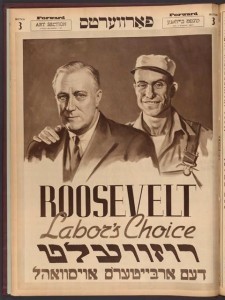
We also have a really wide variety of different ways to engage. We launched a podcast called “Fault Lines” that has a conservative and a lefty talking about issues that’s doing quite well. We recently published our first-ever college guide. It was put together by two of our youngest staffers and has an analysis about Jewish life at colleges that has not been seen anywhere else. The Forward does strong journalism about issues that matter to the Jewish community. We try to bring together smart voices.
And we’re still publishing the Yiddish Forward, a monthly newspaper and daily website.
How do you report on controversial topics that might offend readers?
We make people angry every week. When people don’t like what we write, they tell us. It’s not my favorite part of the job, but it is part of the job. We don’t operate in a silo, but I do believe in editorial freedom. You have to fully commit to Jewish journalism for the whole community so readers can know they’re getting the true story.
We’re a nonprofit, so we depend on fundraising as well as subscriptions and ad revenue. That means it takes extra gumption to be honest and forthright. We have to make people understand how important independent journalism is. We think it’s important that we be around in another 120 years.
What’s your favorite part about your job?
First, getting to work with the staff is great. Then, there’s the pride I feel running such a significant Jewish organization. It’s a privilege at a time when creating dialogue in the Jewish community is so important, to feel that what you do matters.
How do you feel about speaking at Beth Tfiloh next month?
My father asked me if I knew who else has spoken at that lecture. He said, ‘[Supreme Court Justice] Elena Kagan, [syndicated columnist and author] Charles Krauthammer.’ … I’m not sure how helpful that was. It was a little intimidating. But I’m thrilled to speak at my grandmother’s shul. I just wish she could be there.
For information about the free Penn Memorial Lecture with Rachel Fishman Feddersen, visit bethtfiloh.com.

Rabbi David Wolpe looks at the recent interest in Hollywood productions about King David and why the story is resonating now.

Directed by Johanna Gruenhut, the production is based on of the 1998 novel and 2003 film of the same name.
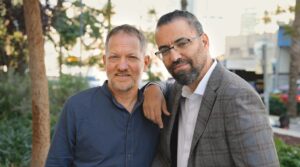
In "The Future is Peace," Aziz Abu Sarah and Maoz Inon say there is still hope for coexistence between Arabs and Jews.
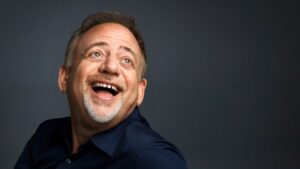
In his new memoir, piano man Marc Shaiman tells a showbiz story shaped by Jewish humor.