By Menachem Z. Rosensaft
The formulaic question we should adapt from the Passover seder and ask ourselves as we commemorate the victims of the Holocaust this year is, “How is this Yom HaShoah different from previous Yom Hashoahs?”
On the one hand, we are experiencing the most intense, far-flung antisemitism since the end of World War II, much of it under the veneer of purported anti-Israel sentiment. Jews across the globe are subjected to vitriolic and physical attacks of a type we thought had been made obsolete by knowledge of the atrocities and outrages perpetrated by the Third Reich and its multi-national accomplices.
In the past year, we have witnessed Jews murdered in terrorist attacks at Bondi Beach, Australia; in Washington, D.C.; in Boulder, Colorado; in Manchester, England; and in Israel.
Last week, a Pakistani national pleaded guilty in federal court in New York for attempting to carry out a mass shooting with automatic weapons at a Jewish center in Brooklyn, New York.
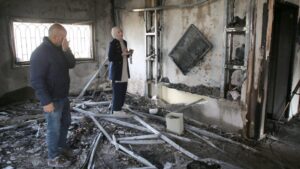
At the same time, while we raise the alarm about genocidal threats directed at Israel by Iran, Hamas, Hezbollah and the like, we cannot ignore or trivialize the spike in violence from extremist Israeli settlers against Palestinian civilians in the West Bank.
Meanwhile, Holocaust memory is under siege by far-right American commentators and activists as never before.
Podcaster Candace Owens dismisses the notorious SS doctor Joseph Mengele’s inhumane medical experiments at Auschwitz as “bizarre propaganda,” while the white supremacist Nick Fuentes denigrates the Holocaust as a “Jewish bedside story.”
Last week, President Donald Trump threatened the perpetration of what amounts to genocide against Iran. “A whole civilization will die tonight,” he declared ominously, “never to be brought back again.”
In response, Pope Leo XIV called the president’s comments “truly unacceptable,” and urged pointedly, “Let’s remember especially the innocent children, the elderly, sick, so many people who have already become or will become victims of this continued warfare.”
By that evening, cooler heads seemed to have prevailed and a possible Armageddon may have been averted with the announcement of a fragile two-week ceasefire that could still blow up at any moment. Or perhaps Trump never meant it in the first place.
Still, the words, once said, cannot be unsaid and yet another red line has now been crossed.
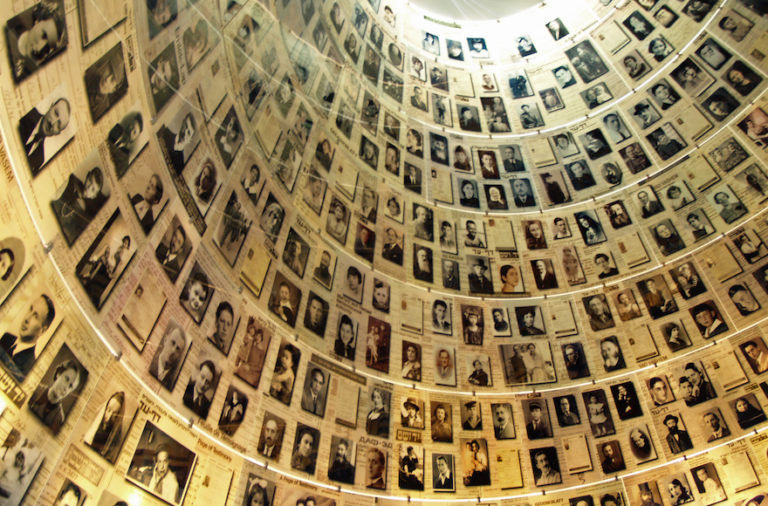
The principal purpose of Yom HaShoah – which this year was observed on Tuesday, Apr. 14 — is to ensure that the six million Jews murdered in the Holocaust will not fade into oblivion.
But looking more than eight decades into the past — while important — is nowhere near sufficient.
The slogan “Never Again” remains a valid grounding for Holocaust and genocide remembrance, but only if it is not turned into a chauvinistically and exclusively Judeocentric imperative.
I am not suggesting that Yom HaShoah commemorations should be somehow universalized, but they also must not take place in a vacuum.
Corrosion of Souls
My grandparents and 5-year-old brother were murdered in an Auschwitz gas chamber because they were Jews. Their memory inspires and compels me to do everything within my power to prevent their fate from befalling anyone else, whether Jewish, Muslim, Tutsi, Rohingya, Uyghurs, Roma or members of any other targeted group.
My grandparents and brother were the victims of virulent antisemitism. But remembering them would be hollow, bordering on meaningless, if I were not to fight against all hatreds and bigotries with the same intensity with which I combat antisemitism and anti-Israel antipathy.
In my new book of poetry, “Burning Psalm 125 Redux,” I write, “the messiah will not come/will not leave/Adonai’s seclusion/until jerusalem’s bearded/rabbis imams priests/teach daily that each/jewish child/palestinian child/is created with one/only one/always the same/divine spark.”
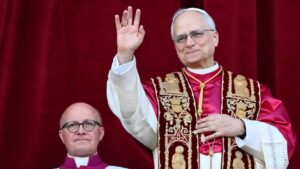
As we recite memorial prayers for the millions of nameless, faceless shadows whose lives ended in places like Auschwitz, Treblinka and Bergen-Belsen, let us remember in the spirit of Pope Leo’s words that my brother and all the children murdered in the Shoah were created in the same image of God as all the children who suffer and die in wars today, regardless of whether these are genocidal in nature.
Yom HaShoah must remind us that hateful words can and eventually will corrode souls, that bigotry of any kind all too easily metastasizes, and that indifference to the suffering of others is an unforgivable moral transgression.
I tell my students at Cornell and Columbia that I reject the concept of a hierarchy of suffering. Every genocide, every crime against humanity is equally heinous by definition and the victims of each such horror deserve to be commemorated on their own terms.
Auschwitz survivor and Nobel Peace Prize laureate Elie Wiesel believed “that the Holocaust was a unique Jewish tragedy with universal implications.”
Beyond ‘Woke’
In the same vein, our remembrance of the Jews murdered during the Holocaust on Yom HaShoah must make us sensitive and responsive to the suffering of others who are victimized by hatred and bigotry, regardless of their faith, nationality, race, ethnicity, gender or sexual orientation.
This is not being ‘woke’; it is being human and Jewish.
Both the Talmud and the Quran teach that taking a life is tantamount to destroying a world while someone who saves a life has saved an entire world. Our goal as Jews and human beings must be to prevent the destruction of worlds and to save as many worlds as possible.
The Jews murdered in the Holocaust were more than just six million individuals. Together, they constituted a glorious civilization that was annihilated.
We cannot save any of them or bring them back to life. But by remembering them on Yom HaShoah and throughout the year, we ensure that they — and the many worlds they represented — remain an integral part of our collective consciousness.
And perhaps this Yom HaShoah is as good a moment as any for us — all of us — to commit ourselves not to permit their past to become any other nation’s or civilization’s prologue.
Menachem Z. Rosensaft is a lawyer and human rights activist, adjunct professor of law at Cornell Law School, lecturer-in-law at Columbia Law School, and author of “Burning Psalms: Confronting Adonai after Auschwitz.” Rosensaft has served in various roles at the U.S. Holocaust Memorial Museum. He is also a co-founder of the International Network of Children of Jewish Holocaust Survivors.
What does it mean to be fully present with each other and the sacred, asks Maryland-born cultural anthropologist Alanna E. Cooper.
As millions mourn the passing of Stephen Colbert from the airwaves, Michael Olesker looks back on the "institution" of late-night TV.
As he gets ready to leave for California, Rabbi Daniel Cotzin Burg looks back on his time in Baltimore and his 10 years writing for Jmore.