
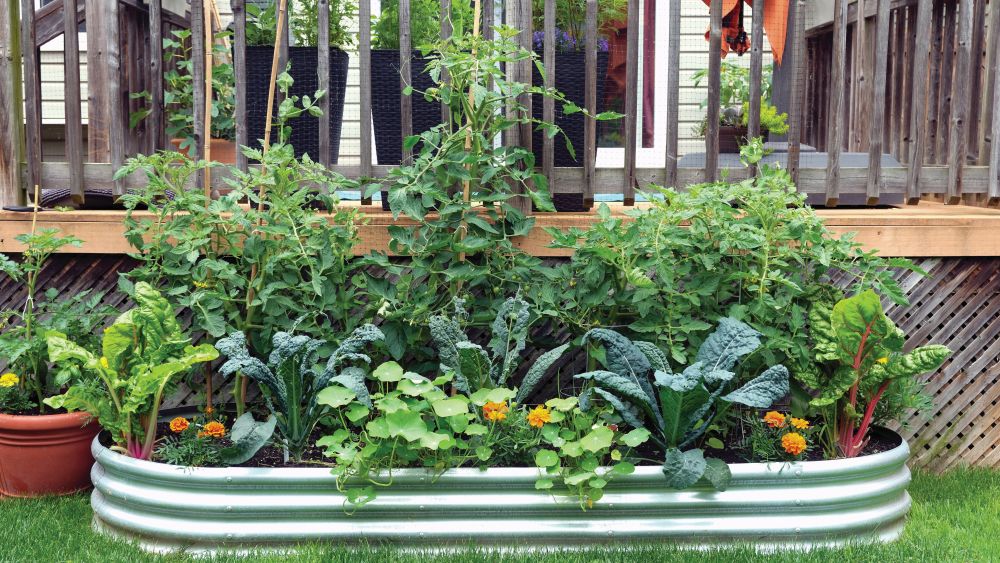
Container vegetable gardening is perfect for small spaces and busy lifestyles. Decks, patios, driveways and even tucked-in corners of flower beds will suffice.
Containers can be as simple as a coffee can or as decorative as a large ceramic pot. As long as they have proper drainage holes, you are good to go.
Small Spaces, Big Possibilities
The size of the vegetable or herb will dictate the size of the container. Basil and cilantro only need a 6-inch diameter; kale, Swiss chard, or cabbage do well in a 12-inch diameter container; and yellow squash, cucumbers or tomatoes require an 18-inch diameter and should be 24 inches high.
With the right container, it is surprisingly easy to grow a meaningful harvest just steps from your kitchen.
Various self-watering containers are commercially available and salad boxes, which are generally 4 square feet and 4 inches in height with a fine meshed screen to hold soil, are perfect for beets, radishes and salad lettuces.
The salad box can rest on a table or be attached to porch or balcony railings with brackets or screws, making fresh greens accessible even in very limited space.
Seeds are directly sown, and salad greens grow to four inches and will produce two or three harvests. Most vegetables and herbs require a minimum of 8 hours or more of sunlight, though salad lettuce only needs four hours, making it an especially forgiving choice for beginners.
Choosing the Right Soil
In the marketplace, several varieties of potting soil are available, and selecting the right one makes all the difference. For organically grown vegetables, the potting soil label will have the letters OMRI (Organic Material Research Institute). This designation guarantees that the potting soil doesn’t contain any synthetic polymer to maintain water moisture and that no synthetic fertilizer has been added.
For vegetables, best practice is to add your own fertilizer depending on what is being grown. Cole crops such as kale, cabbage and Swiss chard require a fertilizer high in nitrogen to support leafy growth.
In contrast, summer fruits like tomatoes, peppers, eggplants, cucumbers and squash require a fertilizer low in nitrogen but high in phosphorus to promote flowering, which ultimately leads to a larger harvest.
A Fresh Start
At the end of the growing season, it is helpful to give containers a thorough cleaning for use in the following year. The potting soil should be removed, and the containers washed with a 1% bleach solution to kill any lingering fungi, bacteria or viruses.
The used soil can be composted or simply worked into flower or shrub beds where it will continue to provide value. Some gardeners will collect the used potting soil, place it in an eight-mil polybag, and add unused container soil at a volume ratio of 1:1. This refreshed mixture can be used the next season for flowers, though not for vegetables.
Reaping the Harvest
Tomatoes, peppers and eggplant transplants are typically purchased from a garden center and planted in the last week of May or the first week in June. However, cucumbers, yellow squash, basil, cilantro and parsley can be started in containers from seed in mid-June, offering flexibility for gardeners who get a later start.
Tomatoes and cucumbers should be staked to promote vertical growth and keep plants healthy and productive. Keep the soil consistently moist but not wet, as containers dry out quickly due to wind and summer heat.
A solid, slow-release organic fertilizer with 6-8% nitrogen content should be applied every 3-4 weeks for Cole crops such as cabbage, broccoli, kale, cauliflower, and Brussels sprouts.
For summer fruits such as tomatoes, peppers and eggplant, a fertilizer with about 6% phosphorus content will promote flowering, which will lead to a bountiful harvest.
Rebecca Brown began her career as a horticulturist more than 30 years ago and studied at the New York Botanical Gardens. She has been a University of Maryland, Baltimore County master gardener for 12 years and is a backyard beekeeper.
Norman Cohen is a retired chemist. He has been gardening for more than 40 years and has been a University of Maryland, Baltimore County master gardener for 18 years. Cohen also provides gardening education to the public at local farmers markets.

Filmmaker Justin Schein looks at wealth and inequality through the very real story of his late father.

For 35 years, the late Deborah Brodie, aka Bubbie Cookie, amassed a collection of over 200 Jewish ritual objects, which she used to teach her Hebrew school students with special needs.

Conceived by Columbia resident Benjamin Kintisch, "Life Review: The Hospice Musical" offers a thought-provoking and occasionally amusing perspective on mortality.

Steve Hofstetter, who will perform at Soundstage next week, recently made headlines for his social media post ridiculing some fans' warnings about Charm City's safety.