
In the weeks following Hurricanes Irma and Maria, Rabbi Michael L. Feshbach recalled standing by the side of a road with scores of others on the island of St. Thomas in the U.S. Virgin Islands, trying desperately to reach loved ones.
“We had to drive for two hours to get a weak cell phone signal,” said Rabbi Feshbach, a Potomac native and the new spiritual leader of the Hebrew Congregation of St. Thomas, the second-oldest synagogue in the Western Hemisphere and the oldest in continuous use under the American flag. (About 100 Jewish families live in the U.S. Virgin Islands.)
“It took days for me to phone my elderly parents in the D.C. area,” he said. “Everybody is improvising. … This is a great lesson in perspective.”
For Rabbi Feshbach, who previously served Temple Shalom in Chevy Chase, coming to the Virgin Islands in July was supposed to be a change of pace from his hectic career that included leading congregations in Florida, New York and Pennsylvania. Instead, within two months of arriving in St. Thomas, he found himself and his congregation scrambling to save their 185-year-old synagogue while working frantically to help families on St. Thomas who had lost everything.
For the U.S. Virgin Islands, the unyielding intensity of Hurricanes Irma and Maria, just two weeks apart — and coinciding with Rosh Hashanah and Yom Kippur — made for a calamity of near-biblical proportions.
“We lost all of our High Holiday prayer books because of damage from Hurricane Maria,” said Rabbi Feshbach. The temple — which has 125 on-island members — also lost 60 prayer books and 80 Haggadot. After news got out about the damage, many Reform synagogues around the United States volunteered to replace the prayer books.
Driving rains in the aftermath of the hurricanes made travel treacherous as entire roads were washed out and power lines were downed, leaving the island in near darkness.
In spite of the chaos, Rabbi Feshbach was determined not to cancel High Holiday services.
“Our cantorial soloist didn’t make it in for Rosh Hashanah because the airport was closed,” said Rabbi Feshbach, who deputized his 16-year-old daughter, Talia, to fill in as cantor.
Kol Nidre services were held at 4:30 p.m. because the island was under a mandatory curfew. Rabbi Feshbach asked the island’s governor to waive the curfew, but the governor refused — a decision that Rabbi Feshbach said in retrospect was wise due to the horrific road conditions.
“The power went out in the middle of Yom Kippur services,” said Rabbi Feshbach. “After Kol Nidre, on Yom Kippur morning, for the first time the ark was wet. I panicked.”
Even though Torah scrolls had been wrapped in plastic, four of the seven High Holiday Torah covers and one Torah scroll were wet. The island’s Jewish cemeteries were also badly damaged by the storm. The hurricanes caused the synagogue to cancel 25 life cycle events.
People come from around the world to celebrate b’nai mitzvah, weddings and other ceremonies at the synagogue, which was founded by Sephardic Jews in the 1790s and still has a sand floor. The synagogue also lost revenue from its gift shop and museum.
Rabbi Feshbach tried to contact the Jews on the other islands for help. “I reached out to the leaders of St. Croix [Congregation B’nai Or] before Yom Kippur,” said Rabbi Feshbach. “But they were still under a 24-hour curfew.”
Despite the hardships, Rabbi Feshbach said he is proud of the way congregants have pitched in to help all of the residents of St. Thomas. The congregation has been working with the Federal Emergency Management Agency and faith-based organizations to distribute much-needed food, medicine and 100 generators donated to the synagogue. The congregation also “adopted” four families who lost everything in the storms.
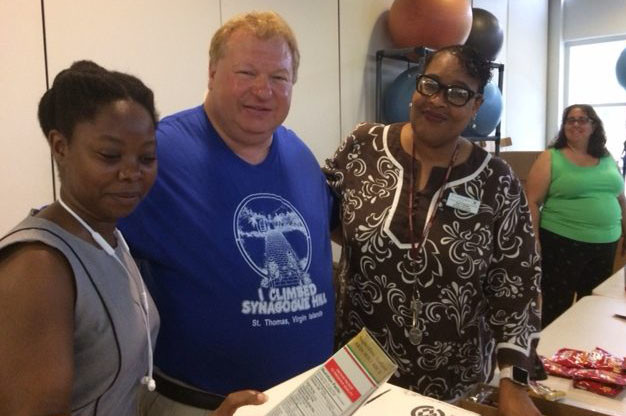
At the University of the Virgin Islands, congregation volunteers and UVI staffers distributed diapers, medical supplies, pet food, personal hygiene products, sun screen and baby food.
“We extend our sincere gratitude to the Hebrew Congregation of St. Thomas for their generosity and support for UVI employees during this time of recovery,” said Dr. Wendy Coram Vialet, director of the Center for Spirituality and Professionalism at UVI.
The outpouring of support from the global Jewish community is “a reminder that our synagogue exists in partnership with the whole Jewish world,” said Rabbi Feshbach.
With the airport on St. Thomas now reopened, Rabbi Feshbach — whose home still does not have power, nor do many of his congregants — hopes Jewish and non-Jewish tourists will return to the U.S. Virgin Islands.
“People need to come back to the islands. We are dependent on tourism,” he said. “I look forward to a complete recovery.”
To learn more about the Hebrew Congregation of St. Thomas or to contribute to the synagogue’s relief efforts visit synagogue.vi.
Jill Yesko is a Baltimore-based freelance writer.
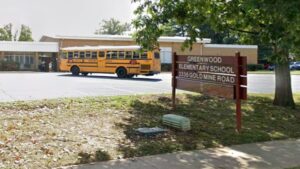
Schools in Montgomery County have recently experienced a wave of antisemitic incidents.
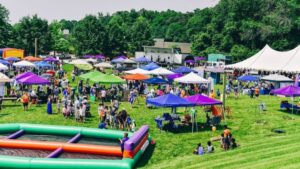
This year’s Community Block Party at the JCC of Greater Baltimore will feature classic cars, giant inflatables, games, a rock-climbing wall and roller skating rink, and strolling entertainers.
Marc Terrill talks with Michael Bresler, CEO and President of Broadheights, an AI consulting group, about the opportunities and challenges of artificial intelligence.
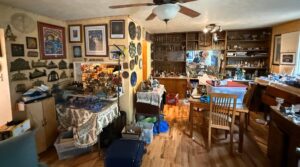
For 35 years, the late Deborah Brodie, aka Bubbie Cookie, amassed a collection of over 200 Jewish ritual objects, which she used to teach her Hebrew school students with special needs.