
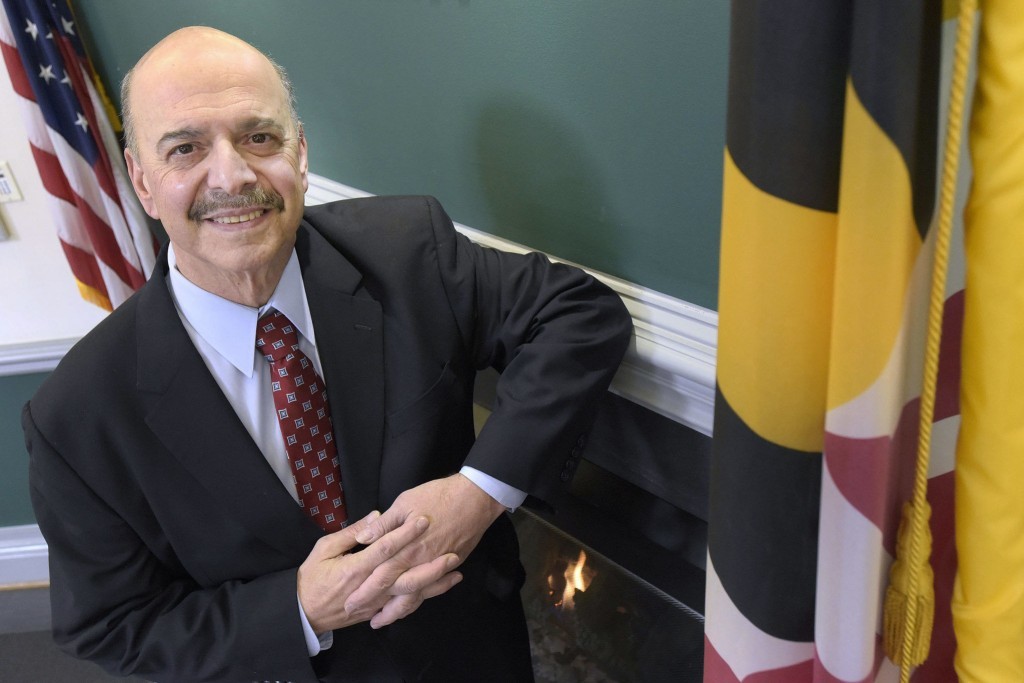
Del. Dan K. Morhaim (D-11th) recently announced that after nearly a quarter-century in the state legislature, he will retire at the end of his term next year.
The longest serving physician in the General Assembly, Morhaim has sponsored legislation on many medical issues, as well as on the environment, government efficiency and more.
Morhaim, 69, and his wife, Shelley, have three grown children, two grandchildren and live in Pikesville.
Jmore: How have you generated ideas for new policies?
Morhaim: I listen to people and find out what’s going on in their lives. Over the past 24 years in office, my style has been to work on issues that other people don’t see or don’t want to tackle, then I develop solutions in the form of new policies.
One major area for you is the environment, right?
Back in the 1980s, there was no recycling in our region and waste was filling up expensive landfills. I shared my concerns with my [Baltimore] County Councilman [and now Rep.] Dutch Ruppersberger, and he appointed me to the Baltimore City/County Task Force on Recycling. Through that effort, we set up the program that’s working to this day. That began my involvement in politics, and so in 1994, I ran for the House of Delegates and became a state legislator.
Once in office, I worked on many environmental bills. One I’m particularly proud of is creating that state’s electronic recycling program. Used electronics — computers, printers, modems, TV’s, cabling, etc. — were piling up with no way of safe disposal. These products contain toxins — such as lead, cadmium and benzene– but also valuables like gold, silver and copper. The ultimate goal is for manufacturers to take responsibility for the life cycle of their products by designing the electronics to be safely dismantled.
The legislation was innovative, and it took a few years of hard work to put it all together. The result is that Maryland’s e-cycling is paid for by the computer manufacturers who pay the fees required to run the program, but if they take back their products their fees are greatly reduced. Thanks to this unique approach, Maryland has a robust electronics recycling program that has kept millions of tons of electronics out of the waste stream; toxins out of our air, water and soil, and captured key products for re-use. Our approach has become a national model, copied by many other states.
Health care has always been a priority for you.
I’ve sponsored legislation on a wide variety of health bills. My first bill to expand addiction treatment was in 1998. Other legislation expanded programs for the treatment of birth defects, cancer prevention, smoking cessation, protection of health care workers from infectious diseases and improving care at end-of-life. For the latter subject, I wrote a book, “The Better End: Surviving (and Dying) on Your Own Terms in Today’s Modern Medical World.”
Early in my medical career in the emergency room, I was taking care of an elderly patient suffering from abdominal pain and cancer. She took me by the arm, and said, “Doc, have you ever had terrible nausea and vomiting? I want you to remember how that felt. That’s what I go through all the time. I’ve tried everything, and the only thing that helps me is a little bit of marijuana, but I’m a patient and not a criminal.” I listened and introduced my first medical cannabis bill in 2003.
To this day, while Maryland’s program is beginning to become operational, there’s still a long way to go. Most of the key research in cannabis medicine comes from Israel, and hopefully Maryland’s scientific and research community can get more active in this.
How have you helped the state save money?
Citizens want funding for a wide variety of programs, and in my years in office everyone who has asked presents a legitimate and sincere need. Traditionally, the state can only get money by increasing taxes, fees, or surcharges, or by cutting the budget in other areas. But there’s another way: Make government operate more efficiently. This is a dense and complicated topic, but I’ve led the way on numerous reforms and that have helped save millions by increasing competition for state contracts, pushing consortium buying, and cutting red tape and paperwork.
This year, I’ve introduced legislation to get the state, the 24 counties and the 24 school systems to buy health insurance for all their employees together, and this purchasing pool would also include bona-fide non-profits. House Bill 1400 could save $200 million a year, money that could be better spent on needed items while providing employees at all levels with better health insurance.
Here’s another bill of great importance that’s been overlooked: There are unfortunately scam charities with great sounding names and often using local phone numbers such as Kids Wish Network, Cancer Fund of America, and National Veterans Service Fund, to name a few. They spend only a fraction of the money collected on the actual service, but they prey on good people, often seniors, to get donations. Legislation I introduced toughened our laws, and now we can identify scam charities and either control them or shut them down.
Pete Arnold is an Olney, Md.-based freelance writer.

Schools in Montgomery County have recently experienced a wave of antisemitic incidents.

This year’s Community Block Party at the JCC of Greater Baltimore will feature classic cars, giant inflatables, games, a rock-climbing wall and roller skating rink, and strolling entertainers.
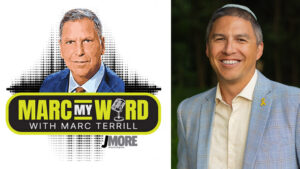
Marc Terrill talks with Michael Bresler, CEO and President of Broadheights, an AI consulting group, about the opportunities and challenges of artificial intelligence.

For 35 years, the late Deborah Brodie, aka Bubbie Cookie, amassed a collection of over 200 Jewish ritual objects, which she used to teach her Hebrew school students with special needs.