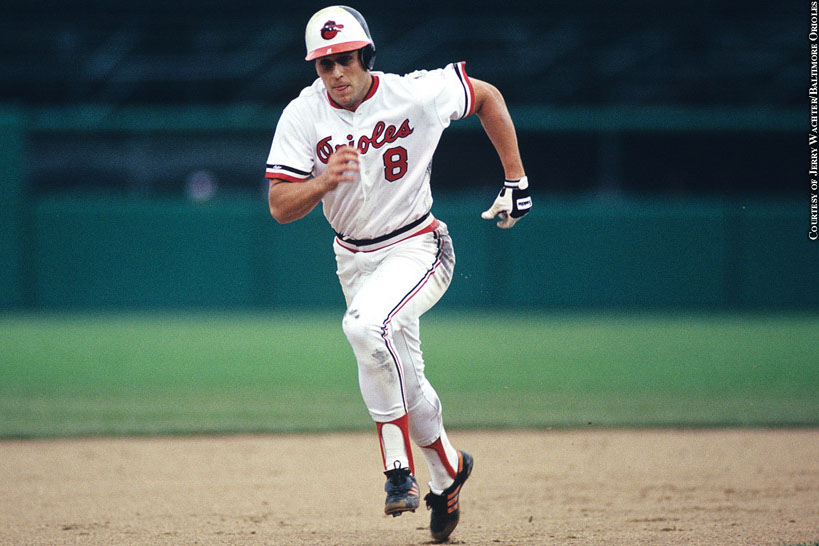
Fellow sufferers, it’s October, and you know what that means: for the 35th consecutive autumn, baseball’s World Series will commence, and the Orioles of Baltimore will not be participating.
Thirty-five years! For those biblical scholars keeping score, that’s nearly as long a stretch as the Children of Israel wandering the desert before they finally found the Promised Land.
But as this is written, there hasn’t been even the vaguest heavenly hint of promise for these Orioles.
For a sense of modern perspective, the last time the Orioles reached the World Series, the young Buck Showalter was playing minor league baseball in Oneonta, N.Y., and Adam Jones and Manny Machado weren’t even born yet.
For further perspective, consider the following: the summer of 2018 has been worse than 1988. That’s the year the Orioles stunned sports fans all over the world by opening their season with a record 21 straight losses before finally winning a game. They lost 107 times before that year mercifully ended. This awful year will be worse.
Youngsters will find it hard to imagine, but for a stretch of nearly two decades, from the mid-1960s into the 1980s, the Orioles had the best overall record in all of Major League Baseball. In one six-year period, they reached the World Series four times and then made the American League playoffs the next couple of years, and reached the World Series again in 1979 and ’83.
As the ballplayers around here used to say, it was great to be young and an Oriole.
Free agency was beginning to come in then, and the big money was beginning to be spread around by the rich clubs, but our Orioles proudly called themselves “the best team money couldn’t buy.”
It felt good to use the phrase. It seemed to fit our municipal image as a scruffy, unpretentious working-class town — until the money got out of hand.
Back then, the big contracts were six figures a year. The immortal Brooks Robinson, for example, was tickled to be making $100,000 by the mid-1970s.
But in an era when Machado’s about to ask for $350 million over the next 10 years, the game’s economics have come undone, and its management types seem incapable of fixing the huge financial inequities.
Manny might have gone on to become the greatest Oriole of them all, but now he’s gone, Jonathan Schoop’s gone, Zach Britton’s gone, Kevin Gausman’s gone.
Once, they were considered the centerpieces of the Orioles’ future. Now, all are considered unaffordable.
And that’s the new future — not only for the Orioles, but for all teams in medium or small baseball markets. With baseball’s pulverizing modern economics, they simply can’t spend like the New Yorks and the Bostons and the California clubs.
What does that mean? It means that after developing a player through several minor league seasons, and breaking them into the majors, and finally seeing them start to develop their full potential, teams lose control of their contracts, the players can offer themselves to the highest bidder, and these under-financed teams have to begin rebuilding all over again.
All of which tells us one thing: the game’s rigged. The richest teams expect to win every year, and everybody else should just accept seasons of also-ran mediocrity, with occasional aberrant years when they hope a miracle occurs and they can challenge for a playoff spot.
Meanwhile, Peter Angelos is 89. When he steps aside, do his sons take over Orioles’ ownership or do they sell? Might they sell to some out-of-towner?
For a city that couldn’t imagine losing the Colts until we awoke one morning and found them headed for Indianapolis, these are not empty questions, not when the lease on Oriole Park is up in a couple of years.
It’s 35 years in which the Orioles have wandered baseball’s desert. It’s that long, also, since the Colts stole out of town. In the minds of Baltimore sports fans, such things are not exactly unrelated.
A former Baltimore Sun columnist and WJZ-TV commentator, Michael Olesker is the author of six books. His most recent, “Front Stoops in the Fifties: Baltimore Legends Come of Age,” has just been reissued in paperback by the Johns Hopkins University Press.
What does it mean to be fully present with each other and the sacred, asks Maryland-born cultural anthropologist Alanna E. Cooper.
As millions mourn the passing of Stephen Colbert from the airwaves, Michael Olesker looks back on the "institution" of late-night TV.

As he gets ready to leave for California, Rabbi Daniel Cotzin Burg looks back on his time in Baltimore and his 10 years writing for Jmore.