
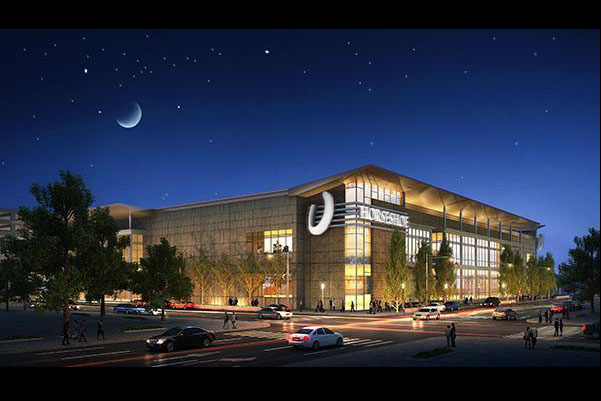
Now comes news that the latest economic salvation for Baltimore rests on a theory as solid as a roll of the dice.
On the Baltimore Brew website, veteran investigative reporter Mark Reutter gives us the latest breakdown on downtown’s Horseshoe Casino, once billed by former Mayor Stephanie Rawlings-Blake as an economic engine that would reduce the city’s property tax rate, fund school construction, pay for recreation centers and join local hospitals and universities as “one of our anchor institutions.”
Two years ago, the Horseshoe accounted for nearly one-third of the revenues generated by Maryland casinos, Reutter reports. Today, its share is under 14 percent.
In the past four years, the Russell Street casino’s revenues dropped by more than 16 percent; over the past two years, they’ve dropped by more than 31 percent.
And last month’s total revenues at the Horseshoe fell to $19,472,964, according to Maryland Lottery and Gaming Control Agency figures. That’s the worst monthly showing since the casino opened 51 months ago.
Plus, Reutter reports, “The small fees the Horseshoe pays to lease city land have had no impact on the city’s property tax rate or on public construction.”
With pride, proponents of casino gambling point to raw economic figures. For example, Maryland’s six casinos last month posted $140 million in revenues, which is a 7 percent jump from a year ago and a whopping 52 percent jump from two Novembers ago.
But the action has drifted away from Baltimore – and the big money anticipated for various city civic projects is still a dream that’s been deferred.
The Horseshoe brings in millions each month, but also spends millions on salaries and such. As Reutter points out, the biggest portion of money benefiting the city goes toward services that directly help the casino, such as police protection around the building, medical services, garbage collection and infrastructure improvements around the immediate area.
So why the drop-off in gambling action in Baltimore? One theory is that many downtown commercial establishments are still suffering from the aftereffects of the 2015 Freddie Gray disturbances and the ongoing daily reports of municipal violence and crime. Others trace the downturn to new competition, including the 2016 opening of MGM National Harbor in Prince George’s County.
There is a pattern here, which dates back several decades, to the dawning of the first Maryland Lottery games and continues today. The gambling proponents arrive bearing glorious tales of legalized gambling financing millions in civic improvements. But invariably, magically, municipal costs somehow stay high.
If you live in the city, have you checked your property tax or water bills lately? Somehow, they keep coming up snake eyes.
 A former Baltimore Sun columnist and WJZ-TV commentator, Michael Olesker is the author of six books. His most recent, “Front Stoops in the Fifties: Baltimore Legends Come of Age,” has just been re-issued in paperback by the Johns Hopkins University Press.
At its annual meeting this year, the Baltimore Jewish Council will honor the late Harford County educator and longtime Holocaust education champion.
The former Colt, who passed away on May 25 at age 93, achieved immortality during a cold December day in 1958, writes Michael Olesker.
A new biography on the creator of "Doonesbury" misses the mark, writes Michael Olesker.
What does it mean to be fully present with each other and the sacred, asks Maryland-born cultural anthropologist Alanna E. Cooper.