

In a gesture that seems built on simple common sense, Baltimore State’s Attorney Marilyn Mosby announced this week that her office will no longer bother prosecuting marijuana cases.
Common sense?
Yes, because marijuana’s generally not linked to violent crime, and ignoring prosecution would allow police to devote more time to the street crimes that are truly tearing apart the city of Baltimore.
Common sense?
Yes, especially in a time when so many states are decriminalizing pot or at least allowing it for medical usage.
Common sense?
Yes, when you consider the sheer inequality in enforcing the marijuana laws over the years. More than 90 percent of those arrested on pot charges happen to be African-American. And what are we to make of that? That white people aren’t smoking dope? You’d have to be high to make such an argument.
Maybe it’s also a sign of common sense in that Mosby thus joins prosecutors in such places as Philadelphia and Chicago, and Manhattan and Brooklyn, N.Y., who have made similar moves turning away from prosecuting marijuana cases.
So it’s common sense, except …
Well, a few things give pause. Mosby, for example, says she briefed top-ranking police officials about her new policy, and their reaction was not enthusiastic. In fact, the official statement from police said marijuana arrests will continue “unless and until the state legislature changes the applicable laws.”
So what does that mean?
That the cops will continue to make arrests – and defendants will have to raise bail money or wait behind bars for their cases to be called – but under the new policy, those cases will never be called?
Who knows? The city’s awaiting arrival of a new commissioner, Michael Harrison, out of the New Orleans police department – the fifth police commissioner since Mosby took office, by the way – and maybe he’ll agree with her.
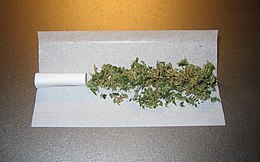 In New Orleans, Harrison’s police handled marijuana cases by issuing a summons. If cops wanted to make an arrest, they had to get special permission.
If that sounds like compromise, think about Mosby. She’s perceived, particularly by city police, as a rigidly uncompromising figure ever since the Freddie Gray disturbances of 2015, when she insisted on bringing charges against half a dozen police, none of whom was ever found guilty.
Some see her as a grand-stander with big ambitions, a political figure looking to make headlines. She made some after the Gray troubles, and now she’s done it again.
But headlines are one thing. How do we get our law enforcement people working on the same page?
 A former Baltimore Sun columnist and WJZ-TV commentator, Michael Olesker is the author of six books. His most recent, “Front Stoops in the Fifties: Baltimore Legends Come of Age,” was reissued in paperback by the Johns Hopkins University Press.
At its annual meeting this year, the Baltimore Jewish Council will honor the late Harford County educator and longtime Holocaust education champion.
The former Colt, who passed away on May 25 at age 93, achieved immortality during a cold December day in 1958, writes Michael Olesker.
A new biography on the creator of "Doonesbury" misses the mark, writes Michael Olesker.
What does it mean to be fully present with each other and the sacred, asks Maryland-born cultural anthropologist Alanna E. Cooper.