
Last installment of a three-part series:
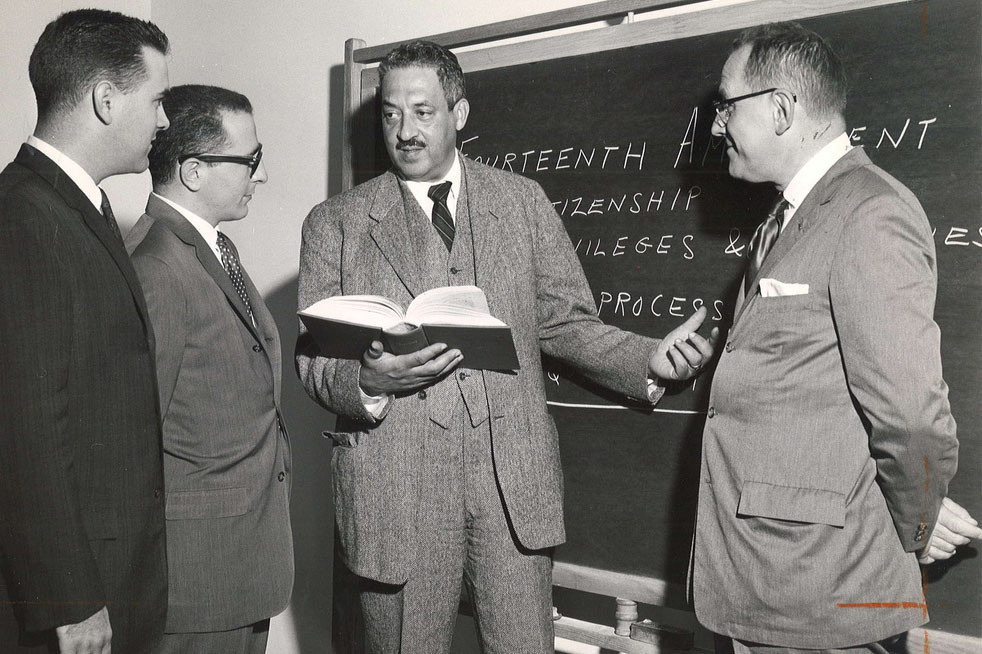
Sixty-five years ago, on the day that the U.S. Supreme Courtstruck down legalized racial segregation in America’s public schools, the lateedition of Baltimore’s Evening Sun toppedpage one with this headline: “Race Segregation Banned.”
The Afro-American ranthree full pages trumpeting the end of racially divided schooling.
And the next morning’s Sunheadlined page one this way: “Supreme Court Bans Segregated Schools.”
All of these were premature, and all historically misguided.
The destructive legalisms that kept America’s childrendivided by race across many generations have been replaced, in the moderncontext, by public schools that have significantly re-segregated by parentalchoice.
The white suburban migration of 20th century America has left cities like Baltimore, all these years since May 17, 1954, with overwhelmingly African-American public schools.
Across the nation, white students now account for less thanhalf of public school students, and the percentage of intensely segregatedschools – in which less than 10 percent of the student body is white – hastripled over the past 30 years.
Sixty-five years ago, in the aftermath of the SupremeCourt’s historic Brown v. Board of Education ruling, Baltimore’s public schoolsenjoyed about a 15-year run when their racial percentages reflected the city’soverall population.
By 1970, though, huge numbers of white families had eithermoved to nearby counties or, if they stayed in the city, registered their childrenat overwhelmingly white private or parochial schools.
Take Northwest Baltimore, for example. In the 20th century, area boys and girls attended either Pimlico or Garrison junior high schools. But by 1970, Garrison was virtually all African-American, and Pimlico followed suit a few years later. Each remained that way for years until the schools closed for the last time.
The situation was similar at Forest Park High School, thoroughlyintegrated for more than a decade after the Brown decision. But the last whitestudents left Forest Park nearly half a century ago.
Here’s a personal picture of school integration: When I lookthrough my Baltimore City College yearbook from 1963, I can count about 150African-American seniors out of 750 graduates. Then, from the mid-1970s forseveral decades, the school was more than 90 percent black. Today, City isabout 70 percent African-American, with new influxes of Asian and Hispanicstudents and whites.
Here’s another picture: There were about 250 Jewish City College graduates in my year. Today, there aren’t 250 Jewish students in the entire Baltimore City Public Schools system.
It’s a reminder that, in the great suburban exodus, whitefamilies of all religions took flight.
Does any of this matter?
Absolutely.
Education is more than learning long division, more than memorizingthe kings of England.
It’s about learning how to get along with people fromdifferent backgrounds – for that’s the American experience at its fullest.
It’s about dealing with the same classroom situations,standing in the same endless cafeteria lines, playing on the same playgrounds –discovering common ground when we’re at our most open-hearted.
It’s about reaching adulthood and having some understanding,and some comfort level, with those of all backgrounds – and seeing neighbors asmore than threatening ethnic stereotypes.
On that May morning 65 years ago, the Supreme Court didn’tsay school integration would be easy.
They only said, in spite of all previous American history, that it was right – and that we could do better.
Part 1: Recalling a Court Ruling that Would Echo for Generations
Part 2: Have We Lived Up to Thurgood Marshall’s Dream?

A former Baltimore Sun columnist and WJZ-TV commentator, Michael Olesker is the author of six books. His most recent, “Front Stoops in the Fifties: Baltimore Legends Come of Age,” was reissued in paperback by the Johns Hopkins University Press.
At its annual meeting this year, the Baltimore Jewish Council will honor the late Harford County educator and longtime Holocaust education champion.
The former Colt, who passed away on May 25 at age 93, achieved immortality during a cold December day in 1958, writes Michael Olesker.

A new biography on the creator of "Doonesbury" misses the mark, writes Michael Olesker.
What does it mean to be fully present with each other and the sacred, asks Maryland-born cultural anthropologist Alanna E. Cooper.