

The miracle of Harbor East is not justthe skyscrapers going up faster than the way Anthony Marinelli, the last of theold-time Little Italy bakers, used to churn out bread once upon a time.
It’s the appearance of an authentic jazzclub — think Ron Carter, AbdullahIbrahim and Roy Ayers — in the midst of the Four Seasons Hotel,handbags, glad rags and tourist bling.It’scalled the Keystone Korner Baltimore, and it sits at the corner of Lancasterand Eden streets, most recently the site of the Mussel Bar & Grille.
The guardian of the groove there is ToddBarkan, a fabled impresario declared a “Jazz Master” by the National Endowmentfor the Arts. In accepting the honor last year, Barkan said, “For me, the art of jazz is mostsupremely expressed in affording others the opportunity and space to create andswing together.”
So whydid Barkan, 73, open a jazz club in Baltimore, the town where Billie Holiday,Cab Calloway and Eubie Blake once practiced the craft?
“Baltimorechose me,” said Barkan, while noting that the idea surfaced during celebrationsof his NEA award in Washington, D.C. The night before the official ceremony,there was a private dinner for the honorees at Marcel’s, the flagship of chefRobert Wiedmaier’s restaurant group. At the time, Wiedmaier’s Mussel Bar &Grille had recently closed.
“[Wiedmaier]and I became fast friends,” said Barkan. “We began socializing and startedtalking about combining our great loves into one place.”
A few months later, the chef suggestedthat he and Barkan transform the Mussel Bar & Grille space into a jazzclub, with Wiedmaier and his restaurant crew overseeing the operation’sfood service component.
Withina year, jazz began floating across the harbor as the scent of charbroiledoysters, fried black bass and barbecued ribs wafted from the kitchen. “That’sthe marriage,” said Barkan. “In terms of this level of food and music, I’d sayonly the Blue Note Tokyo comes close.”
BeforeBaltimore, the Keystone had incarnations in Tokyo and Oakland, Calif., inaddition to San Francisco, where Barkan gigged on piano back in ‘68 with the Latin comboKwane & the Kwan Ditos.
Along the way, Barkan helped resurrectthe career of many a faded legend. Prominent among them was the Afro-Cubancomposer Arturo “Chico” O’Farrill. Might Barkan turn the same trick — invitingan enduring but fractured city to swing together — with live music at groundzero of Baltimore’s tourism industry?
As he has done with all of his projectsas a club owner, record producer, booking agent, he has invested the new clubwith love, labor, capital, moxie and hope.
“I grew up with nothing but Sinatra andDuke Ellington, and was a jazz fan by the age of 9; by 13, I was a fanatic,”said Barkan, whose first musical mentor was the late multi-instrumentalist andfellow Columbus, Ohio, resident Rahsaan Roland Kirk, whom he met on a bus goingto a baseball game. “Roland and I would sit for hours just listening to tenorsax players, then we’d listen to nothing but stride piano players.”
Later, Barkan staged jazz concerts atOberlin College at the height of Beatlemania before leaving the Buckeye Statefor San Francisco a few years later, “looking for paladins and dreams of psychedelia.”
In San Francisco, Barkan made the sceneand made friends, and in 1972 bought Keystone Korner in Frisco’s North Beach neighborhood,booking the likes of Max Roach, Milt Jackson and Miles Davis. The club wasbranded the “Birdland of the ‘70s” by the late, great jazz pianist and arrangerMary Lou Williams.
After the original Keystone closed in1983, Barkan managed the Boys Choir of Harlem (bringing in jazz musicians tosolo with the choir) and served as artistic administrator for “Jazz at LincolnCenter” at the invitation of Wynton Marsalis.
Barkan announced his presence inBaltimore on April 30 — International Jazz Day — by opening the club with aperformance by bassist Ron Carter. A steady parade of established stars andup-and-comers have performed at the Keystone since, with veteran guitarist JoelHarrison onstage during the Fourth of July.
A D.C. native, Harrison, 62, has paid hisdues in enough dives to know a genuine miracle when he’s booked at one. On hisrecent club date at the Keystone, Harrison was backed up by Baltimoreans GregThompkins on tenor sax and Lee Pearson on drums. Gary Versace wowed the crownon organ during jazz treatments of Glen Campbell’s “Wichita Lineman” and DonnyHathaway’s “I Love You More Than You’ll Ever Know.”
“I’m always hustling for work,” Harrison saidbetween sets.
For musicians of talent — known and obscure, playing jazz in all of its iterations — the Keystone Korner has made that hustle easier in Baltimore.
Keystone Korner Baltimore is located at 1350 Lancaster St. For information, visit http://keystonekornerbaltimore.com.
Rafael Alvarez isa Baltimore-based freelance writer.
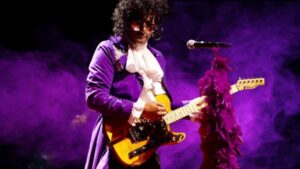
Enjoy some live music this fall, with a range of performances from The Ultimate Prince Tribute to Journey, classical and more.

For Aja Cohen, founder and chief creative officer of Transcendent Active, a modest activewear brand, the company is a reflection of her entire journey -- fashion, faith, movement, motherhood and identity.
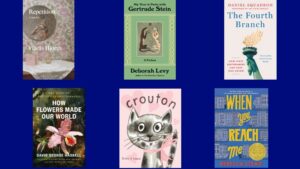
Emma Snyder, owner of The Ivy Bookshop, offers recommendations for must-read titles for adults and children.
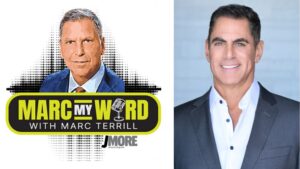
Marc Terrill talks with Ken Muskat, President for Scenic Group USA and Latin America, about the evolution of the cruise industry, why curated cruise and yacht experiences have become the fastest growing segment of the leisure market, and more.