

For Jill Mull, being a survivor is something to be celebrated but not taken for granted.
A 14-year breast cancer survivor, the Pikesville native and Park School graduate recognizes how the shocking diagnosis changed the trajectory of her life.
“With survivorship, once you’ve completed treatment and are in remission, people tend to say, ‘Congratulations, you’re done,’” says Mull, 46. “But the truth is, we are never really done. We live with side effects from treatment and fear of reoccurrence all the time. There are emotional, physical and spiritual side effects that stay with us our entire lives.”
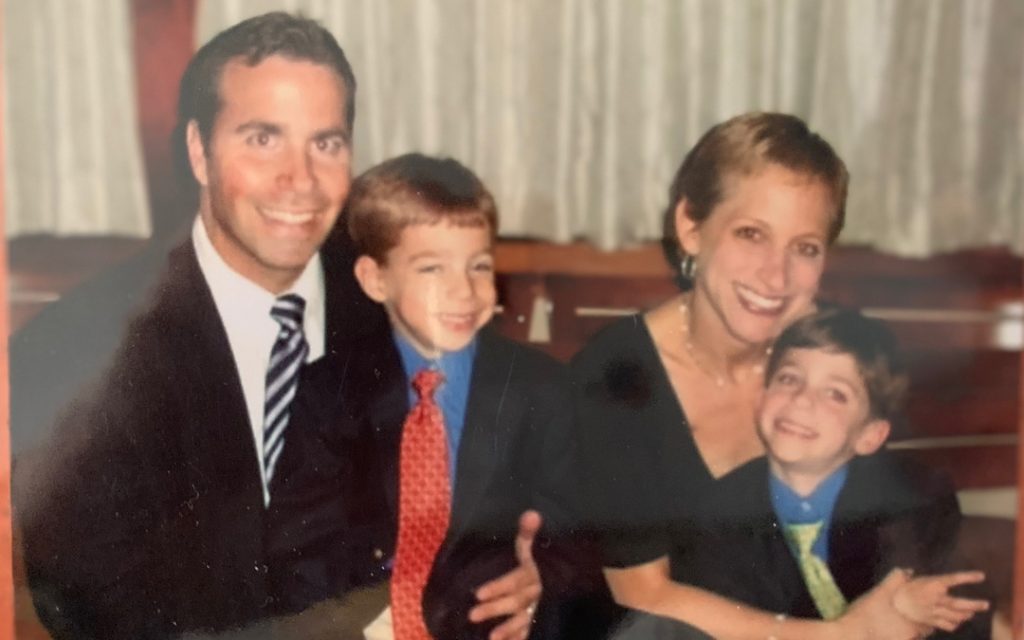
Mull was just 32 when discovering a lump randomly in the shower. A healthy adult woman with then-4-year-old twin boys and no family history of cancer, she was worried but convinced by her loved ones that the possibility of cancer was small and it was probably a cyst.
Regardless, Mull visited her doctor the following day and was promptly sent for a mammogram.
“When I took the slip in for the mammogram, I was told I didn’t need one because I was young and healthy and they would do an ultrasound instead,” she recalls. “It’s important to be your own advocate, because they did the ultrasound and immediately said I actually did need a mammogram. I remember sitting in a pink paper robe with women much older than myself when the practitioners came in and said I needed a micro-mammogram for a better image.”
The imaging was followed by a biopsy. Within 48 hours of finding the lump, Mull’s life was turned upside.
“The next morning the doctor called me and said the biopsy was positive,” says Mull, who was diagnosed with Stage 2B breast cancer. “I had just dropped the boys off at the JCC for camp and I pulled over, curled into a ball and cried. Eventually, I picked my feet up and got home where my husband, parents, sister and brother gathered so we could figure out a plan.”
A few days later, Mull had a lumpectomy and then went away for her father-in-law’s birthday. When returning home, she remembers getting a phone call from the surgeon, who through tears told her the cancer was more aggressive than previously thought and she needed chemotherapy.
“We cried all night thinking of the future and what it may or may not hold,” Mull says. “But I always had a great support system and I’m grateful for that. People who didn’t know me were sending food and help, and that taught me the lesson I still think about today — it’s important to have a community where we support each other because good friends, family and community are a lot of the battle.”
‘One of the Lucky Ones’
After 16 rounds of chemotherapy, a bilateral mastectomy and reconstructive surgery, and a year of intravenous and oral treatments, Mull was declared cancer-free. In addition to her chemo and therapies, Mull also took hormonal therapies for 10 years.
“After I finished treatment, young women and family members who were diagnosed would reach out to me and I would talk to them and give them tips on how to get through chemo and how to handle the fear, anxiety and uncertainty breast cancer created,” she says.
In 2014, Mull, an elementary school teacher before becoming a stay-at-home mother, began her new career as an outreach and education patient navigator at Johns Hopkins Hospital’s Kimmel Cancer Center. Since starting her job, she has never looked back.
“I’m one of the lucky ones,” Mull says. “Not only did I survive but I got a career where I can help others, give back and ease women’s journeys through diagnosis and treatment. I think everything happens for a reason, and I believe I went through what I went through so I can help ease others.”
As part of her position at Hopkins, Mull conducts three peer support groups — one for women who are under 50 who have early stage breast cancer, one for women who have metastatic breast cancer and one for women of all ages at all stages. In addition, she joins patients at appointments and listens to their stories to determine what additional resources to which she can connect those patients.
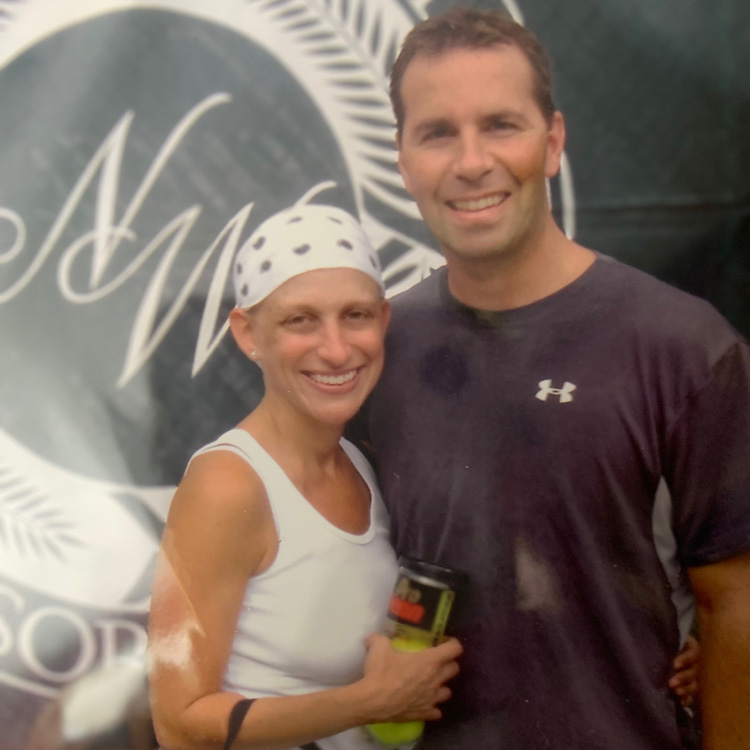
(Photo provided)
“One of the most anxiety-ridden times is when you are first diagnosed and there is no set plan,” Mull says. “That’s where I step in and let those with early stages know there is light at the end of the tunnel and provide support for those who are diagnosed with metastatic cancer. It’s healing to connect people with similar diagnoses or stories, regardless of where they are in their journeys.”
While Mull says she is blessed because she doesn’t suffer from many side effects, a breast cancer diagnosis does stick with a person forever. Many survivors suffer from ongoing physical side effects that are caused by treatment such as neuropathy (numbness or pain in body parts), Lymphedema (swelling in arms or legs), burns from radiation, weight gain from steroids or chronic joint pain. Also, there are a plethora of emotional and spiritual side effects that can last a lifetime.
“Cancer is always by your side,” Mull says. “Even as a survivor, it is never over. You have to learn how to live your life with it by your side each day. That fear of reoccurrence never goes away.”
The diagnosis also impacts patients’ loved ones. Mull says her twin boys, who are now college freshmen, are incredibly empathetic when they see someone with cancer, and they feel compelled to raise awareness for breast cancer. Her son, Ethan, joined a group at the University of Michigan called Go Blue Wear Pink and plans to run for an officer position in the organization.
“He called me and said he was joining this group, and started posting about it on his Instagram account to raise money. His friends, who are 18 years old, all began sending him money,” says Mull. “It’s amazing to see my kid’s group of friends supporting this as well.”
Even as a 14-year survivor, Mull admits she sees her life in two parts — before the breast cancer diagnosis and after.
“This changed my whole life,” she says. “It changed my career, my thought process, my priorities and my values. I wake up grateful every day and try not to worry about the small stuff. I appreciate witnessing my children’s milestones because there was a time where I was scared I wouldn’t be there for them. This diagnosis puts everything into perspective and stays with you forever.”
John Singer wants to help Marylanders of all economic backgrounds to afford ankle foot orthoses.
Colorectal cancer rates are climbing among young people and Ashkenazi Jews.
The donation will be directed to help foster research conducted by faculty at the University of Maryland School of Medicine and to advance innovative treatments.
The founder and owner of Catonsville Dental Care, "Dr. B" maintains a spirit of optimism that inspires friends, colleagues and patients.