
Just off the Northwest Baltimore neighborhood where I didmost of my growing up, we had a massive wooded area that ran from the ChizukAmuno Arlington Cemetery off of Rogers Avenue all the way over to PattersonAvenue, not far from the Reisterstown Road Plaza.
The woods were crowded with giant old trees and a cornfieldand a pond that froze over in winter, and a little patch of Eden where sunlightfiltered down on a slender little stream, where I paused one day with my friendJoel and his father, David Kruh.
Grownups didn’t often come back to the woods, but we werelucky Mr. Kruh was with us that day. We were thirsty by the time we reached thelittle stream. I started to reach for some of its water.
“You’d better not,” Mr. Kruh said. “It might be polluted.”
I was probably 10, and I’d never in my life heard the word. Pollution, what in the world was that?
Imagine living on the planet earth, and being lucky enoughto live an entire decade and never hear that word.
It’s a luxury not given to today’s children – and they will forevercurse their elders’ generation because of it.
The news keeps getting worse, doesn’t it?
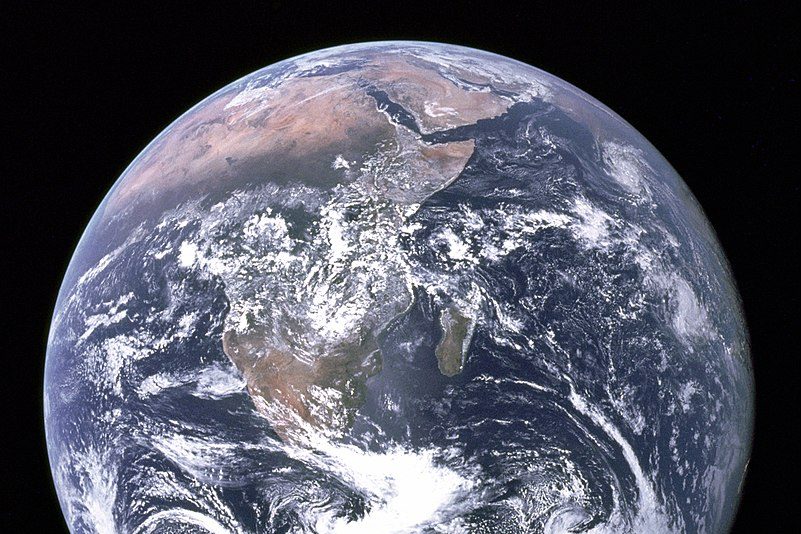
In this Thanksgiving Week, the United Nations EnvironmentProgram issues its annual Emissions Gap Report. The report uses a word todescribe its findings: “bleak.”
Never mind all the warnings from scientists, never mind the“bleak” future we’re painting for today’s children and those not yet born — theplanet’s worst polluters are still at it.
And the two biggest polluters, China and the U.S., actuallyincreased their emissions last year, the report says, noting that the world’s20 richest countries – which produce more than three-quarters of worldwideemissions — must take the biggest and fastest steps to move away from fossilfuels or we’re plunging into territory we may not be able to escape.
Are you listening,Donald Trump?
Yes, he’s listening but it doesn’t matter, as the U.S. hasformally begun pulling out of the Paris environmental agreement.
According to the U.N. report, global greenhouse gasemissions have grown by 1.5 percent every year over the last decade. Averagetemperatures are on track to rise by 3.2 degrees Celsius, a rise thatdramatically increases the likelihood of extreme weather events such as glacialmelting and swelling seas.
And previously unimagined dangers to people all over Earth.
So I think of that big woods near my old neighborhood, andthat slender, sunlit stream that looked clean to a 10-year old’s eyes but maybewasn’t. I think of it as Eden, because it seemed so clean.
And I think of it now because so much of that big woodedarea is gone now. It’s paved over. It’s Northern Parkway, between Reisterstownand Liberty roads, and instead of trees and ponds and cornfields, it’s got gasstations and burger joints and shopping centers.
And thousands of cars, all day and all night, belching outtheir poison, just one more little example adding to the troubles.
This is the holiday week when many of us gather with ourchildren and grandchildren and give thanks.
While we’re at it, we ought to offer them apologies.

A former Baltimore Sun columnist and WJZ-TV commentator, Michael Olesker is the author of six books. His most recent, “Front Stoops in the Fifties: Baltimore Legends Come of Age,” was reissued in paperback by the Johns Hopkins University Press.
At its annual meeting this year, the Baltimore Jewish Council will honor the late Harford County educator and longtime Holocaust education champion.

The former Colt, who passed away on May 25 at age 93, achieved immortality during a cold December day in 1958, writes Michael Olesker.

A new biography on the creator of "Doonesbury" misses the mark, writes Michael Olesker.
What does it mean to be fully present with each other and the sacred, asks Maryland-born cultural anthropologist Alanna E. Cooper.