
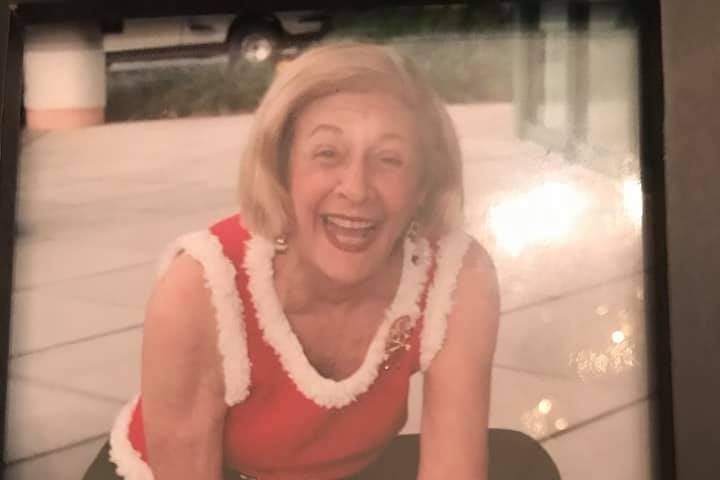
The news arrives, three weeks late, that local businesswoman, philanthropist and civic activist Tucky Ramsey has slipped away from us.
How could this happen? For 84 years, Tucky seemed like an absolute life force around here, one of a generation of women who brought their enormous energy, skills and insight to a Baltimore hungry for their contributions.
Tucky didn’t just talk to you; she bubbled. She didn’t just contribute; she could take over a room. She was part cheerleader, part den mother, part schoolmarm.
When she married her second husband, the distinguished federal Judge Norman P. Ramsey, you watched with a kind of awe. Judge Ramsey was a shy, rather quiet, dignified man. What was he doing with this woman with the thousand-watt smile and the infectious hurricane energy?
You realized, after a few moments, that he was having thetime of his life, entering emotional precincts whose existence he hadn’tpreviously even heard about.
Tucky helped start The Jemicy School for students with dyslexia and other language-based learning challenges. She helped create Presenting Baltimore, a business keyed to bringing conventions and special events to the city. For years, she promoted women’s advancement in business and politics.
She was part of a generation of women that emerged – many of them during William Donald Schaefer’s years at City Hall – and helped breathe new life into the city in the nervous aftermath of the 1968 riots and helped birth Baltimore’s first modern renaissance.
The list of those women is long and includes those such as JanetHoffman, Joan Bereska, Hope Quackenbush, Sandy Hillman, Bea Gaddy, MarionPines, Victorine Adams, Floraine Applefeld, Mary Arabian, Bailey Fine, BarbaraMikulski, Mary Pat Clarke, Lucille Gorham, Sally Michel, Lainy LeBow – andTucky.
Many emerged just as the original women’s movement was gearing up across the country, though few connected their arrival with the more media-savvy national movers and shakers.
(And few thought to give Schaefer credit for surroundinghimself with so many of these women. For Schaefer, it had nothing to do withgender. He just knew talent and brains when he saw it.)
And Tucky was Schaefer’s kind of talent. It went beyond anykind of municipal duties. She was a great one for hosting high-profile soirees,for boosting the city, for bringing out people’s best qualities.
If you knew her for 10 minutes, you felt like she’d known you for years. That’s the kind of warmth and good cheer she brought.
It’s the kind the city could use right now.

A former Baltimore Sun columnist and WJZ-TV commentator, Michael Olesker is the author of six books. His most recent, “Front Stoops in the Fifties: Baltimore Legends Come of Age,” was reissued in paperback by the Johns Hopkins University Press.
At its annual meeting this year, the Baltimore Jewish Council will honor the late Harford County educator and longtime Holocaust education champion.
The former Colt, who passed away on May 25 at age 93, achieved immortality during a cold December day in 1958, writes Michael Olesker.

A new biography on the creator of "Doonesbury" misses the mark, writes Michael Olesker.
What does it mean to be fully present with each other and the sacred, asks Maryland-born cultural anthropologist Alanna E. Cooper.