
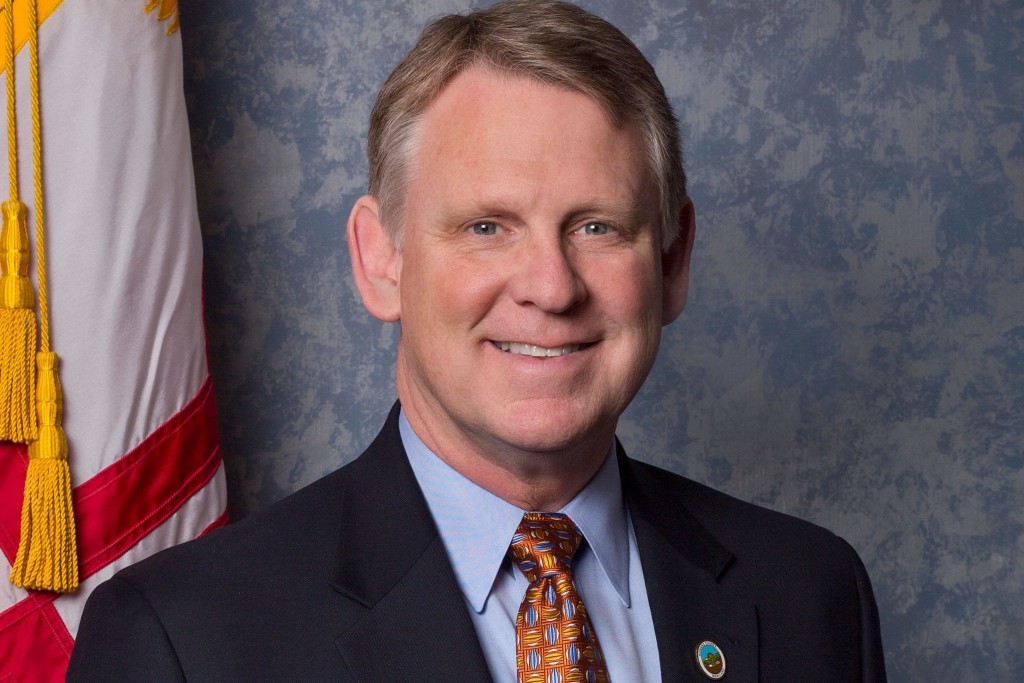
Every year, Howard County receives accolades from national magazines and organizations as one of the premier places to live in the United States. In fact, Columbia, which turns 50 this year, topped Money magazine’s list last September of top places to live in the nation due to its quality of schools, housing prices, job growth and diversity.
With a general population of 313,000, Howard has one of the fastest growing Jewish communities in the U.S. According to the 2010 Jewish Community Study of Howard County, an estimated 17,200 Jews reside in 7,500 households in the county.
Jmore recently caught up with Allan H. Kittleman, the county executive since December 2014, to talk about Howard’s growth and development.
What’s it like to be a Republican in such a blue state?
I do what I think is right and best, and I don’t worry about politics. I spent 10 years as a Republican in the Maryland State Senate, and there, too, I didn’t vote just based on politics. Chuck Ecker was the county executive from 1990-1998, and a great role model. He said, “Do a good job, do the best that you can, and you don’t have to worry about getting re-elected.”
What’s being done to stimulate the county’s economic growth?
Recently, we announced a capital improvement program of $374.3 million for fiscal year 2018. We are proposing monies to support education, county parks, a new public safety radio program, and flood mitigation in Ellicott City. We have planning dollars for a detox and outpatient treatment center, as well as planning and design money for fire and police stations.
We will soon launch the Howard County Innovation Center. It will include the Maryland Center for Entrepreneurship, 24 start-up companies, an incubator for high-tech companies, a business resource center, and the Howard County Economic Development Authority. We’ll have all kinds of services in one place for young, innovative companies. Similarly for people who need human services, over several months we will build a new community resources campus for housing, community development and human rights. These and other community-based services will all be in one area that will be served by public transportation.
Also, to further develop downtown Columbia, we’ll use tax-increment financing, which means funds from taxes will come from new development. The Howard Hughes Corp. plans to invest over $2 billion in the area. With the taxes that come from that investment, we’ll improve the infrastructure, build a new cultural center, a new transit center, and a lot of other activity, including 900 affordable housing units.
What’s Ellicott City’s status after last summer’s devastating flood?
Gov. [Larry] Hogan arrived in about 12 hours and declared a state of emergency. We brought in an incident management team from out of state because we needed help coordinating our efforts. Federal partners also helped us with a federal declaration and FEMA [Federal Emergency Management Agency] relief.
Most importantly, the community came together. We raised over $1.7 million in a couple of months. Competitors have helped competitors. Now, over 80 percent of the stores have reopened. Our town is much more resilient now, and we’ll be better able to handle future problems. We still have much to do — storm water mitigation, also strengthening the stream walls and the culverts. People are doing hydraulic studies, and we are making master plans of the best things to do going forward.
What about the county’s schools system?
Education is our number one priority. Our public schools are among the best in the state because we have high quality teachers and strong family involvement. I certainly see value in programs that offer public funds for private education, including BOOST [Broadening Options and Opportunities for Students Today). It’s important to encourage people to provide opportunities for all types of education, public and private.
What’s being done to reduce anti-Semitism and other types of bigotry in Howard?
The best way is to have people communicate with each other. That’s the reason we’ve started the #OneHoward initiative. It’s one way to address racism, intolerance and bigotry. We have trained people to be facilitators, to help people to talk about religion, race, anything. If you’re going to change people, you’ve got to have them talking to each other. You can’t do this in a big community meeting. So let’s say we get 20 people in a room at senior centers, schools and libraries all around the county. We get them talking, and we use peer pressure for good. My goal is to get more people involved, talking to each other in small groups.
Peter Arnold is an Olney, Md.-based freelance writer.
Top photo: Howard County executive Allan H. Kittleman (Handout photo by R. Scott Kramer)

Schools in Montgomery County have recently experienced a wave of antisemitic incidents.

This year’s Community Block Party at the JCC of Greater Baltimore will feature classic cars, giant inflatables, games, a rock-climbing wall and roller skating rink, and strolling entertainers.
Marc Terrill talks with Michael Bresler, CEO and President of Broadheights, an AI consulting group, about the opportunities and challenges of artificial intelligence.

For 35 years, the late Deborah Brodie, aka Bubbie Cookie, amassed a collection of over 200 Jewish ritual objects, which she used to teach her Hebrew school students with special needs.