
More than a few years ago, I had a meeting with the executive director of a local Jewish organization. The group’s raison d’etre was combating the tide of cults and Christian missionaries who at that time were relentlessly targeting and proselytizing to Jews and others. Once again, Jewish souls were on the line, he told me.
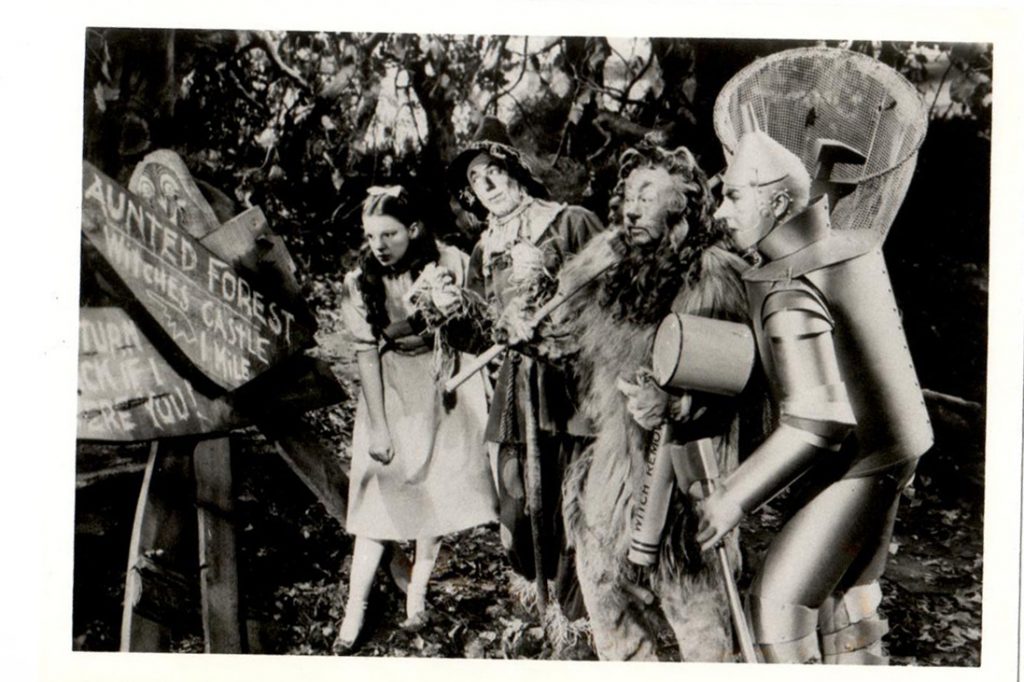
While we were schmoozing in his tiny, cluttered office off of Park Heights Avenue, I couldn’t help but notice that the wall behind his desk was covered with images from the 1939 musical fantasy film, “The Wizard of Oz.”
Now don’t get me wrong, I like Dorothy and the Tin Man and the Cowardly Lion just as much as the next guy, but I was genuinely puzzled and stymied. Why would this gentleman, an observant Jew wearing a kippah and tzitzit, display photos from the beloved Judy Garland classic all over his office? I couldn’t stop myself from inquiring about it.
“What’s the main lesson from ‘The Wizard of Oz’?” he asked while folding his hands.
I paused and thought about it. Not having seen the movie in many a moon, I said, “Um, that we’re not in Kansas anymore, Toto?”
He smiled at me like you would with a dim-witted child and patiently said, “Nope. Think again.” Finally, I shrugged my shoulders, with a loop of “Over the Rainbow” playing in my head.
“The main lesson is, there’s no place like home,” he said softly. “Remember, Dorothy didn’t really need to go to the Emerald City or wear the ruby slippers. She didn’t need the Good Witch of the North. Everything she really needed was right there at home. Well, it’s the same thing with being Jewish. It’s all there in front of us, waiting for us, if we only look for it. We don’t need to search anywhere else.”
For some reason, that conversation always stuck with me, as quirky and trite as it might sound. Like a lot of people, I tend to turn to my faith at times of sorrow and pain, such as recently when I suffered a personal loss and started attending a daily minyan. It seems that for many of us, we turn to God and our sacred tradition when mired in darkness, despair and confusion. But Judaism, Yiddishkeit, being Jewish — whatever you want to call it — is always there when we need it. The pity is that we don’t turn to our faith more often when the times are good and our souls are not troubled.
Not long ago, I was chatting on the phone with an old friend of mine who lives in New Jersey, near Philly. It was just one of those calls made to catch up and keep our sanity intact during this cruel pandemic. For some reason, he brought up the topic of faith and observance, as he’s prone to doing in our conversations, even though he’s a completely secular person with an aversion to religion and a limited Jewish upbringing.
“I’m not into organized religion at all,” he said, rather randomly. “I went to Hebrew school for five years and hated every single minute of it. I just wanted to play stickball with my buddies. My wife’s Catholic, and my son grew up without any religion at all. I just try to be a good person. That’s my religion.”
I hear this from a lot of Jews, that communal trappings like religious school turned them off to Judaism forever and they observe an unscripted sense of spirituality. But frankly, I can’t help but feel it’s a bit of a cop-out.
Faith is a highly personal matter, and every human being has to come to their own conclusions about what they believe in. But it seems to me that framing your entire belief system on something that transpired during the earliest chapter of your life is a bit myopic and ill-conceived. For those truly seeking spiritual answers and enlightenment, there truly is no place like home.
But it’s up to us if we want to investigate and explore.
Sincerely,
Alan Feiler, Editor-in-Chief

As he gets ready to leave for California, Rabbi Daniel Cotzin Burg looks back on his time in Baltimore and his 10 years writing for Jmore.

Michael Olesker pays tribute to WJZ’s retiring Marty Bass, a longtime fixture on local TV screens.

The Orioles' weak defense plays a major role in the nightly carnage, writes Michael Olesker.