
“My garden is my most beautiful masterpiece.”
—French painter Claude Monet
Here in the Baltimore metropolitan area, we have a number of public garden masterpieces to choose from, which comes in particularly handy during a claustrophobia-inducing pandemic.
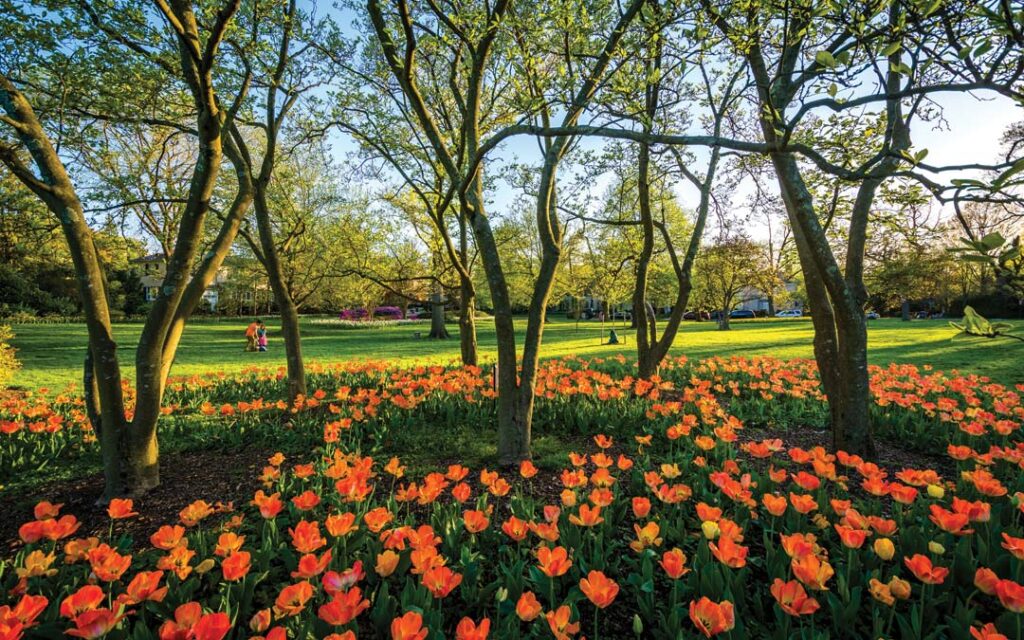
Nestled in the North Baltimore neighborhood of Guilford, Sherwood Gardens is world-famous, particularly for its annual tulip display. Thousands of visitors descend upon the six-acre park – framed by Stratford, Underwood, East Highland and Greenway roads – to take in the 80,000 tulips that peak in late April, as well as azaleas, evergreens and other flora.
The property on which Sherwood Gardens is located was originally part of the estate of A.S. Abell, founder of the Baltimore Sun. Originally known as Stratford Green, Sherwood Gardens was created in the 1920s by Baltimore businessman, philanthropist and amateur landscape designer John W. Sherwood, whose home bordered the park (which dates back to 1913 and was designed by the Olmstead brothers).
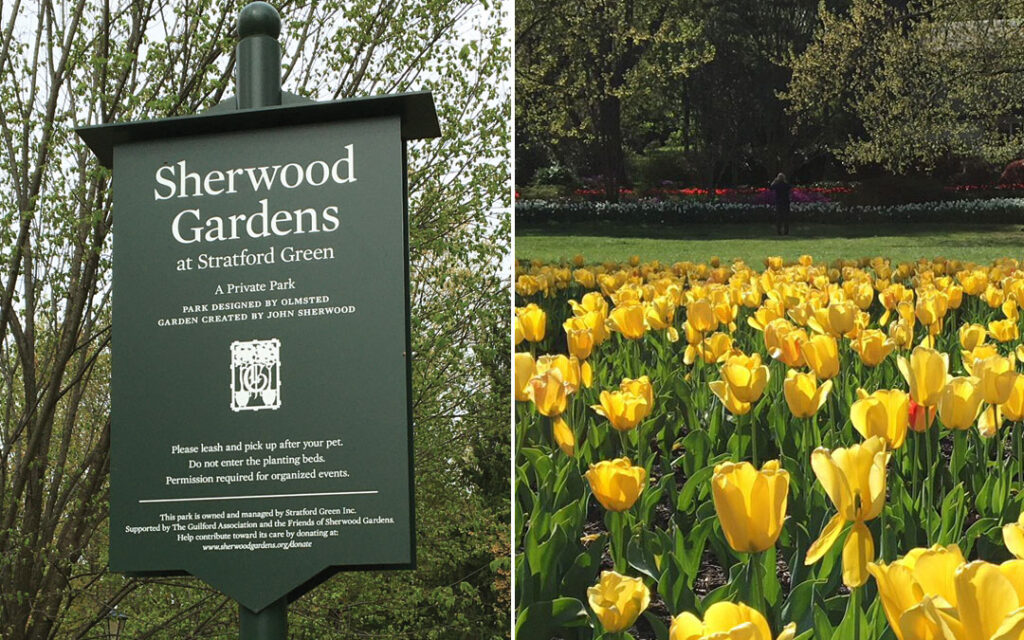
A tulip aficionado, Sherwood imported tens of thousands of bulbs from the Netherlands each year to plant on his property, while adhering to the Olmstead design principles of creating a pastoral space with rare trees, native plants, perennials and flowering shrubs.
Sherwood’s passion eventually spilled into Stratford Green, where he also planted Japanese cherry trees, pink and white dogwood, crab apple and blue wisteria for added vibrant colors.

When noticing unexpected visitors dropping by and enjoying his wondrous gardens, Sherwood opened the area to the public. After his death in 1965, Sherwood mandated in his will that the gardens remain a place for all to enjoy. The Guilford Association purchased the site, and it is now maintained by Stratford Green Inc., a nonprofit. The association helps plant the spring bulbs and summer flowers, trim trees and groom lawns. Care for the garden comes exclusively from private donations by the friends of Sherwood Gardens.
Sherwood Gardens is open to the public year-round and free. For information, visit sherwoodgardens.org.
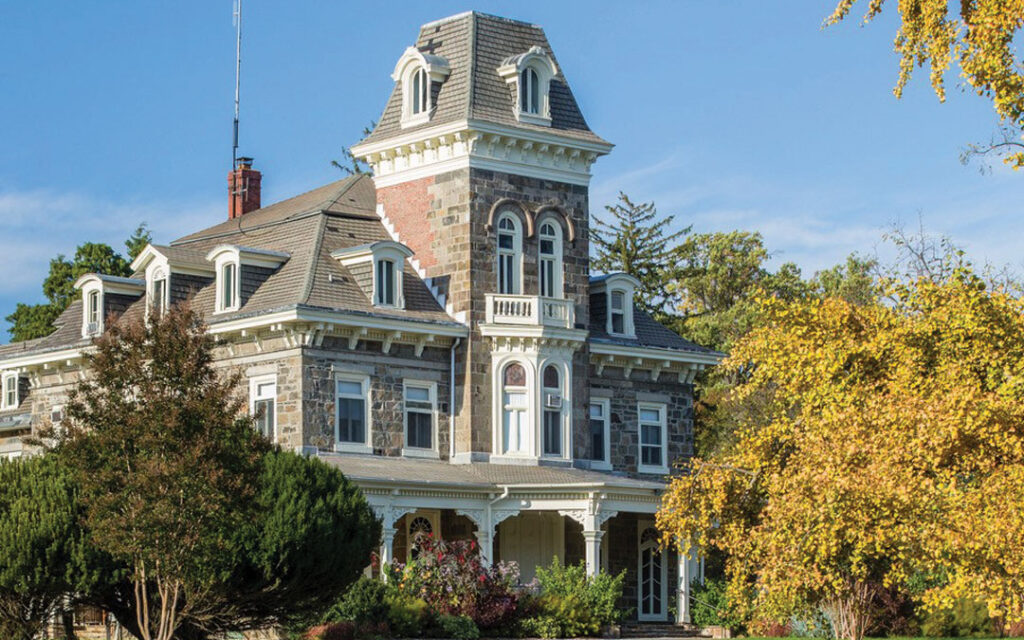
Located a few miles northwest of Sherwood Gardens is the equally enchanting Cylburn Arboretum. Cylburn is located on 200 acres of green space near Sinai Hospital, brimming with lovely gardens, plant collections, hundreds of specimen trees and shrubs, peaceful wooded trails, intriguing statuary and fountains, and an historic mansion and carriage house to boot.
Cylburn was the private estate of Quaker businessman Jesse Tyson, who in 1863 purchased the land north of Baltimore city along the Jones Falls as a summer residence to share with his mother, Hannah. Designed by George A. Frederick, architect of Baltimore’s City Hall, the Cylburn Mansion was not completed until 1889 after Tyson, then in his 60s, married 19-year-old local debutant Edyth Johns.
‘I have the fairest wife, the fastest horses and the finest house in Maryland,” Tyson reportedly told friends.
Formal gardens and tree-lined lawns were planted by Tyson, a perfect backdrop to the surrounding area of natural woodland, wildflowers, wildlife, and native and migrating birds.
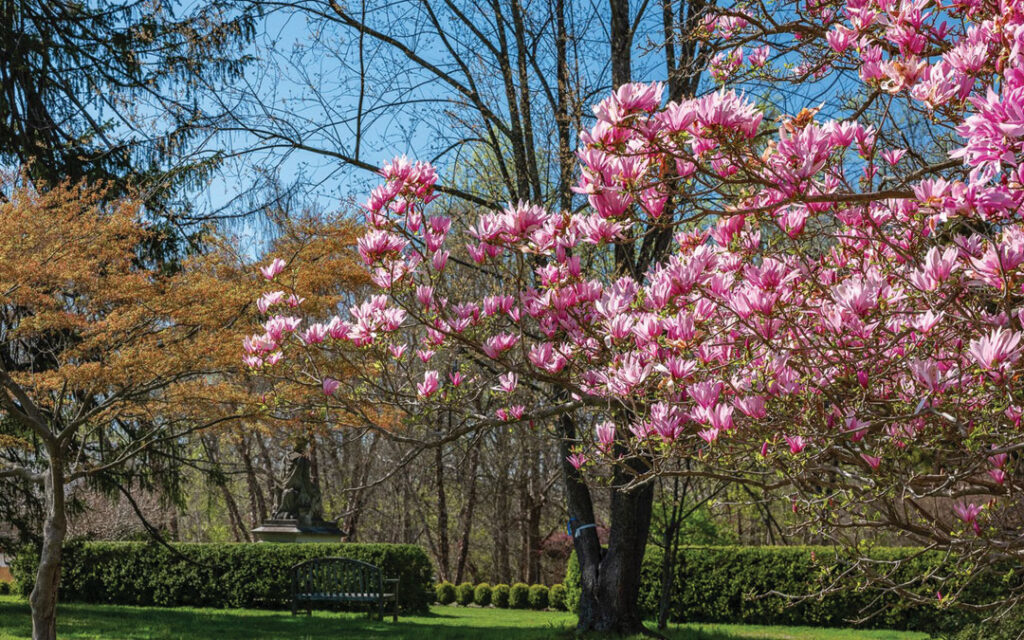
The Cylburn estate was purchased by the city during World War II. In 1954, the property became the Cylburn Wildflower Preserve and Garden Center. Twenty-eight years later, it was renamed the Cylburn Arboretum. Among the collections are azaleas, bamboo, chestnuts, hollies, Maryland oaks, magnolias and beeches. In addition, the arboretum features a number of flower and vegetable gardens,
The arboretum is maintained by volunteers, Baltimore City and the Cylburn Association. Among the newest additions on the campus is the Vollmer Visitor and Education Center, which features a 250 seat meeting hall and theater, and a back patio and natural outdoor amphitheater. Cylburn also has a new greenhouse classroom for education and workshops.
Located at 4915 Greenspring Ave., Cylburn is free and open to the public year-round. For information, visit cylburn.org.

Filmmaker Justin Schein looks at wealth and inequality through the very real story of his late father.

For 35 years, the late Deborah Brodie, aka Bubbie Cookie, amassed a collection of over 200 Jewish ritual objects, which she used to teach her Hebrew school students with special needs.

Conceived by Columbia resident Benjamin Kintisch, "Life Review: The Hospice Musical" offers a thought-provoking and occasionally amusing perspective on mortality.

Steve Hofstetter, who will perform at Soundstage next week, recently made headlines for his social media post ridiculing some fans' warnings about Charm City's safety.