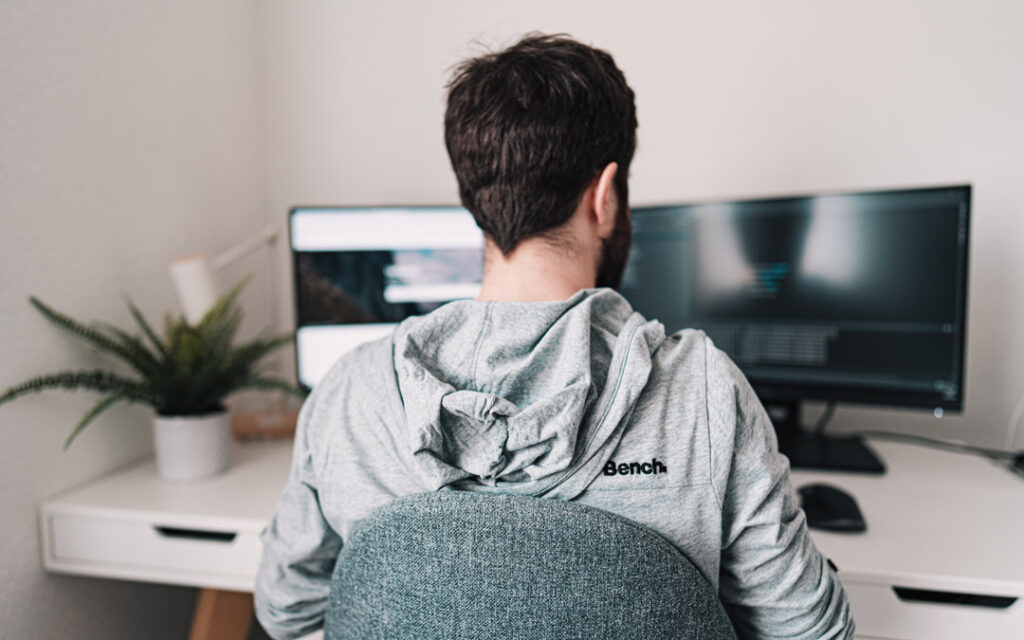
On the telephone the other day, my friend Ron Matz and I were lamenting the future of our former newsrooms and, by extension, the future of once-crowded offices everywhere that now resemble ghost towns.
Matz came up through radio stations WFBR and WCAO, long silenced by the whims of history, and WJZ-TV’s “Eyewitness News,” whose once-bustling newsroom has been muted by the effects of COVID-19.
That newsroom, once home to veterans such as Jerry Turner and Al Sanders, and Richard Sher and Oprah Winfrey, has carried little but ghostly echoes for the past year as management has attempted daily journalism without exposing folks to the dangers of the pandemic.
Reporters, photographers and even some assignment editors have been kept out of the building. Anchors such as Denise Koch and Vic Carter are allowed in, safely spaced, but even weather reports have sometimes been transmitted from home locations.
So the newsroom itself, where journalists gathered to put stories together, to exchange insights and (best of all) to kibitz extensively, has been essentially empty.
When I talk to the remaining handful of old friends still at The Sun, I hear similar woes. Everybody’s been working from home to avoid contamination. One veteran reporter said there are so many vacant desks there now that the empty newsroom looks like a furniture store showroom.
What Matz and I lamented was the loss to all those who once found homes in such places. We worked there, yes. But we also got our primary educations there, and broadened ourselves by mixing with so many different kinds of people, and made lifetime friendships, and found ourselves joyfully engaged despite the pressures of the day.
That’s what’s vanishing from workplaces everywhere now.
There are once-crowded office buildings all over America that have been emptied out because of the pandemic. The companies that once occupied those buildings have managed, in spite of it, to go on functioning. And the people running those companies are asking, “Why not keep going like this?”
That’s the computer age for us. Where we once worked at computers in offices, we’ve adapted to working at computers at home.
All that we’ve lost is each other.
Under such conditions, companies may find that their bottom economic lines are holding up. But where’s the companionship that once accompanied those jobs? Where are the shared professional insights? Where’s the shared laugh?
Are they all forever minimized by the bottom line, as company CEOs ask themselves, “Why am I paying big rent for office space every month if our sales figures stay high?”
As the New York Times reported recently, “What had seemed like a short-term inconvenience is now clearly becoming a permanent and tectonic shift in how and where people work. … Some of the country’s largest cities have yet to see a substantial return of employees, even where there have been less stringent government-imposed lockdowns, and some companies have announced that they are not going to have all workers come back all the time.”
I got my professional newspaper start at a place called The News American, where I spent a full decade. Then I went to The Sun, where I spent nearly 30 years. I used to tell people that working at The News American was like working in a friendly neighborhood bar, and working at The Sun was like working for the Bar Association.
I learned different lessons at each place, and I learned from different kinds of people at each place. But I learned. My colleagues knew stuff that I didn’t know, and maybe I shared some stuff they hadn’t known.
That’s what Ron Matz and I were lamenting the other day. We learned more working in newsrooms than we ever did sitting in some schoolroom attempting to parse irregular French verbs.
If we’ve all learned anything about ourselves over the past year, it’s that we don’t like feeling alone and isolated. TV newsrooms will reopen one day. But for millions of people, when this pandemic finally ends and so many are still working from home, won’t they continue to cope with the dreary isolation that should have vanished with the plague itself?

A former Baltimore Sun columnist and WJZ-TV commentator, Michael Olesker is the author of six books. His most recent, “Front Stoops in the Fifties: Baltimore Legends Come of Age,” was reissued in paperback by the Johns Hopkins University Press.
What does it mean to be fully present with each other and the sacred, asks Maryland-born cultural anthropologist Alanna E. Cooper.

As millions mourn the passing of Stephen Colbert from the airwaves, Michael Olesker looks back on the "institution" of late-night TV.

As he gets ready to leave for California, Rabbi Daniel Cotzin Burg looks back on his time in Baltimore and his 10 years writing for Jmore.