In the summer of his 93rd year, Jerry Phipps has written his first book. He’s now living down in Florida, where he plays golf regularly and says his goal is to break 100 on the day he turns 100 years old.

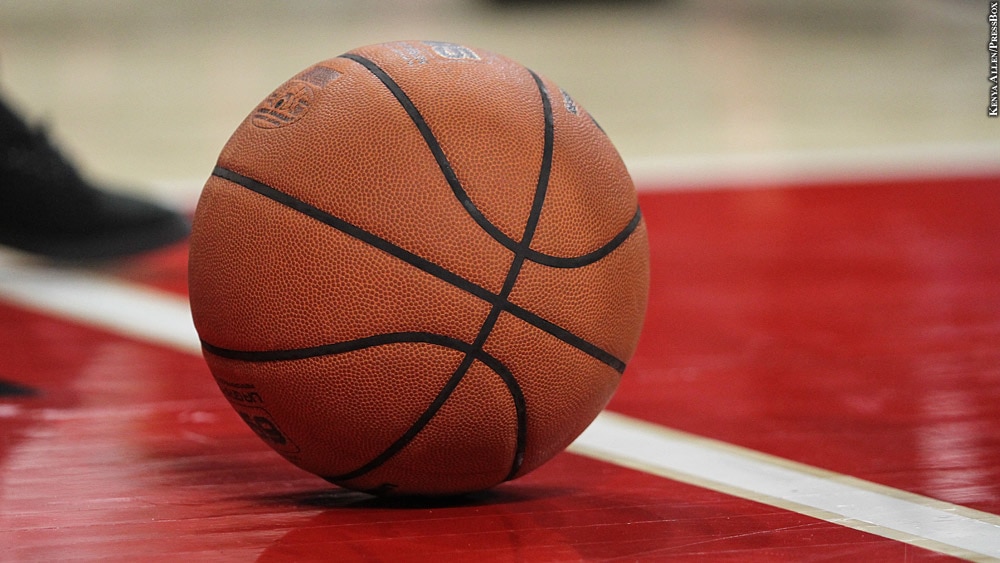
But his book’s about basketball, the sport that made him a coaching legend back here in Baltimore.
Over much of the 1960s, he coached Baltimore City College to a bunch of Maryland Scholastic Association championships and, at one point, won 40 straight games — and then lost the streak when he disciplined a star player to teach him a lesson.
Over 14 seasons, Phipps coached the Community College of Baltimore (now known as Baltimore City Community College) team to 360 victories, 12 league championships and five regional community college titles. Over his career, he logged more than 600 wins at the high school and college level.
Why the turn, this late in the fourth quarter, from ballgames to book-writing?
For the answer to that question, Phipps turns to the late Nobel Prize-winning author Toni Morrison, who said, “If there is a book that you want to read, and it hasn’t been written yet, then you must write it.”
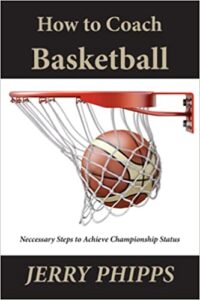
His new book is called “How to Coach Basketball: Necessary Steps to Achieve Championship Status” (La Maison Publishing), and it’s got plenty of game stuff in it. But there are life lessons, too, including that incident back at City College when Phipps benched his star player after the Collegians had logged back-to-back 20-and-0 seasons.
At a track meet the spring after the second undefeated season, Phipps spotted his “all-star caliber player consuming alcohol with some friends.” The next day, Phipps called the kid into his office.
Phipps said he wouldn’t kick the player off the team, but he was “on probation with me. … When practice began the next season, he’d be required to practice with the team as usual. But, when the season began, he would not dress for games. He would sit on the bench in street clothes and support his teammates. The probation would last as long as I determined.”
In City’s opener the next winter, they lost a double-overtime thriller by two points. That ended the 40-game win streak, but it taught the player (and his teammates) a lesson beyond basketball.
The kid was allowed to rejoin the team five games into the season. City went 17-and-3 that year. More important than that, he and Phipps bumped into each other years later, and the player told Phipps, “You probably saved me from myself.”
There’s another fellow who says the same thing — Leonard “Boogie” Weinglass, who says Phipps “turned my life around.” Weinglass played basketball at City and was the team’s leading scorer.
“Jerry Phipps told me, ‘You play by my rules, meaning no cutting class, no missing practices and no getting into trouble, or you’re off the team,’” recalled Weinglass, now 79. “He gave me discipline I never had before that.”
Weinglass led the team in scoring and went on from a tough adolescence to start the Merry-Go-Round clothing chain, which once had 1,500 stores across the country and eventually made Weinglass a multi-millionaire and a remarkable philanthropist.
For Phipps, such stories are the real victories.
“You try to teach some life skills,” he said the other day. “And then, when the kids make something of their lives, you’re thankful if you gave ‘em a little help along the way.”
He gave that help to hundreds of kids who left basketball behind but held onto some bigger lessons about life.

A former Baltimore Sun columnist and WJZ-TV commentator, Michael Olesker is the author of six books. His most recent, “Front Stoops in the Fifties: Baltimore Legends Come of Age,” was reissued in paperback by the Johns Hopkins University Press.
What does it mean to be fully present with each other and the sacred, asks Maryland-born cultural anthropologist Alanna E. Cooper.
As millions mourn the passing of Stephen Colbert from the airwaves, Michael Olesker looks back on the "institution" of late-night TV.

As he gets ready to leave for California, Rabbi Daniel Cotzin Burg looks back on his time in Baltimore and his 10 years writing for Jmore.