

This article is part of Jmore’s October 2021 Innovations in Health Care issue.
Children are not “mini-adults,” and that’s especially true when it comes to their medical care.
The Children and Adolescent Psychiatry Unit at University of Maryland Children’s Hospital has taken that into account with its recently opened 16-bed, state-of-the-art unit. It’s the first in the state designed both architecturally and clinically to deliver “trauma-informed” care for children from ages 5 to 17.
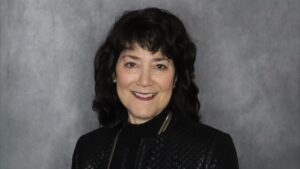
“The new unit is an essential component of the continuum of care we offer to youth experiencing mental distress,” says Dr. Jill A. RachBeisel, chief of psychiatry at University of Maryland Medical Center and associate professor and chair in the Department of Psychiatry at University of Maryland School of Medicine. “They are not alone in their struggle. We are here to help them recover and thrive, whether they need crisis stabilization at the new inpatient unit or ongoing counseling at our outpatient psychiatry clinics.”
Psychiatric care in the new unit addresses a wide range of conditions including disorders related to trauma, psychosis, mood, anxiety, autism, intellectual disability and attention deficit hyperactivity.
Dr. RachBeisel says the approach of the new unit is to give young patients the choices, control and calm environment that are taken from them in what are often trauma-filled environments or events.
“When a child or adolescent experiences a mental health crisis that requires inpatient care, they are, in effect, ripped away from all that is familiar to them,” says Dr. RachBeisel, observing that this is akin to being re-traumatized. “Trauma-informed care leads to both better care and better results.”
Dr. RachBeisel notes that in urban environments such as Baltimore, young people are at higher risk for experiencing abuse, neglect, violence, loss of an intact family structure and substance abuse problems.
“We want to give these youngsters a physical space that is warm and welcoming where they can feel safe, express themselves and have control over their environment,” she says.
Among the innovative features of the new nature-themed, therapeutic unit are an immersive “sensory room” that helps the young patients regulate their own emotions; audio-control switches in patient rooms so they can decide which sounds they hear; and lighting that changes during the day to mimic our natural circadian rhythm.
It’s not only the physical environment that has been designed to provide trauma-informed care but also every facet of treatment and recovery.
Dr. RachBeisel explains that to maximize staff and patient interaction, the unit features “on stage” and “off stage” areas, so patient care is the focus in treatment areas while other work, like documentation, phone calls and team conversations, happen “off stage.”
“When the staff is with the kids, they are ‘right there’ with them, interacting with them constantly,” she says.
The average stay in the new unit is five to six days, with a focus on managing reactions, developing coping skills, and learning to solve problems. Once the youngsters are discharged, school transition specialists work to help connect patients and their families to vital services and peer support.
“There’s a huge need for this kind of care,” says Dr. RachBeisel, noting that the pandemic has only exacerbated the importance of mental health care for youth. Indeed, the Centers for Disease Control and Prevention has reported that mental health-related emergency department visits rose sharply in 2020, the first year of the pandemic, as compared to 2019.
Similarly, the nonprofit Mental Health America screened more than 1.5 million people in September of 2020 and found that the rate of suicidal thoughts was highest among youth.
If you or a family member are in need of psychiatric care, call the Psychiatric Assessment and Referral Center (PARC) at 410-328-6231.
A former Baltimore resident, Carol Sorgen is a freelance writer based in Portland, Oregon.

A Norfolk native, Frankle worked at Sinai Hospital, Camp Airy and privately for five decades.
Esther Greenberg, Leora Match, Kathlleen St. Villier Hill and Ben Gershowitz will be recognized for the contributions to the community.

From AI to weight-loss medications, here are the ways that breast cancer diagnoses and treatments are changing.
For more than five decades, Dr. Rosenstein was known by local families as a trusted and caring physician for their children.