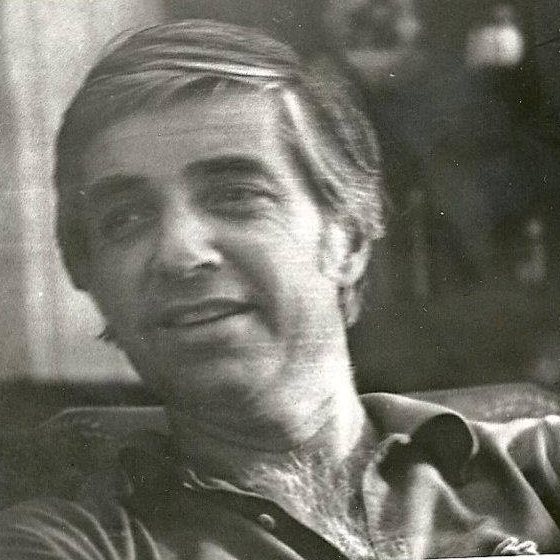
Bill Tanton was one of the lucky few who wrote sports columns back when newspapers still stood tall and so did Baltimore sports teams.
He wrote for a newspaper called The Evening Sun, which no longer exists. He wrote about two local teams that no longer exist, called the Colts and the Bullets, and a team called the Orioles which still exists but brings little of the joy they once evoked.
And now, I see by the newspaper obituary columns that Tanton has left us, too, at 90, after several decades in the newspaper business and a few decades more in the lacrosse world.
He arrived in the newspaper business long before anyone had ever imagined the colossus called a Super Bowl, long before baseball players conceived of a unionized walkout and long before basketball became a global phenomenon.
He wrote about the Orioles during that 20-year stretch when they had the winningest record in all of major league baseball — an era that extended from Brooks and Frank,Boog and Palmer, to Eddie and Flanny and Cal.
He wrote about the Bullets when Wes Unseld and Gus Johnson were soaring above the rim and setting off fast breaks to Earl Monroe, who electrified crowds at the place we used to call the Civic Center.
And he wrote about the championship Colts teams starting when John Unitas was throwing to Raymond Berry and Lenny Moore, and finishing when Bert Jones and Lydell Mitchell and the “Sack Pack” were creating new legends.
Lucky guy, that Tanton.
Lucky to be covering winning teams with colorful characters, lucky to be writing for one of his hometown papers, lucky to have the best job any newspaper could offer — writing a column.
For the uninitiated, there’s a difference between a reporter and a columnist. A reporter says: Here are the facts, given as objectively as I can write them down. A columnist says: Here are the facts — and here’s my opinion about them.
How lucky for Tanton. He got to tell us the facts and his opinion for so many years when things were going so beautifully around here.
He came from a working class background but got himself a first-rate education and made the most of it: St. Paul’s School (where he played three sports), Johns Hopkins University (where he played lacrosse) and then Columbia University for grad school.
That kind of background practically groomed him for a spot at The Evening Sun. And his timing was right, too.
The guy who preceded Tanton as The Evening Sun’s sports editor and columnist was Paul Menton, who seemed to have been there since the invention of linotype. The great line about the self-important Menton was that he wouldn’t talk to anybody below a general manager. This meant he wrote one of the most boring columns in all of America.
Tanton brought fresh air to the column. He understood the games, and he understood the hometown folks who were his readers. He showed up at ballgames, and he wasn’t afraid to ask delicate questions, and his column had immediacy and insight.
Not everybody liked it. One autumn, when he wrote that the Colts looked like a bunch of contented under-achievers, a big offensive lineman slammed him up against a wall to intimidate Tanton.
Bill didn’t write about the incident – but he didn’t let it intimidate him, either. He knew the job had its pitfalls. But he also knew it gave him a front-row seat at the gladdest of happenings.
He got to cover Baltimore sports when the winning was steady and the job of newspaper sports columnist was about as good as life got.
A lucky guy, Bill Tanton.
Michael Olesker’s newest book, “Boogie: Life on A Merry-Go-Round,” will be published this spring. It’s the life story of Baltimore legend Leonard “Boogie” Weinglass, an original “Diner” guy who grew up to create the Merry-Go-Round clothing chain and contribute millions to charity.
What does it mean to be fully present with each other and the sacred, asks Maryland-born cultural anthropologist Alanna E. Cooper.
As millions mourn the passing of Stephen Colbert from the airwaves, Michael Olesker looks back on the "institution" of late-night TV.

As he gets ready to leave for California, Rabbi Daniel Cotzin Burg looks back on his time in Baltimore and his 10 years writing for Jmore.