We say goodbye today to Jerry Ceppos, a gentle soul who believed in the importance of America’s daily newspapers even as those around him were insisting the whole business was over.
We lost Jerry over the weekend. He was 75. The obit in the San Jose Mercury News said the cause of death was sepsis, brought on by an infection. The obit also said he’d been editor of that newspaper and helped bring it into the era of digital media.
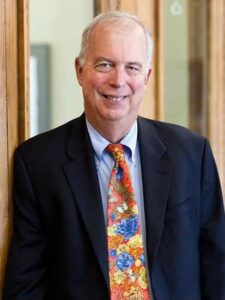
The digital part sounded a little jarring, since Jerry was part of that last generation to come of age when newspapers were still the big game in journalism, and nobody gave a thought to the computers that would one day change everything.
I met Jerry when he was a kid out of Silver Spring’s Northwood High School. He was a self-described geek, a shy, quiet, self-effacing fellow. But he became editor of The Diamondback, the daily student newspaper at the University of Maryland, College Park.
He took over the paper as the treacherous late 1960s were arriving, and all the old rules of life in America — and in journalism — were being rewritten at a feverish pace.
In his gentle way, he helped take the paper into the real world, past its traditional stock coverage of Homecoming games and fraternity rituals into that fevered era marked by riots on college campuses, war in Vietnam, political assassinations, racial antagonisms, drugs and vast cultural upheaval.
I was writing sports for the paper. I wasn’t mature enough, or informed enough, to take myself beyond writing about simple, safe, traditional ballgames, where the rules were set and unchanging. But Jerry would give me a little push here and there.
“Come on,” he’d say. “I need you to look into a little something. You can do it.” He had more confidence in me than I had in myself.
The Diamondback had some terrific talent in that frantic little era, people like Ira Allen and Annie Groer and others who brainstormed in the newsroom late into the night when other students were hitting the books (or the local bars). Ira later covered the White House for UPI. Annie wrote a feature column for the Washington Post.
Jerry advanced through the ranks at several different papers before landing in San Jose. He helped the Mercury News win a couple of Pulitzer Prizes. But he took special pride, as executive editor, in tripling the racial and ethnic diversity of the staff and creating new beats to cover minority communities previously overlooked.
Later, he was the top news officer of the Knight-Ridder chain, which was then the second largest publisher of newspapers in America.
When he retired from newspapering, he became dean of the journalism school at Louisiana State University.
An old Diamondback pal, Margie Solomon Barrie, and I phoned him there a few years back, when American newspapers were already in freefall.
“Don’t tell me,” I said, “that these college kids think they’re gonna find newspaper jobs when they graduate?”
“No,” Jerry said sadly. “They don’t even know newspapers exist.”
“Where do they think they’re gonna work?” I said. “TV news?”
“No,” he said, “they don’t even watch TV news.”
“Well, how do they think they’re gonna make a living?” I asked.
“Blogging,” he said. “They think they’ll make a living blogging.”
The newspaper game as we once knew it was about over. But Jerry Ceppos was there for its last hurrah, which lasted for several decades. And this gentle, modest man was a powerful presence.
Michael Olesker’s newest book, “Boogie: Life on A Merry-Go-Round,” was recently published by Apprentice House. It’s the life story of Baltimore legend Leonard “Boogie” Weinglass, an original “Diner” guy who grew up to create the Merry-Go-Round clothing chain and contribute millions to charity.
What does it mean to be fully present with each other and the sacred, asks Maryland-born cultural anthropologist Alanna E. Cooper.
As millions mourn the passing of Stephen Colbert from the airwaves, Michael Olesker looks back on the "institution" of late-night TV.

As he gets ready to leave for California, Rabbi Daniel Cotzin Burg looks back on his time in Baltimore and his 10 years writing for Jmore.