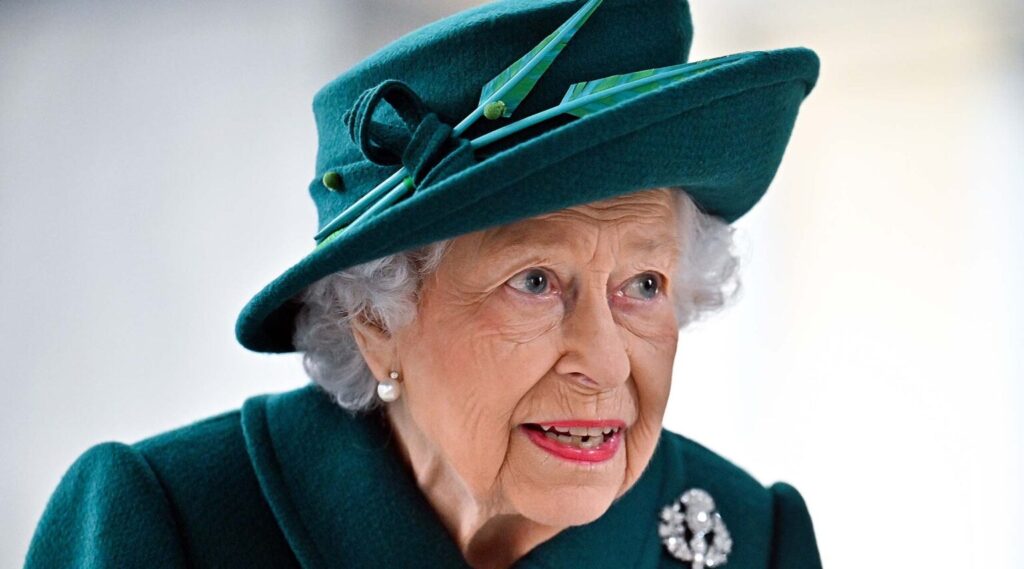
On that summer evening in 1991 when Queen Elizabeth II of England came to Memorial Stadium, to watch the Orioles play the great American game of baseball, the classic Bawlamer moment arrived when an O’s fan in an upper deck seat behind home plate gazed down upon the festivities and hollered:
“Take off that hat, queenie, we can’t see dem O’s,” a wisecrack implying one of the queen’s famous wide-brimmed hats was blocking all the pre-game action.
Apparently unnoticed — at least by the fan in the upper deck — the queen was, on this particular evening, hatless.
Well, have another Natty Boh, pal, and never mind.
As the queen goes to her grave, at 96, after seven decades as Britain’s monarch, it’s worth pointing out that we’re respectful enough of royalty around here but not precisely awed by it.
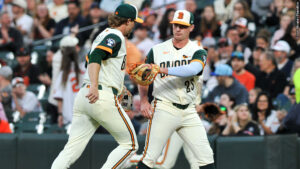
One example: it’s general protocol that commoners don’t shake hands with the queen. But in pre-game ceremonies that evening, as Elizabeth II stood in the dugout next to President George Bush I, a receiving line of Orioles filed past her, and each player happily and unself-consciously reached out to shake her hand.
The queen seemed fine with it. She wore gloves despite the summer heat. Perhaps she’d heard about all baseball players wearing gloves and wished to be in style.
Among the O’s greeting the queen were Cal Ripken Sr., Cal Ripken Jr. and Billy Ripken. In a clip WJZ ran over the weekend, former Mayor Kurt Schmoke, who was there, recalled, “The queen innocently asked, ‘Does one have to be named Ripken to join this team?’”
No, but it didn’t hurt.
We respectfully mourn the queen’s passing, but we have emotional distance. On the evening she came to Baltimore, we could appreciate her as the enduring symbol of a great nation but wonder why any nation was still nurturing kings and queens. The royal family seemed a royal anachronism.
But Elizabeth seemed carved out of a different time for reasons beyond royalty. She was a public figure who never gave up her privacy. In America, our political figures will do anything to get our attention.
There’s an old story about John F. Kennedy, campaigning for the 1960 Democratic nomination for president against Hubert Humphrey.
“There are certain things Hubert is willing to do for votes, and I am not,” Kennedy said. “And one of them is bobbing for apples.”
Queen Elizabeth never had to run for office, so she had that advantage. But whatever urges she had for public approval, she kept to herself. And, in so doing, she kept her dignity, which became the lasting image of modern Great Britain.
She did it for 96 years of her life, and 70 years sitting on the throne of England, and in other places, including a baseball dugout in Baltimore where a bunch of sweaty ballplayers reached out to shake hands and some guy in the upper deck offered a Bawlamer hello.
Michael Olesker’s latest book, “Boogie: Life on A Merry-Go-Round,” was recently published by Apprentice House. It’s the life story of Baltimore legend Leonard “Boogie” Weinglass, an original “Diner” guy who grew up to create the Merry-Go-Round clothing chain and contribute millions to charity.
What does it mean to be fully present with each other and the sacred, asks Maryland-born cultural anthropologist Alanna E. Cooper.
As millions mourn the passing of Stephen Colbert from the airwaves, Michael Olesker looks back on the "institution" of late-night TV.

As he gets ready to leave for California, Rabbi Daniel Cotzin Burg looks back on his time in Baltimore and his 10 years writing for Jmore.