Breaking from Tradition: the History of Baltimore Hebrew Congregation’s Building
Baltimore Hebrew Congregation’s building was conceived as an artwork unto itself.
Read More
|
|
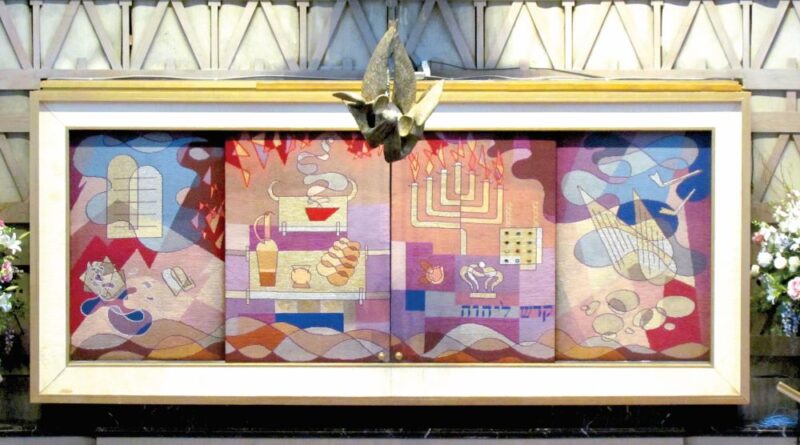 This needlepoint tapestry covering the doors of Baltimore Hebrew's Torah ark was sewn by almost 50 women from the congregation. (Provided photo)
Baltimore Hebrew Congregation’s building was conceived as an artwork unto itself.
Read More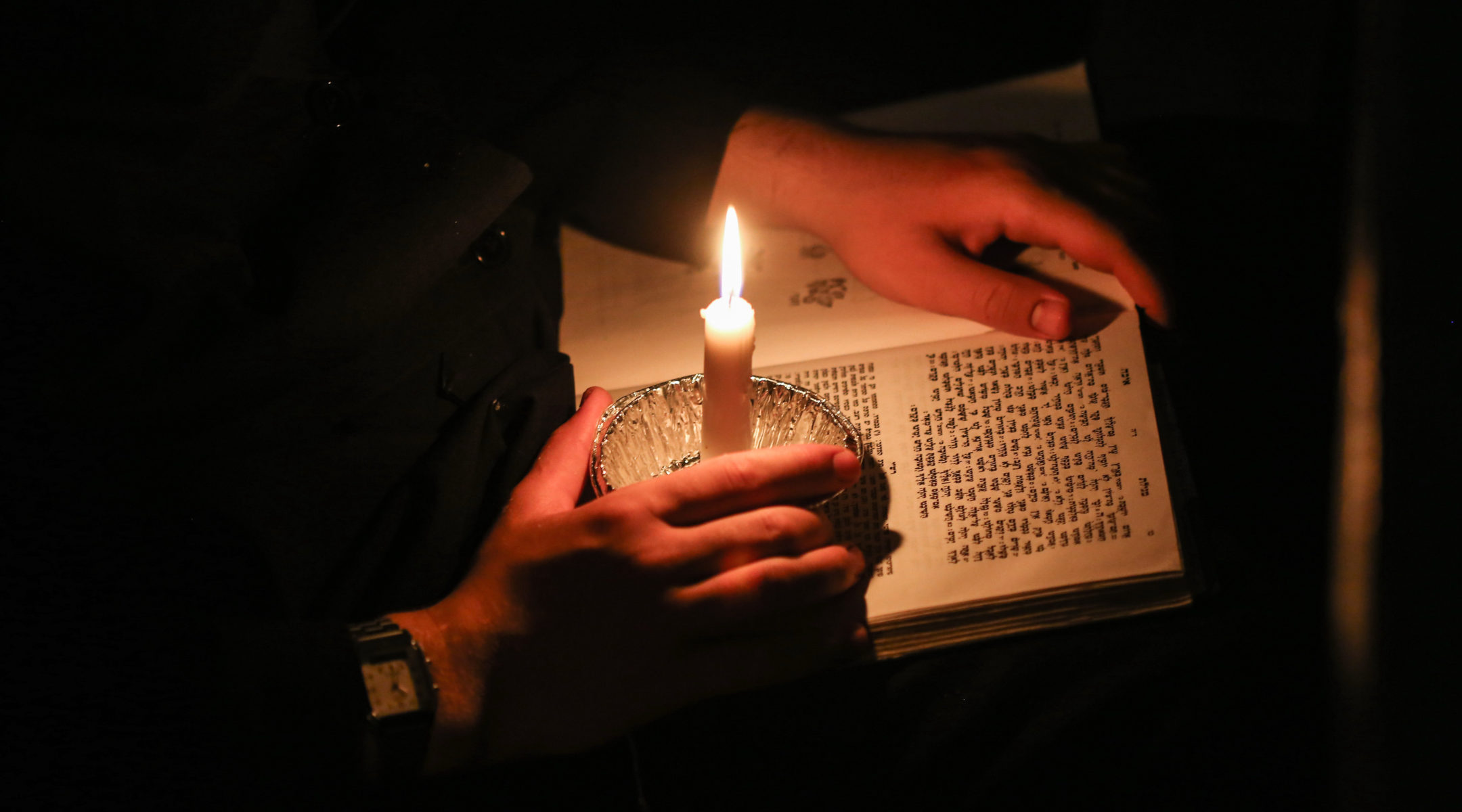 On Tisha B'Av, the saddest day on the Hebrew calendar, Jews remember the destruction of the Holy Temple in Jerusalem by reading from the Book of Lamentations.
(Photo by Yaakov Lederman/Flash90, via JTA)
On Tisha B'Av, the saddest day on the Hebrew calendar, Jews remember the destruction of the Holy Temple in Jerusalem by reading from the Book of Lamentations.
(Photo by Yaakov Lederman/Flash90, via JTA)
The goal of the day of mourning, observed July 26-27, is to induce a mindset of appreciating what was lost with the destruction of the Temple, writes Rabbi Shlomo Zuckier.
Read MoreThe Hamakom blessing not only provides us with comfort in knowing God is with us but helps perpetuate the memory of a loved one, writes Rabbi Dr. Eli Yoggev of Beth Tfiloh Congregation.
Read MoreThe longtime Howard County Jewish leader started July 10 at the Conservative congregation in Columbia.
Read More Baltimore Hebrew congregant Helene H. Waranch presents a congregational Torah scroll to UNIVRI president Jorge Crestani at a ceremony in Jerusalem. (Photo courtesy of Helene H. Waranch)
One of Baltimore Hebrew Congregation’s Torahs was recently repaired and transported to the Israelite Union of the Itajai Valley.
Read MoreShavuot is not only the culmination of Passover, but (also) its subversion, writes Shaul Magid.
Read MoreDuring the Counting of the Omer, Rabbi Dr. Eli Yoggev offers a weekly series on his reflections about Ethics of the Fathers.
Read MoreRabbi Shlomo Zuckier explores the rationale behind the Tikkun Leil Shavuot ritual.
Read MoreDuring the Counting of the Omer, Rabbi Dr. Eli Yoggev offers a weekly series on his reflections about Ethics of the Fathers.
Read MoreDuring the Counting of the Omer, Rabbi Dr. Eli Yoggev offers a weekly series on his reflections about Ethics of the Fathers.
Read More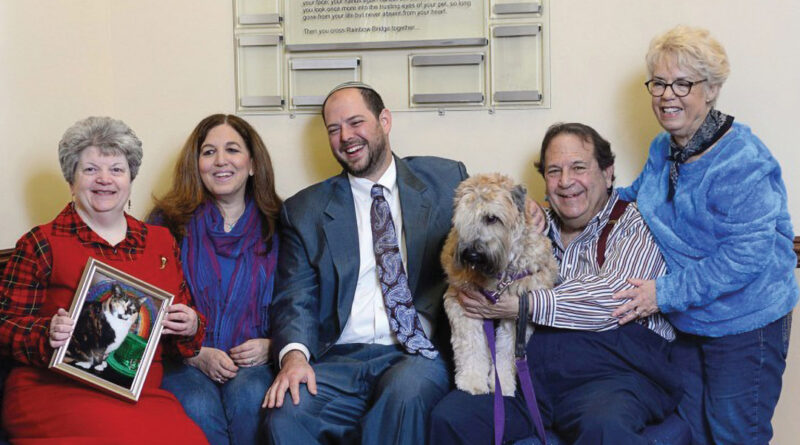 Rabbi Yerachmiel Shapiro (center): “When I’m on the bimah, I’m in the zone. I’m the person everyone’s looking toward to help them. If I’m not in a spiritual place, I can’t do that. (Provided photo)
With so much on their plates, how do local rabbis and cantors recharge their spiritual batteries?
Read More