

Fear. When a diagnosis comes with devastating news about ourselves or a loved one, when we do not trust our leaders or the direction they are headed, when we find ourselves in a crisis of our own making or someone else’s or no one’s in particular, fear can enter our bodies, our minds, our souls. It can whisper words of revenge, hatred, isolation. Fear can scream the need for walls and weapons and war.
Fear is not caution. Caution keeps us from driving without a seatbelt, grabbing a hot pan from the oven, jumping off the edge of a cliff. Fear tells us it’s keeping us safe, but in fact it makes us more vulnerable. It feeds on its own energy, telling us that there is more and more to fear.
The Chasidic master Rabbi Nachman of Bratslav taught, “All the world is a very narrow bridge.” A popular Jewish song is based on his teaching. “Kol ha-olam kulo, gesher tzar m’od.” The world can be a precarious place, a very narrow bridge, and our path through it can feel unsteady at best. In the song, the next verse goes, “The most important thing is not to be afraid at all.” But that is not what I think Rabbi Nachman meant.
Because the Chasidic masters didn’t write down their teachings, they were passed down imperfectly, as in the game of telephone. In a more accurate version, Rabbi Nachman uses the verb, “Do not make yourself afraid.” In Hebrew, the difference is only a couple of letters. In meaning, the difference is enormous.
Rabbi Nachman does not suggest that there is nothing to fear. We wouldn’t believe him if he tried. But he cautions that the most important thing is not to make the fear more than it needs to be, not to let it drive our actions, not be consumed by it.
As children we instinctively know in our fear to reach outside of ourselves, for a hand, a calm word from a wise elder, or a friend. At night, if we were afraid, perhaps our parents sang to us, helped us say the Shema, or tucked us in with a blanket or stuffed animal.
As adults, we live in a world that has increasingly traded online community for in-person contact. The benefits of a virtual world are many, but an iPhone does not provide the same comfort as a hand of flesh and blood. As fear rises within us, Jewish tradition teaches us to reach out in person.
The concept of a minyan, the minimum of 10 adults needed for a service, says that being alone is not how we find comfort, meaning and purpose. We must find a place where people physically, tangibly come together.
Our ancient Rabbis say when two people come together to study Torah, God’s presence is there. Not one person alone studying, but two together. (Pirkei Avot 3:2)
Those Rabbis also suggest that when we are in need, we should “Find yourself a teacher and make for yourself a friend.” (Pirkei Avot 1:6)
The world is a very narrow bridge and life is fraught with difficulty and pain. Fear will come, but it does not need to define us. It does not need to keeps us shackled or teach us to build higher and higher walls. As we walk the narrow bridge of life, Judaism counsels a way to keep from making ourselves more afraid. We can reach out for community, a teacher, a friend and with them by our side, take courage from our rich sacred heritage.
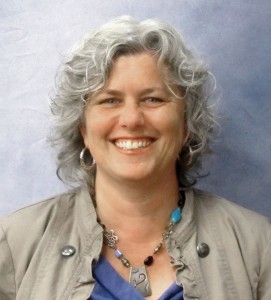
Rabbi Elissa Sachs-Kohen serves Baltimore Hebrew Congregation.
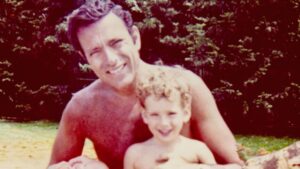
Filmmaker Justin Schein looks at wealth and inequality through the very real story of his late father.

This year’s Community Block Party at the JCC of Greater Baltimore will feature classic cars, giant inflatables, games, a rock-climbing wall and roller skating rink, and strolling entertainers.
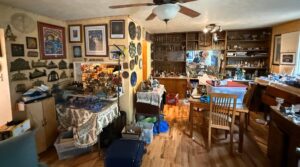
For 35 years, the late Deborah Brodie, aka Bubbie Cookie, amassed a collection of over 200 Jewish ritual objects, which she used to teach her Hebrew school students with special needs.
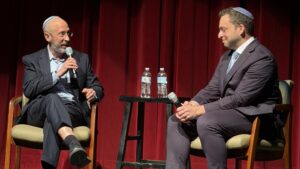
In a recent talk at Beth Tfiloh, Elisha Wiesel called on Jews to cultivate joyfulness in their faith and sense of community.