
Remembering a true rock ‘n’ roll pioneer who hailed from Baltimore’s Jewish community
Charm City natives Ellen Naomi Cohen (aka “Mama Cass” Elliot) and Jerry Leiber (co-writer of such seminal hits as “Hound Dog,” “Yakety Yak” and “Jailhouse Rock”) have long been recognized for their profound impact on popular music.
But another Jewish Baltimorean who’s far from a household name greatly surpassed them in cultural influence, according to some music experts.
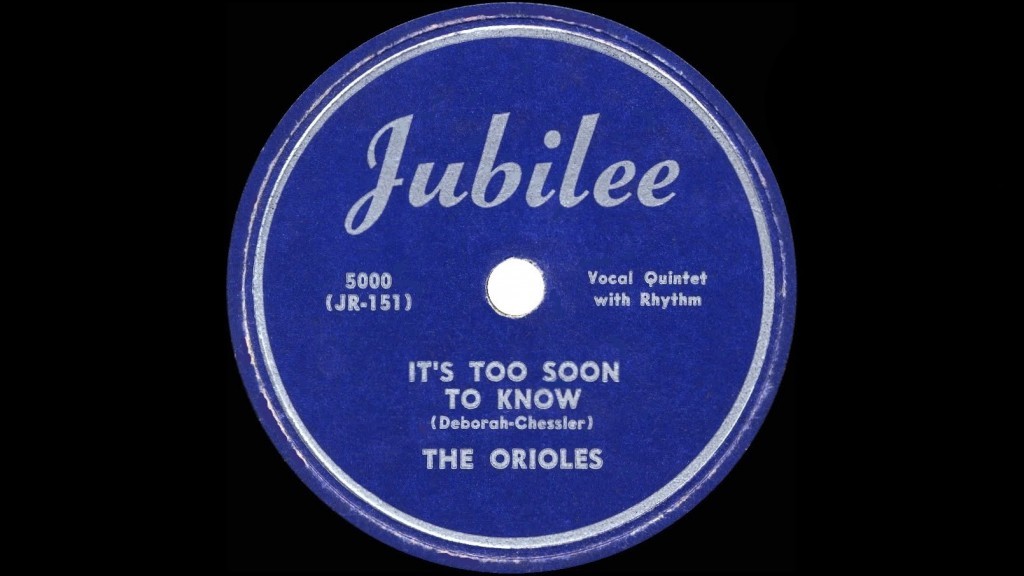
In 1948, Deborah Chessler wrote the song “Too Soon To Know.” As recorded by the African-American doo-wop group the Orioles, the tune can plausibly be called “the very first rock and roll record,” according to renowned rock historian Greil Marcus.
Not only that but the partnership between Chessler and the Orioles “created modern rhythm and blues” and led directly to “the worldwide transformation of popular music through rock and roll,” Marcus writes.
So who was Deborah Chessler and how did this partnership come about?
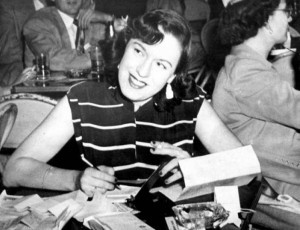
Like so many other local Jews of her generation, Shirley Chessler (she used “Deborah” professionally) grew up in Northwest Baltimore and attended Forest Park High School. After graduating, she worked in a shoe store by day and spent her nights visiting the city’s live music venues, soaking up influences and trying to sell her songs.
She frequented both black and white clubs, but was drawn especially to African-American acts. As she later noted, “My songs were more in the black vein.”
One day, a friend called to suggest that she listen to a vocal group called the Vibranaires — in fact, they were ready to sing for her over the phone. The sound she heard on her end of the line “was the sound she had been hearing in her head,” music critic Eugene Chadbourne writes. Not only did Chessler offer to pen songs for the group, she soon became its manager.
The newly renamed Orioles released “Too Soon to Know” as their first single. “While other black vocal groups such as the Mills Brothers and Ink Spots sang for white audiences,” Chadbourne writes, the Orioles aimed “squarely at the urban black audience.”
The song reached No. 1 on the “race charts” and, surprisingly, No. 13 on the pop charts. It represented a new sound for mainstream radio.
“No one knew what to make of it, except that it stopped time and it stopped hearts,” contends Marcus.
Quickly attracting imitators, the Orioles heavily influenced the emerging style of music known as rhythm and blues as it spread beyond the African-American community and into the mainstream.
It’s not surprising that R&B songwriters such as Deborah Chessler and Jerry Leiber came out of Baltimore’s Jewish community. Jews and blacks lived in adjoining neighborhoods, which led to contact and familiarity despite segregation. Many Jewish shopkeepers catered to African- Americans, and some families lived above their stores in black neighborhoods.
As manager, Chessler pushed to bring commercial success to the Orioles without compromising their sound, a difficult task in a music industry rife with racism. She landed the group a record contract and wrote many hits from 1948 to 1954. Meanwhile, the Orioles toured extensively — accompanied by Chessler and her mother, Irene. The entourage made a curious sight, especially in the South.
The Orioles’ legacy was acknowledged with their 2009 induction into the Rock and Roll Hall of Fame, with the 86-year-old Shirley Chessler Reingold in attendance. She died in 2012.
Her story inspired a musical, “Soul Harmony: The Story of Deborah Chessler, Sonny Til, and The Orioles,” which debuted last year in Portland, Ore. “Soul Harmony” bills itself as “an original musical about the music that gave birth to … a new genre of music that would ignite a generation.”
Since the roots of rock were many, this claim is a bit suspect. Yet there can be no doubt that the young Jewish shoe store clerk from Baltimore deserves an important place in the history of American popular music.
Deborah R. Weiner is co-author of “On Middle Ground: A History of the Jews of Baltimore” to be published by Johns Hopkins University Press. She served for many years as research historian at the Jewish Museum of Maryland.

The BCO, founded in 1984, will perform the works of Frank Zappa, Beethoven, Mason Bates and Karena Ingram.

Led by local Israel-American cellist Amit Peled, the Mount Vernon Virtuosi aims to inspire people beyond musical enjoyment.

Container vegetable gardening is a terrific option for people with limited space and/or time. Rebecca Brown and Norman Cohen share some tips.

Filmmaker Justin Schein looks at wealth and inequality through the very real story of his late father.