
Families in danger, desperate to flee their homeland. A climate of fear and xenophobia in the United States and Europe. Popular right-wing radio commentators fanning the flames of hatred. Politicians using immigrants as scapegoats. Federal laws designed to bar undesirable aliens.
Sound familiar? This was the situation German Jews faced in the 1930s as they came under attack from the Nazi regime. Until World War II began, they were free to leave Germany; the problem was finding somewhere to go.
Many sought refuge in America, but faced great obstacles. Much anti-foreign vitriol in the U.S. targeted Jews, who were blamed for everything from the Depression to social unrest. The climate prevented any loosening of immigration restrictions. Nevertheless, with the aid of American Jewry, some 95,000 Jews arrived from Nazi-occupied Europe before World War II, most settling in New York.
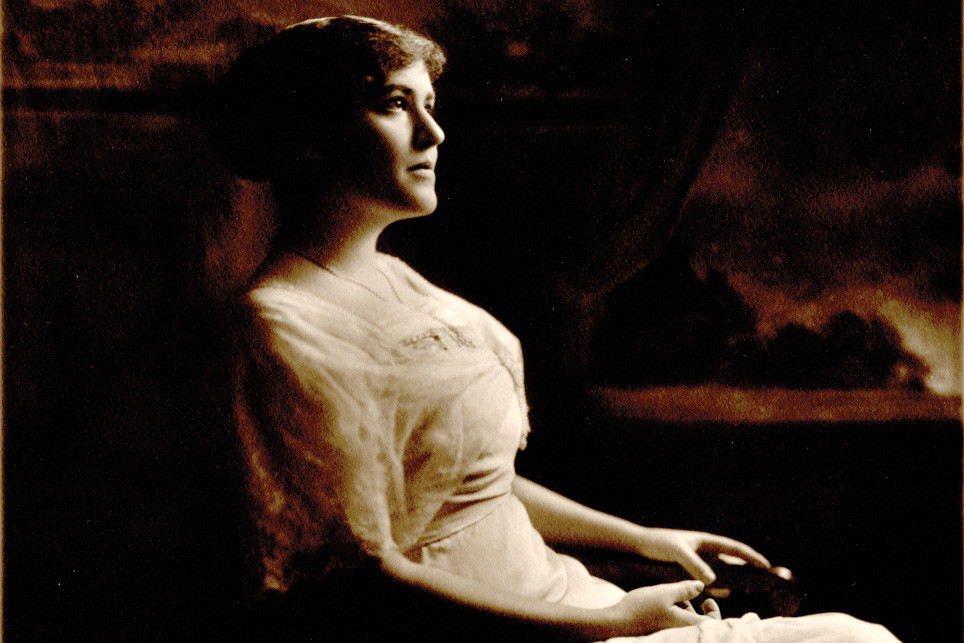
Jewish Baltimoreans helped more than 3,000 refugees settle in here. Individual families sponsored long-lost German cousins; organizations mobilized the resources of the community. Led by the tireless Julia Friedenwald Strauss, the local branch of the National Council of Jewish Women oversaw the communal response.
To obtain scarce U.S. visas, refugees needed affidavits of financial support from American sponsors and assistance in overcoming barriers imposed by an uncooperative U.S. bureaucracy. Strauss and her husband, Myer, personally issued affidavits to many refugees. She also recruited sponsors from among the city’s Jewish elite, including her niece, Eleanor Kohn Levy, who brought over numerous families, from distant cousins to total strangers. The pair spent long hours wading through the bureaucracy on behalf of their German contacts.
After arriving, the refugees had to find work in the midst of the Depression and adjust to new surroundings while recovering from their traumatizing encounter with Nazism. Strauss’s NCJW branch joined with the local Hebrew Immigrant Aid Society and a specially created Associated agency, the Refugee Adjustment Committee, to help newcomers settle in. Given the climate of the times, these groups took pains to keep a low profile. Rumors circulated that prominent Jewish-owned stores were firing Christians to give jobs to Jews recently arrived from Germany.
The NCJW spurred the formation of a local branch of German Jewish Children’s Aid, which resettled some 50 children who came to Baltimore without their parents. While some parents later followed their children across the ocean, others perished in the Holocaust.
The Orthodox community also strove to rescue Jews from Nazism. The recently founded Ner Israel Rabbinical College offered scholarships, room and board, and travel support, enabling dozens of yeshiva students to obtain visas. In 1936, Congregation Shearith Israel, longtime bastion of German Orthodoxy, hired Rabbi Simon Schwab, bringing him over from Ichenhausen, Germany, where a yeshiva he opened had been destroyed by the Nazis.
Refugees arrived through other networks as well. Eminent child psychiatrist Leo Kanner had emigrated from Germany in 1924. From his post at Johns Hopkins Hospital (where he pioneered in the study of autism), he helped some 200 former colleagues escape Nazi territory. Dr. Kanner contacted universities and hospitals nationwide to secure jobs that enabled his colleagues to obtain visas. Around 20 found a place at Hopkins and settled in Baltimore.
Meanwhile, the refugees themselves worked feverishly to bring over relatives and friends left behind, until World War II caused the door to slam shut. They also created a self-help group, the Chevra Ahavas Chesed, whose unofficial leader was Rabbi Schwab, a beloved figure among religious and secular alike. A close-knit refugee community formed around Whitelock Street (in today’s Reservoir Hill neighborhood).
Under a national climate eerily similar to the 1930s, refugees from today’s war-torn regions continue to reconstruct their lives in Baltimore. The were aided by the local affiliate of the International Refugee Committee, founded in 1933 to aid victims of Nazism at the suggestion of the world’s most famous Jewish refugee, Albert Einstein.
Deborah R. Weiner is co-author of “On Middle Ground: A History of the Jews of Baltimore,” to be published by Johns Hopkins University Press. She served for many years as research historian at the Jewish Museum of Maryland.
Along with the local Chapter of the National Council of Jewish Women, Julia Friedenwald Strauss (shown here in 1912) helped to settle German Jews in Baltimore. Photo courtesy of Jewish Museum of Maryland
The BCO, founded in 1984, will perform the works of Frank Zappa, Beethoven, Mason Bates and Karena Ingram.

Led by local Israel-American cellist Amit Peled, the Mount Vernon Virtuosi aims to inspire people beyond musical enjoyment.

Container vegetable gardening is a terrific option for people with limited space and/or time. Rebecca Brown and Norman Cohen share some tips.
Filmmaker Justin Schein looks at wealth and inequality through the very real story of his late father.