
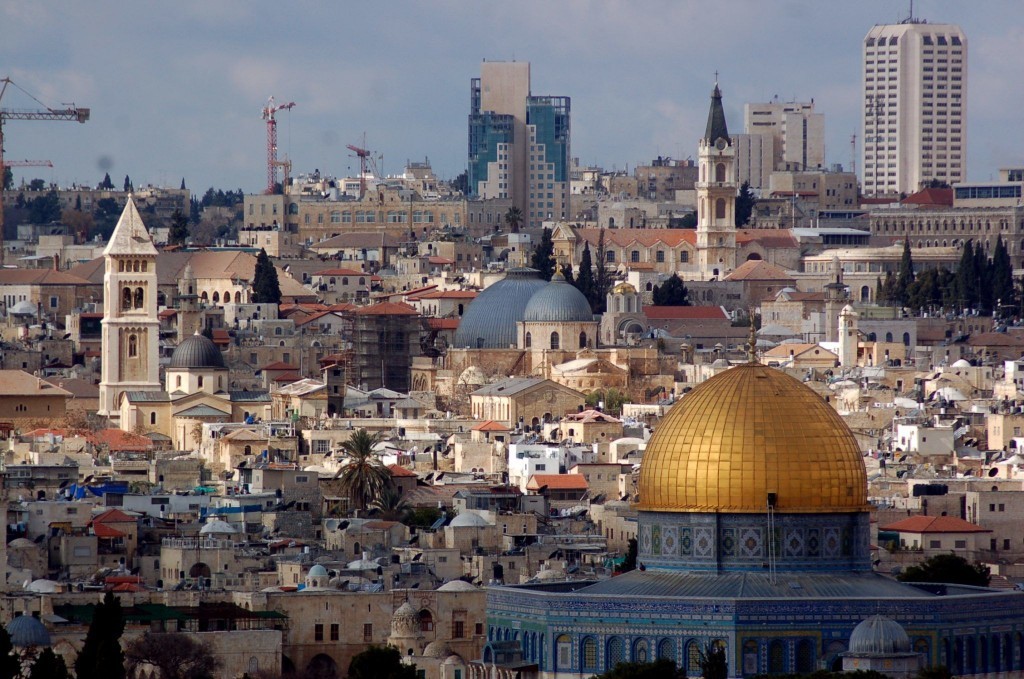
On April 17 at 7:30 p.m., Sen. Benjamin L. Cardin (D-Md.) will moderate a discussion on American foreign policy and Israel’s future. The fifth annual Dahan Lecture – to be held at Pikesville’s Beth Tfiloh Congregation, 3300 Old Court Road – will feature Jeffrey Goldberg, editor-in-chief of The Atlantic, and Bret Stephens, contributing columnist for The New York Times and senior contributor for NBC news.
The “Israel at 70: Behind the Headlines” event will be held in honor of the 70th anniversary of Israel’s founding.
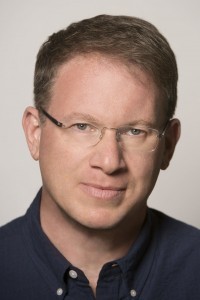
Jmore recently spoke with Goldberg about Israel’s future, the Trump administration’s Middle East policy, race relations and the state of American journalism today. Goldberg, 52, a native of Brooklyn, N.Y., lives in Washington, D.C., with his wife, Pamela Reeves, and their three children.
Jmore: Are the Trump administration’s Middle East policies working, particularly the relocation of the U.S. embassy to Jerusalem?
Goldberg: There is not a particularly coherent policy yet in place. They have bold ideas about a peace plan, but we haven’t seen anything to suggest they’ll have any more success than anyone else has had. My personal view on the American embassy move is that it’s not as a big a deal as everyone says it is. From a personal perspective, putting the American embassy in West Jerusalem makes a lot of sense. It has been part of Israel since 1948 and is the location of the Knesset, the prime minister’s office and the president’s residence. In a weird way, it could be helpful because it convinces Israelis that America understands the role of Jerusalem in its politics and its history.
What about the move’s effect on the Palestinians?
Palestinians are going to make peace with Israel or not make peace with Israel, regardless of whether the American embassy is in West Jerusalem or in Tel Aviv. No Palestinian negotiator believes that Palestinians are going to declare West Jerusalem to be part of Palestine. My hope is that if there’s a two-state solution, the American embassy to Palestine will be in the east part of Jerusalem. That would be the goal.
The Iran deal — fix it, nix it or keep it?
It could always be strengthened, but it’s a reasonable nuclear arms control deal. I don’t think that nixing it will simply allow the Iranians to go pursue nuclear weapons today. Right now they’re following the deal, and they’re not developing nuclear weapons now. That doesn’t mean they won’t in the future.
What if President Trump nixes it?
Then the Iranians might be free to go pursue nuclear weapons. That’s not a situation that you necessarily want.
Israel insists it won’t allow Iran to entrench itself militarily in Syria, but Russia and the U.S. have essentially blown off Israeli concerns. Is Israel headed for a war with Iran and its proxies?
Quite possibly later this year, yes. I don’t want to make any predictions, but clearly we’re moving in an unhealthy direction. Iran is looking to solidify its place in Syria. It’s already very solidly in Lebanon. Yes, I’d be worried about the possibility of an Iranian-instigated attack on Israel. The conditions are becoming ripe for a confrontation. Hezbollah is dug in pretty close to the northern border of Israel. The whole of south Lebanon is filled with rockets aimed at Israel.
Has Israel lost the Democratic party? And American college students, too?
I don’t think Israel has lost anything yet, but clearly there’s some stress. Eight years of disagreement between [former President Barack] Obama and [Israeli Prime Minister Binyamin] Netanyahu caused a lot of strain in the relationship between Israel and the Democrats.
As a private individual, I don’t worry so much about what non-Jews on college campuses think about Israel. I worry about the Jewish kids that are having a hard time being Jewish on certain campuses. And I worry about the impact of very hostile propaganda against Israel on Jewish students on American college campuses. I’m not saying this from a right-wing perspective, because I’m a critic of many Israeli policies. Much of the movement against Israel on college campuses is not organized around nuanced critiques of Israeli government policy. It’s organized around a principal that Israel is an evil that must be eradicated. The anti-Israel movement on campus is BDS [Boycott, Divest and Sanctions].
How have your views on the Middle East evolved over the years?
On the particular issue of the Israeli-Palestinian conflict, over the past 30 years I’ve been right-leaning and I’ve been left-leaning. Now I think I’m more of a fatalist than anything. I don’t see a way toward an equitable two-state solution.
I’m not fatalistic about Israel. Israel has survived 70 years in an inhospitable place. I’m confident it will continue to survive. But I don’t have any particular hope now that the parties can ever come to an agreement. You have this collision of two groups that think they are right in their cause and can’t seem to figure out a way to meet in anyplace close to the middle. I also think that much of the Muslim world has not accepted either the reality of Israel’s existence or the right for Israel to exist. Israel poses no threat to Iran, it poses no threat to Syria, and it poses no threat to Lebanon. And yet you have these thousand missiles pointed right at Israel. The explanation for that is not the occupation of the West Bank. The existence of Israel is the reason the rockets from Lebanon are pointed at Israel.
How has President Trump already changed the national landscape and Washington?
I don’t think he’s an autocrat, though he certainly has autocratic tendencies. Mostly, he seems to be an expert in chaos right now. He’s changed Washington in many ways. For example, he’s turned the Republican party into a vehicle for his views. He’s changed the relationship between the presidency and the agencies he leads, he’s changed the relationship between the presidency and the press. He’s changed everything.
A half-century after the assassination of Rev. Martin Luther King Jr., how would you characterize the state of race relations today?
The lesson of this tribute year to Martin Luther King, Jr. is that much of his work came to an end when he was assassinated. On the one hand, this country has made progress. We’ve had an African-American president. But on the other hand, we didn’t make nearly the progress that maybe Martin Luther King would have wanted to be made on housing, education, health disparities and so many other issues. After the African-American president came a president rightly understood, not only in the African-American community, to be racist. I sometimes wonder about what Martin Luther King Jr. would think of Donald Trump. I can’t imagine he’d have positive feelings about Donald Trump. He would see Donald Trump as a northern version of some of the politicians he’d experienced in other parts of the country.
Is good journalism dying?
No, this is a great time for good journalism. The Trump organization has actually been very good for good journalism. People are reading and engaged with the news more than ever. A lot of quality publications, including The Atlantic, are flourishing not only because of Trump but also because millions of Americans understand that democracy is contingent on having a healthy press. That said, local journalism is in trouble. Big city newspapers are in trouble. Television news is very shallow. So there are a lot of problems, but I also think there is a lot of quality at the same time.
The Dahan Lecture will be preceded by a Yom HaZikaron, or Israel Memorial Day, ceremony in the Beth Tfiloh Mintzes Theater at 6:30 p.m. The following evening, a community-wide Yom Ha’atzmaut, or Israel Independence Day, celebration will be held at Beth Tfiloh. For information, visit bethtfiloh.com.
Peter Arnold is an Olney, Md.-based freelance writer.

Schools in Montgomery County have recently experienced a wave of antisemitic incidents.

This year’s Community Block Party at the JCC of Greater Baltimore will feature classic cars, giant inflatables, games, a rock-climbing wall and roller skating rink, and strolling entertainers.
Marc Terrill talks with Michael Bresler, CEO and President of Broadheights, an AI consulting group, about the opportunities and challenges of artificial intelligence.

For 35 years, the late Deborah Brodie, aka Bubbie Cookie, amassed a collection of over 200 Jewish ritual objects, which she used to teach her Hebrew school students with special needs.