
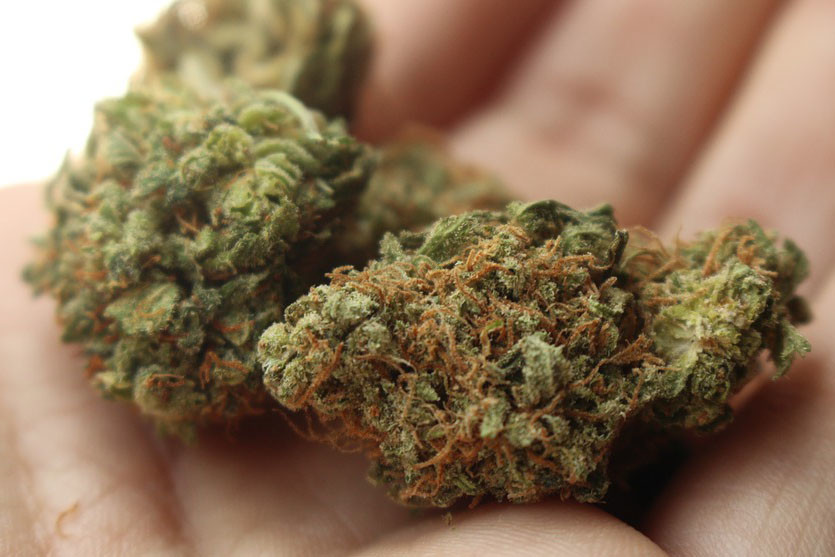
Who knew we had so many sick people in Maryland?
A year ago, the state commenced the legalized sale of marijuana – strictly for medical purposes, of course – with industry sources projecting $46 million in 2018 sales.
Instead, according to the Maryland Medical Cannabis Commission, sales for the first nine months of this year have already topped $67 million.
Now the prophets of pot are projecting sales will top $100 million sometime next month.
Strictly for medical purposes, of course.
Calling it “medical marijuana” served a couple of purposes when legislation was first introduced in the Maryland General Assembly. First, there really is a humanitarian use for those patients seeking relief from various illnesses – and marijuana fills it.
Second, it serves as a kind of wink among the “healthy” imbibers. They’ll find doctors with prescription pads and a sense of perspective to get past rules on who’s actually sick and who just wants to get high.
Is that any business of the state?
For years, the answer to that question has been a resounding: Yes. The nay-sayers have claimed marijuana’s a gateway drug leading to harder stuff. Their argument’s backed up, they say, by soaring sales of heroin and cocaine and pills, and various other illegal substances.
But backers of legalized marijuana have argued that it’s unfair to list what they call “non-addictive” marijuana with the potent addictive qualities of harder drugs.
What’s happening in Maryland, and scattered states around the country, is a re-evaluation along legal lines. But, in truth, it’s only following a trend among law enforcement people.
For years, they were putting people behind bars for trafficking in marijuana – or simply smoking it, if they were foolish enough to do it in public. But, more than a decade ago, without any fanfare, police and prosecutors began realizing a sobering fact of their professions: They were so busy handling cases involving hard drugs – and the violence associated with them – that they had little or no time for pot cases.
Nor, for that matter, was there enough room remaining in state lockups for so many violators.
So the cops and the state’s attorneys stopped bothering with pot cases – and now, to a degree, so have legislators. It’s called “medical marijuana,” but maybe that’s just a marketing tool, a way to slip a little pot past the Puritans.
Whether it works – whether it leads to trafficking in harder stuff – remains to be seen. But it’s clearly a breath of fresh air for those who genuinely need the medical benefits. And that’s a blessing in itself.
 A former Baltimore Sun columnist and WJZ-TV commentator, Michael Olesker is the author of six books. His most recent book, “Front Stoops in the Fifties: Baltimore Legends Come of Age,” published by the Johns Hopkins University Press, is now in paperback.
At its annual meeting this year, the Baltimore Jewish Council will honor the late Harford County educator and longtime Holocaust education champion.
The former Colt, who passed away on May 25 at age 93, achieved immortality during a cold December day in 1958, writes Michael Olesker.
A new biography on the creator of "Doonesbury" misses the mark, writes Michael Olesker.
What does it mean to be fully present with each other and the sacred, asks Maryland-born cultural anthropologist Alanna E. Cooper.