
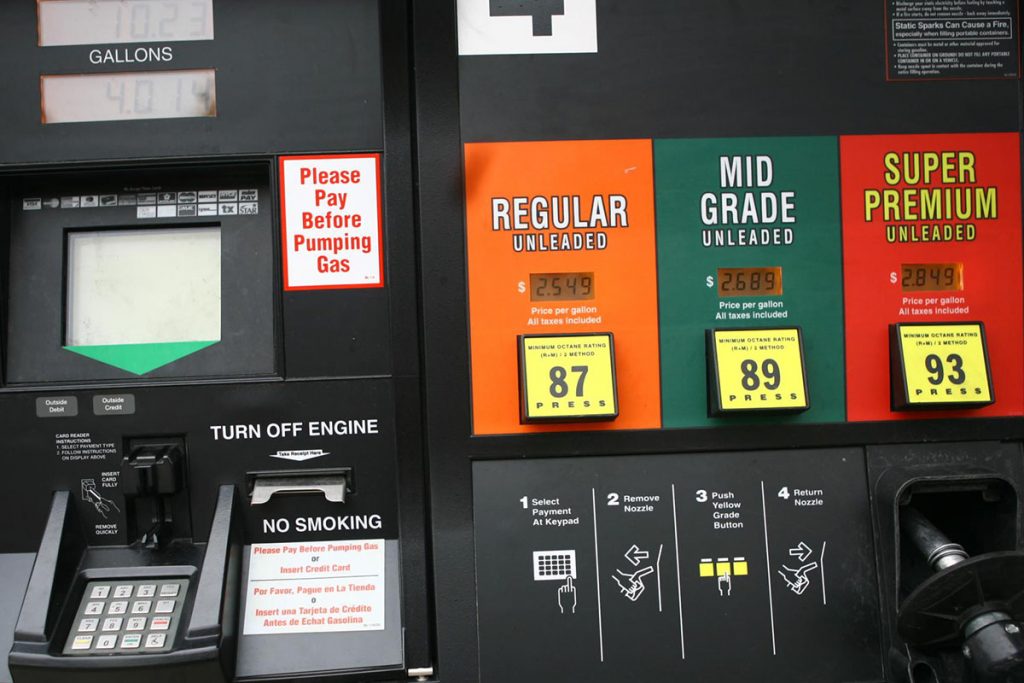
The price on the big neon sign at my local gas station, nowsneaking toward $3 a gallon, is starting to look like a ransom note. Are we gettingpriced out of America’s love affair with the automobile?
An editor for the tech news website Recode, Kara Swisher,says we are, and claims it’s coming faster than any of us realize. And it’sonly partly because of the cost of filling our tanks.
If you doubt her, Swisher reminds us that she was yearsahead of everybody when she wrote a piece 20 years ago called, “I Cut theCord,” about giving up her telephone land line and “going all mobile.”
Now, in a piece for the New York Times, she writes, “Owning a car will soon be like owning a horse – a quaint hobby, an interesting rarity and a cool thing to take out for a spin on the weekend.”
I’ve never been a guy who falls in love with cars. I don’tgive mine cute nicknames, and I’ve never cared about their looks. I can’t tellone brand from another, nor do I care. If my car starts up and gets me where Iwant to go, that’s all I ask.
And yet, as with generations of Americans, my life’s been sobusy with sweet moments on the road that the thought of the “family car”disappearing brings an unanticipated sadness.
In post-war America, entire families would pile aboard on a Sundaysummer afternoon, and head out to the suburbs, just to drive around. So that’swhat the world looked like outside our own neighborhood!
What 20th century teenager doesn’t remember cruisin’? You’d pitch in for gas (25 cents a gallon), squeeze half a dozen pals in the car, and drive around with the radio louder than your folks would let you play it at home, and hit all the high spots: Ameche’s, Gino’s, Price’s Dairy, Champs, Harley’s. The hangout choices seemed endless.
And, inevitably, if the car was filled with guys, somebodywould say, “Let’s go pick up some girls.” With half a dozen guys already in thecar, one of them already straddling the clutch, where were you supposed to fita girl in, even if you found one?

Or you’d take the car to a drive-in, Carlin’s or Bengie’s orthe Elkridge maybe, and hope to fog up the windshield with some romantic heavybreathing, even though it was only the 1950s and heavy breathing was still sortof outlawed.
But now most of the old hang-outs have vanished. And, accordingto this Kara Swisher, we won’t be buying many new cars to reach the new ones.
She calls it the most important shift since the “explosionof the smartphone,” adding, “Private car ownership declined globally last year,and it is a trend that I believe is going to accelerate faster than peoplethink.
“Consider how swiftly people moved from physical maps to mapapps, from snail mail to email, from prime time TV to watching on demand. Whathad been long-held practices were quickly replaced by digital tools that madethings easier, more convenient and simply better.

“That is harder to envision with the heavy hunk of metal andfiberglass that is a car, but it is not hard to see the steps. You start usingcar-share services, you don’t use your car as often, you realize as theseservices proliferate that you actually don’t need to own a car at all.”
Especially not with those gas prices climbing, and not likely to turn around.

A former Baltimore Sun columnist and WJZ-TV commentator, Michael Olesker is the author of six books. His most recent, “Front Stoops in the Fifties: Baltimore Legends Come of Age,” was reissued in paperback by the Johns Hopkins University Press.
At its annual meeting this year, the Baltimore Jewish Council will honor the late Harford County educator and longtime Holocaust education champion.
The former Colt, who passed away on May 25 at age 93, achieved immortality during a cold December day in 1958, writes Michael Olesker.
A new biography on the creator of "Doonesbury" misses the mark, writes Michael Olesker.
What does it mean to be fully present with each other and the sacred, asks Maryland-born cultural anthropologist Alanna E. Cooper.