
In March, I traveled to Germany for a project about motherhood for the Goethe-Institut’s PRX Radio listening series, The Big Pond. (My “Welcome to MotherLand” episode will drop sometime around Mother’s Day in the U.S.)
While there, I traveled to Ravensburg in the south and to Berlin in the north. I had planned to see some of the Jewish historical and memorial sites, but it turns out Germany’s Jewish past is quite present — even when you’re not explicitly looking for it. And, sometimes, you quite literally can trip over it.
The presence of statues and plaques commemorating resistance and memorializing individuals and communities crystallized, for me, the significance of the recent passage of HB 307, which makes Maryland the first state to create a Lynching Truth and Reconciliation Commission. The commission will investigate the more than 40 racial terror lynchings that happened on Maryland soil. The act states, “Restorative justice requires a full knowledge, understanding and acceptance of the truth before there can be any meaningful reconciliation.”
“Meaningful reconciliation” is part of what I felt standing in the presence of the many memorials to Jewish lives and lineages destroyed in Germany. But I also felt a deep sense of grief and outrage. Feelings that seemed to heave up to the surface through generations. Here is some of what I saw and experienced (above).

Exterior, Jewish Museum Berlin — The architecture of the museum in the Kreuzberg neighborhood is part of the experience. There are no straight lines, everything feels amiss. The building zigzags and features angled walls and corridors and bare concrete “voids.” American architect Daniel Libeskind aimed to recount German-Jewish history through design. 
Shalekhet (Fallen Leaves) Jewish Museum Berlin — Created by Menashe Kadishman — more than 10,000 faces with open mouths, cut from heavy round iron plates cover the floor. 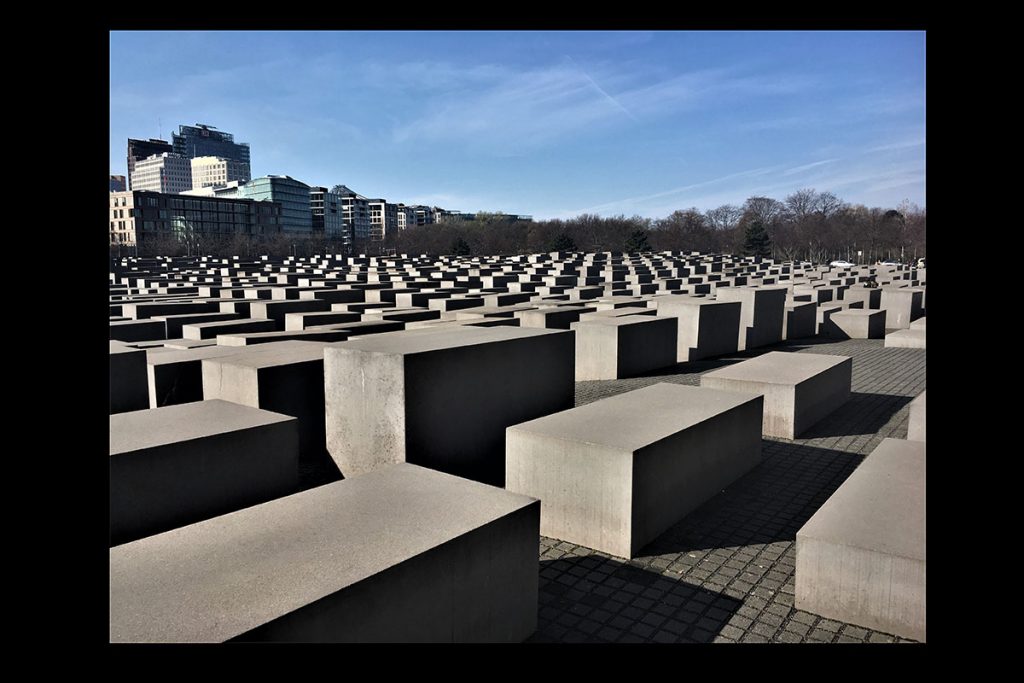
Memorial to the Murdered Jews of Europe — The massive size (more than 4 acres) can be seen best from above – on foot it feels like approaching a cemetery of mausoleums. There are 2,711 rectangular concrete blocks, all different heights and aligned in a grid formation. The ground they cover rises and falls – there is no flat surface. It is a sobering site. 
Rykestrasse Synagogue — This synagogue in the Prenzlauer neighborhood of former East Berlin didn’t take walk-ins. The courtyard was heavily gated and the street directly in front was barricaded. I went across the street to Masel Topf and had a delicious lunch. 
Falafel platter at Masel Topf — Yum! And you can eat the bowl! 
Tea glass detail at Masel Topf — I stared at it long enough that fellow diners started looking at me funny. 
Schönhauser Allee Cemetery gate, Prenzlauer neighborhood, Berlin — The gate was locked, but it’s apparently a beautiful site established in 1827. 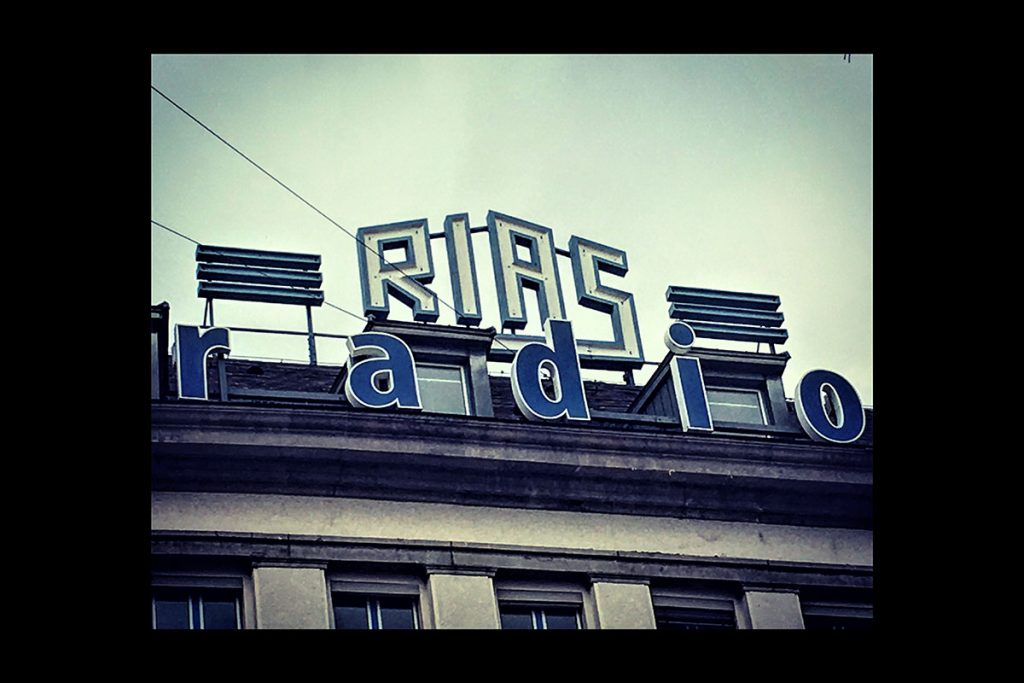
RIAS – Radio In the American Sector – now Deutschlandfunk Public Radio — Famous Greek Cantor Estrongo Nachama began reciting Shabbat prayers over the air there in 1948 until his passing a few years ago. The historic building was home to “a free voice of the free world” from February 1946 to December 1993. 
TV Tower Berlin — While trying to stay warm waiting for a bus nearby, I stumbled upon the Rosenstrasse Resistance park where gentile wives protested the arrest and deportation of their Jewish husbands. They won. More stumbled-upon remembrance. 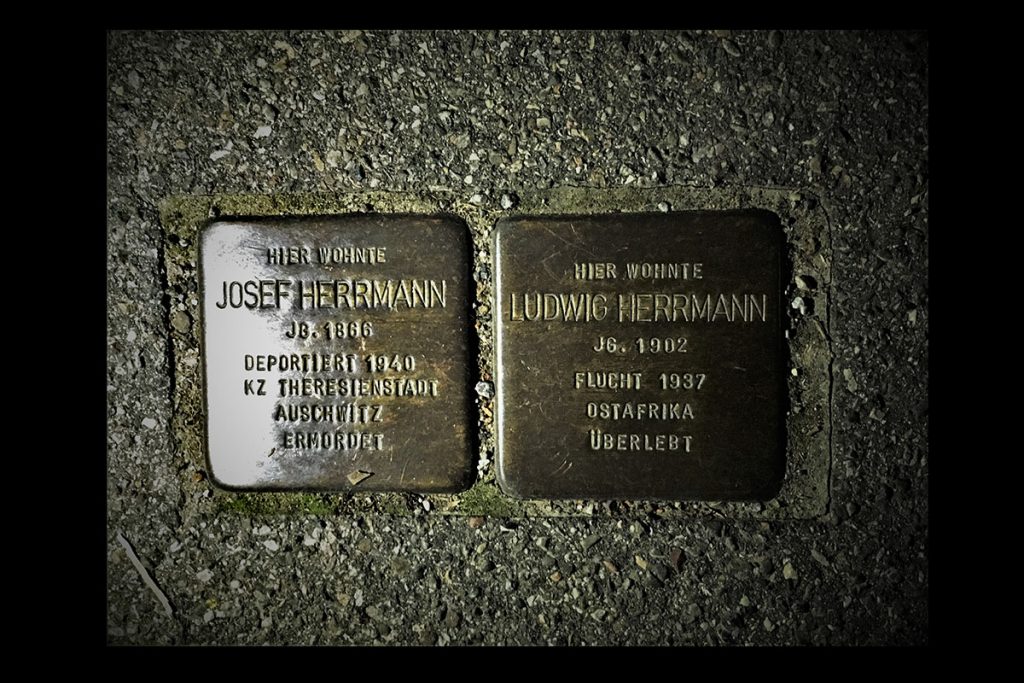
Stolpersteine in Ravensburg — There are approximately 70,000 Stolpersteine (stumbling stones) that have been placed in about 2,000 cities in Europe. The project, by German artist Gunter Demnig, began in 1992 and he’s still working. The stones commemorate the last place of residency or work of victims or survivors of the Holocaust. 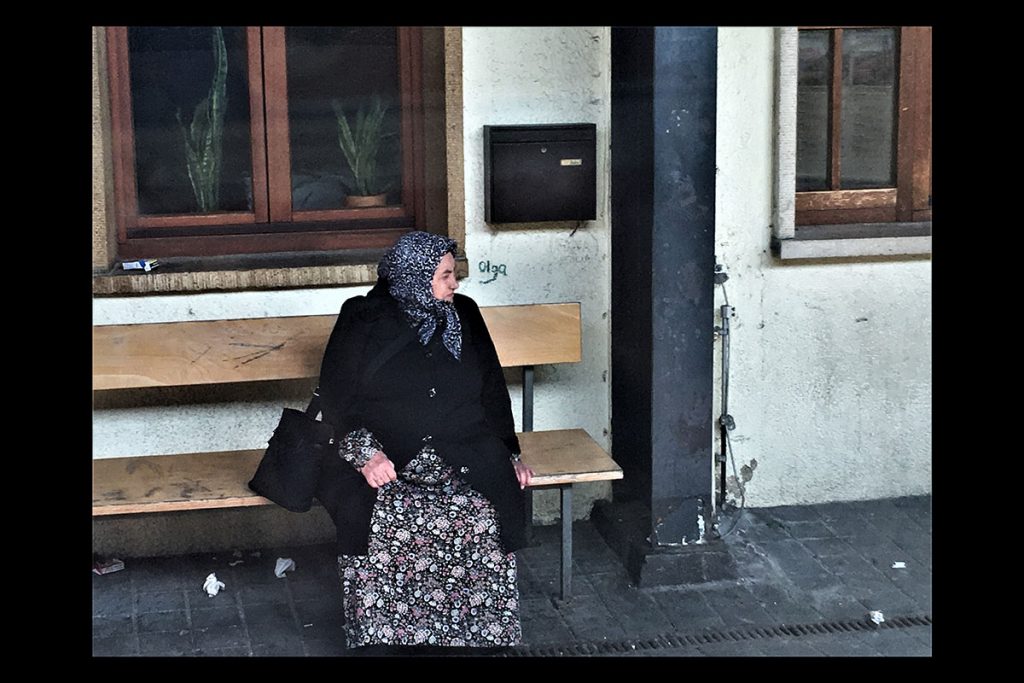
At a quick stop in Ebingen I looked out the window and was struck by how this woman seemed to embody a picture of Germany’s past. I have no idea if her name was Olga, and didn’t see the name written on the wall until I looked at the picture later. 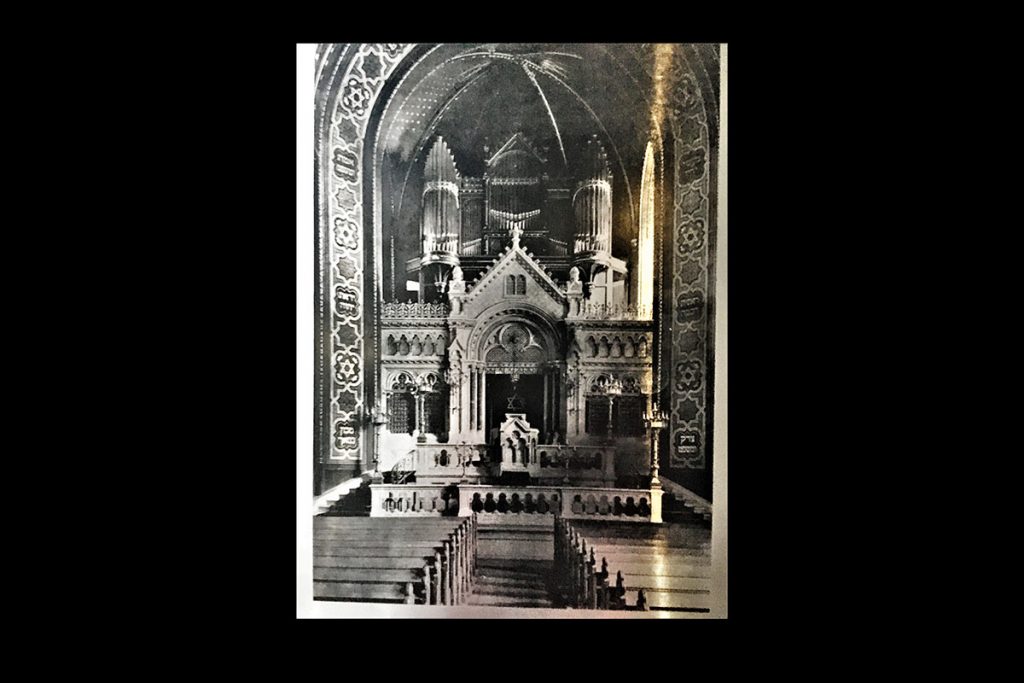
Lindenstrasse Synagogue — I ducked into a random alcove to check my phone for directions and found myself facing this plaque. It’s the site of the former Lindenstrasse Synagogue that was destroyed during Kristallnacht. The plaque recalls memory of place and a devastating loss … the power of remembrance.
For further information:
- Jewish Museum Berlin
- Memorial to the Murdered Jews of Europe
- Lindenstrasse Synagogue
- Rykestrasse Synagogue
- Masel Topf
- Schönhauser Allee Cemetery
- Rosenstrasse protest
- Stolpersteine
- Gunter Demnig
All photos by Melissa Gerr.
Melissa Gerr is a freelance content creator for print, audio and visual. She is a producer/contributor for “On the Record” at WYPR Radio.
Join Melissa Gerr on Weekend Agenda on Facebook Live at facebook.com/jmoreliving on June 14 at 12:30 p.m. to discuss her trip to Germany and other summer vacation plans.
The history of Jewish Barcelona is fascinating and complex, and a tour of the Jewish Quarter offers a glimpse into the city’s tragic past.

Quick: how many of Maryland’s 23 counties have you visited? There's plenty to see and do in the "Old Line State."

From the official state exercise to the site of the largest shipwreck fleet in the Western Hemisphere, how well do you know Maryland?

Philadelphia's Eastern State Penitentiary housed Al Capone and Willie Sutton, as well as Jewish convicts who began davening together there in the 1920s.