
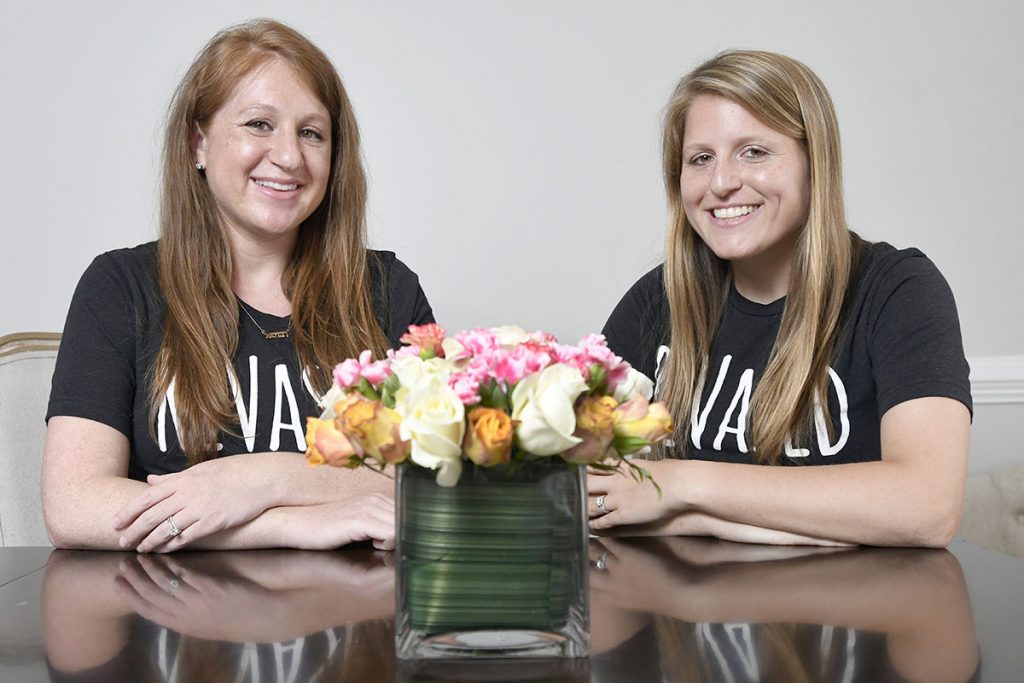
When visitors to the Edward A. Myerberg Center enter theNorthwest Baltimore facility and notice vases of fresh-cut, vibrantly colored flowers,they can’t help but smile.
ReVased, a local organization that offers new life to event flowers, is responsible for ushering that joy into the center for senior citizens.
“Flowers brighten people’sdays when they are here,” says Jennifer Osterweil, the Myerberg’s assistantdirector of programs. “When ourmembers come in and see the beautiful flowers, they always comment. [Flowers]symbolize life and brighten our days. They also bring the outdoors in, which isnice for people who can’t get outside as much as they would like.”
SinceFebruary, ReVased has recycled and donated event flowers to local organizationsand venues, including nursing homes, senior centers and women’s shelters.
“There’s no one in Baltimore who does this,” says Aviva Vogelstein, chief operating officer of ReVased. “We see this as a win-win for everyone involved. The customer feels good about giving back after their beautiful event. The nonprofit receives thousands of dollars’ worth of flowers at no cost, and the environment benefits because flowers that would be wasted are given a second life.”
Avivaand her younger sister, Arielle, founded ReVased after their respectiveweddings. The sisters married a year and a half apart, and couldn’t understandwhy flowers at their nuptials were discarded.
“We would like to change the landscape of events so no flowers go to waste and this becomes an obvious thing people do when planning an event,” says Aviva.
Afterconducting research, the sisters learned that the events industry generallydiscards all floral arrangements, even though flowers are the third highest expenseat weddings, accounting for 10 percent of an event’s budget.
Theyalso learned that the average life span of a flower is three to 14 days, but flowersare generally thrown out after just a few hours of usage. In addition, theynote that throwing out fresh-cut flowers immediately after an event is harmfulto the environment.
“Cutflowers lead to water waste and pollution,” says Aviva, a graduate of the BethTfiloh Dahan Community Day School. “Additionally, most flowers are transportedfrom far away, which has a negative ecological impact.”
Shesays studies show that the presence of flowers leads to improved memory,decreased depression and “an overall health and happiness within individuals.”
Currently,ReVased picks up floral arrangements from such events as weddings, anniversarygatherings, corporate parties and b’naimitzvah. While ReVased charges a service fee — which depends on the sizeand quantity of the arrangements — donors ultimately benefit financially fromtheir donations. That’s because ReVased only works with nonprofits that havecharitable donation acknowledgments.
“Wewill take as much or as little as the event host wants to donate, and thedonations are tax deductible,” says Aviva. “We can’t say what the deductionwill be, but we are told by our accountants that it can be a significantportion of the donors’ floral cost.”
Once ReVased picks up the flowers, it creates new arrangements and donates them to one of its 20 partner nonprofits. “It’s remarkable how much people get out of flowers,” says Arielle, ReVased’s chief executive officer. “We are using these as a medium to build a community among the events and nonprofit world.”
ReVasedalso has teamed up with more than 40 events planners, caterers and florists. “Weare creating a network with companies who want to be eco-friendly andcharitable in the Baltimore community,” says Aviva. “Businesses are hearingabout us and excited about the opportunity to have less waste after events.”
Aviva,who lives in Pikesville, and Arielle, a New York resident, started ReVased inaddition to their full-time jobs and familial responsibilities. Aviva is director of legal initiatives at the Louis D. BrandeisCenter for Human Rights Under Law, where she works to combat anti-Semitism inhigher education through legal advocacy. Arielle serves as director of growthat VIA, a company focused on ridesharing via mass and public transit.
“My sister’s experience inthe nonprofit sector and relationship-building allows for her to handle thatpart, whereas my experience with building companies and go-to market strategieshas allowed me to build our network,” says Arielle. “We are lucky to have thiscomplementary set of skills.”
ReVased was one of sixstartups accepted into the 2019 Accelerate Baltimore cohort, which helps get innovativeideas into the marketplace. Through the program, Aviva and Arielle have gained valuableknowledge into entrepreneurship.
“Don’t be afraid to ask for advice,”advises Aviva. “And don’t be afraid to pivot, because sometimes the slightestchange in what you think your business model is can make all the difference.”
The Vogelstein sisters hopeto grow their organization while bringing happiness to those who need it most.
“Aviva and Arielle have comeup with a fantastic concept,” says the Myerberg Center’s Osterweil, “and I’mamazed we get to benefit from these gorgeous flowers at no cost to ourorganization.”
For information, visit revased.com.

The Tower of David Jerusalem Museum is collecting photographs of the Western Wall ahead of an exhibition next year marking the 60th anniversary of the Six Day War.
Baltimore native Susan Landsman recently celebrated her rite of passage surrounded by family, friends, fellow residents and staff.

Opposition leader Yair Lapid spoke at Thursday's Jerusalem rally, which drew 10,000 participants and 2,000 police officers.
Stewart, a business attorney, believes trust and affordability are the county's biggest obstacles.