
Museums are treasure trovesthat curate and codify events through misty portals of the past. Regardless ofthe subjects on display, they have the collective power to make us confrontourselves.
And if we are wise andwilling, they provide the fuel to activate our critical-thinking skills to gaindeeper compassion, particularly when addressing mankind’s scourge of good versusevil.
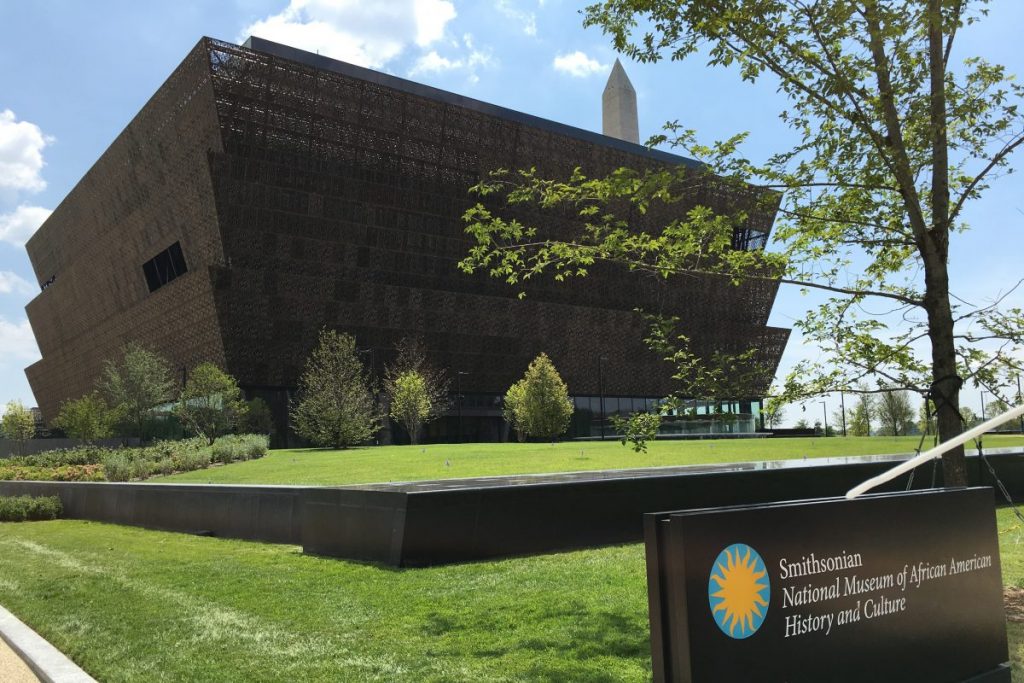
The SmithsonianNational Museum of African American History and Culture can evoke sensitivityin even the most hard-nosed visitor who takes the time to follow the trail oftears that comprises much of the timeline presented by the facility. Againstall odds, the story unfurls of a race that indefatigably pulls itself together.It charts a soaring trajectory brimming with society-altering strides inmedicine, music, politics, education, literature, sports and beyond.
Created by an act of Congress in 2003, the bronze-painted aluminum museum’s total cost came in at $540 million, including construction and exhibit installation. Nestled on five acres in the shadow of the Washington Monument, the edifice occupies nearly 400,000 square feet and is unique in that it is the nation’s largest and most complete showcase of African-American history.
On all levels of theunpretentious structure, rich stories abound, highlighted by the 550,000blacks, most of them from West African, who were chained and loaded ontorat-infested slave ships. The destination was the Americas, Europe and beyond,where they began unspeakable lives serving in the wealthy white man’s world ofprivilege and entitlement.
Unsweetened Sugar
The museum’s lobby,which includes a southerly panorama that very nearly brings into focus the U.S.Holocaust Memorial Museum, contains an eye-opening piece of artwork called “TheLiquidity of Legacy.” Fashioned from nothing but rubber, tires, wood and steel,New York sculptor Chakaia Booker’s goal was to design a piece that symbolizesthe flow of change that helps interpret a person’s legacy.
From the lobby, visitors ride the towering spiral elevator down to a colossal elevator which whisks them to the galleries.
By far, the busiest display area is called “Slavery and Freedom 1400-1877.” While the layout of the twisting room — cramped, dark and dank — resembles sardines in a can, museum officials defend its design. It is intended, they declare, to replicate what daily life was like on a slave ship.
Each exhibit at the museum, opened since 2016, is poignant, judiciously imparting facts and figures to visitors in the hushed spaces. One in particular may change the way we look at the sugar we reflexively sprinkle into our morning coffee.
It tells the story ofthe slave labor that was assigned to producing the sweetener. In 1787, 90percent of the sugar produced worldwide came from the parched and weatheredhands of slaves on plantations. An iron pot used to boil down cane sugar addedtexture to the disturbing narrative.
Nearby, a quote from aslave scribbled on the glass-enclosed exhibit reads in part, “I was broughtfrom a state of innocence and freedom, and in a barbarous and cruel manner,conveyed to a state of horror and slavery.” Nearby, these words are etchedon another pane: “Are we not indebted to those valuable people, theAfricans, for our sugar, tobacco, rice and rum?”
Other galleries shed a light on the abundant literary achievements among African-Americans. A 1976 opinion piece in the Los Angeles Times by author James Baldwin, headlined “Looking for the Bicentennial Man,” voices his views on the state of America on its 200th anniversary.
A stellar list ofdonors whose philanthropy made the facility a reality hangs prominently on onewall. Along with money from the Bill and Melinda Gates Foundation, a nameemotionally associated with Baltimore broadcasting jumps out — Oprah Winfrey.In 1976, 22-year-old Winfrey scored a job in the news department at WJZ-TV,which for decades garnered the highest number of viewers to its evening andlate-evening newscasts.
In an interview with Baltimore Sun media critic DavidZurawick, Winfrey, now 65, called her years on TV Hill “the greatest growingperiod of my adult life.” Her $12 million donation earned the pop cultural iconher own theater at the museum and a marquee bearing her name. Audiences in thespacious auditorium are treated to a production called “Watching Oprah”: TheOprah Winfrey Show and American Culture.”
Lack of Diversity
While at the museum stopand meditate on a genuine slave cabin and an assortment of Civil War andEmancipation artifacts. Underground Railroad leader HarrietTubman’s silk lace and linen shawl, a gift from Queen Victoria, isalso on display.
The Bible that NatTurner, an enslaved preacher, carried after he engineered a slave revolt in1831 draws you in as well. Other displays worthy of your time include thechronologies of African-Americans serving in the military, musical geniuses,visual and stage artists, and the road that black athletes navigated to winrespect on playing fields and courts.
Visitor Shamecca Williams offered her feelings about her second visit to the museum. “It’s a great historical document for those who want to learn more,” said Williams, an African-American who teaches high-school English in Montgomery County.
Those who are not black, she said, often “deny the horrors” that befell her ancestors, and the museum serves to crystallize the past. “It should give a full understanding of why and how we do the things we do,” she said.
Another visitor, Bamba Koroma, 53, a native of Sierra Leone who lives in Silver Spring, said she enjoyed her time at the museum but offered this concern. “Considering what is going on [regarding the heated rhetoric of contemporary American politics], I don’t see many white people,” she said. “I see many black faces, which is understandable, but everyone can learn from this, especially white people.”
If you don’t mindstanding in line, the Sweet Home Café at the museum dishes up hardy foodrepresentative of major geographic sections of the country. The Creole Coastmenu features pan-fried Louisiana Catfish Po’boys and red beans and rice; theNorth offers Yankee-baked beans and smoked haddock, while the West weighs inwith jalapeno chutney, high mesa peach and blackberry cobbler.
Sitting in the caféand relaxing over a cup of coffee, visitor Chloe Young looked said she waswinding up her second visit to the museum.
“The amount ofinformation packed inside the cavernous bottom floor is at once overwhelmingand important,” said the 33-year-old educator from Oakland, Calif. “It servedto demonstrate just how much I didn’t know and wasn’t taught about theatrocities committed against enslaved Africans and black Americans.”
Despite advancementsin bridging the racial divide, Young asserted that the U.S. “has not done evenclose to enough to reconcile with this history. Overt and systemic racism isstill the greatest shame of our country.”
Tony Glaros is a Columbia-based freelance writer.

"A Beautiful Noise" chronicles the singer-songwriter's rise to musical icon.
Duke Zimmerman and Lori Gale will talk at Towson University about their new book "People Get Ready" and the role played by Globe Posters in the civil rights movement.
The new exhibition revisits and updates a previous show about ritual hair covering in the observant community.

The Pikesville resident's latest offering "There's a Dragon in the Tree House and He Won't Come out!" was co-written with her grandsons.