How do we make sense out of evil in the world? Here are four approaches.
“Rabbi, why do bad things happen?”
For years, I’ve been asked this question when tragedy befalls the Jewish people, from Pittsburgh to Meron, to anti-Semitic attacks and more.
I have shied away from answering, feeling my responses would fall short of satisfactory. It wasn’t until this year that I was finally able to organize my thoughts. The following is a path that works for me in processing tragedy from a Jewish perspective. I approach the matter through multiple lenses, which I call “models,” four models to be precise. Each model is insufficient on its own; together, they offer a well-rounded response.
The first, the natural order model, teaches God is not directly responsible for evil in our world. Instead, other non-divine forces are at play. Rabbi Harold S. Kushner adopts this model in his bestseller, “When Bad Things Happen to Good People.” He explains that natural disasters and fatal diseases are not a result of divine retribution, neither are they part of God’s “grand plan.” According to Rabbi Kushner, “God is as outraged by it as we are.”
A common explanation for interpersonal evil, often coined the free will defense, finds its home in this model as well. God put a system in place that, for one to achieve the optimal good, one must choose it autonomously. Therefore, one must be able to freely choose evil as well. It’s not God who is the direct cause of interpersonal evil, but the nature of human beings who choose freely that produces bad results.
This model alone was never satisfactory for me because it removes an active God from the equation. I believe God is actively in charge, and I am attempting to make sense of tragedy from this starting point. God being in charge does not absolve those responsible for tragedy. This model pushes us to account for who or what, beyond God, may be to blame.
The second approach, the faith model, ascribes everything to God while denying our ability to grasp the underlying reasons. The Book of Job is premised on this model. Job is struck by calamities; notwithstanding, he accepts God’s judgment. He “puts his hand to his mouth” (40:4), signifying his faith in God’s works. Another version of this is Rabbi Akiva’s faithful affirmation that “Everything God does is for the best” (Talmud Berachot 60b).
By reinserting God into the equation, the second model balances out the natural order model. However, it still leaves the inquisitive mind wanting. This is where the providence model comes in. It explains how God’s providence plays out in our lives — by means of tragedy.
This is by far the “meatiest” of the models. The Torah embraces this model in associating calamity with the Jewish people’s divergence from Torah observance. Similarly, the Talmudic sages tell us if something bad happens, we must review our behavior and repent because it’s a message from God! Recent explanations offered by rabbis to the Meron tragedy, or even suggested divine lessons to be learned from COVID-19, are also based on this model.
My difficulty with this model is there is a certain confidence native to this model that, without the faith model, becomes a bit too prophetic for my liking. As one who is mystically inclined, I actively search after divine lessons from life events, but who says we know the reasons?
Rabbi Joseph Soloveitchik (“Fate and Destiny”) picks up on this discomfort and takes it to the next degree by claiming we “seek in vain for the solution to the problem of evil within the framework of speculative thought.” Instead, we must focus on what we need to do moving forward. This is the pragmatic model. It accepts the faith model but looks forward in an attempt to transform one’s fate into a positive destiny. I struggle with exclusively adopting this model because our texts over the generations seem to want us not only to act but to inquire and modestly attempt to understand what God is relaying to us through hardships.
Of course, each of us must seek answers that speak to our own experiences and outlooks. These models, when combined together, help me process negative experiences. I assess the natural causes and the players involved. Remembering that I will never grasp all of the reasons, I work on discerning the divine messages for my life. And as Rabbi Soloveitchik teaches, I focus on transforming fate into destiny — making the best out of a bad situation.
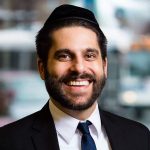
Rabbi Dr. Eli Yoggev serves Beth Tfiloh Congregation.
What does it mean to be fully present with each other and the sacred, asks Maryland-born cultural anthropologist Alanna E. Cooper.
As millions mourn the passing of Stephen Colbert from the airwaves, Michael Olesker looks back on the "institution" of late-night TV.
As he gets ready to leave for California, Rabbi Daniel Cotzin Burg looks back on his time in Baltimore and his 10 years writing for Jmore.