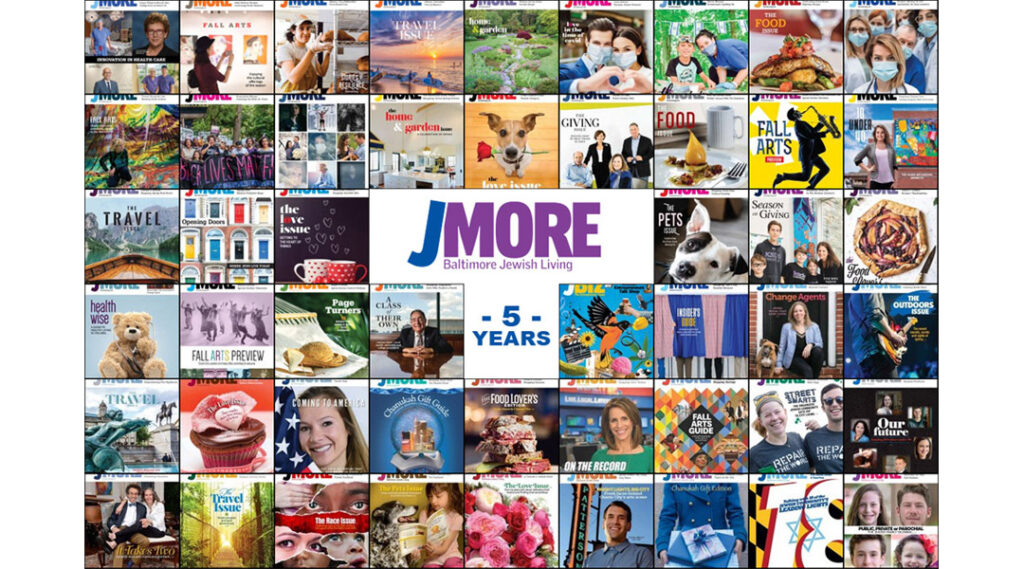
You hold in your hands a little miracle called Jmore. The miracle is its very existence, marked by this publication’s recent fifth anniversary. I’ll tell you about the miracle in a moment, but first I want to tell you about Ted Venetoulis, because his efforts bookend much about Baltimore journalism of the past several decades.
Venetoulis, the former Baltimore County executive who later went into publishing, left us a few weeks back, at 87, when he was attempting tirelessly, over much of the past dozen years, to change the course of local journalism.
As he’d been doing, actually, since the spring of 1986.
That was the year a daily newspaper called The News American lay dying down on South Street. The paper had a 200-year history, but it was losing ground to the glory days of local TV news. The paper’s circulation had plummeted, and so had advertising, and it was bleeding money.
Venetoulis attempted to buy it from its parent Hearst Corp. He did it with something he called a very serious offer, and nearly came to terms.
He offered exactly $1 for the whole thing.
Thirty-five years ago, that piddling offer gave a glimpse of the future of print, and its monetary value. The unprofitable News American died and its location became a profitable parking lot.
A few years later, Baltimore’s Evening Sun died. Over the last 20 years, we’ve witnessed the collapse of an entire print culture — not only newspapers but magazines as well.
Who has the chutzpah to start a print publication in the midst of all this cultural carnage?
Well, five years ago, Dr. Scott Rifkin, with the help of his management team, created Jmore, a print publication with daily online breaking news and features.
Journalism presents a mirror of life to an audience. It reflects a community’s politics and culture and business, its neighborhoods and its social life, its good moments and not-so-good moments.
And from this, a community gets a sense of itself. It’s one of the big reasons the city of Baltimore currently has such poor self-image. TV news, as ever, brings us the latest street carnage. It’s easy to cover. If it bleeds, it leads.
And The Sun has shrunk so dramatically in size, and staff size, that we get the latest homicide horrors every day. But we no longer get much of the rest of life around town for a sense of balance — the bubbling street life in all of its waterfront neighborhoods, the vast new construction, the arts, the gathering spots, the young people moving in.
And that’s where we get back to Ted Venetoulis. He spent much of the past dozen years of his life trying to purchase The Sun. He sought no personal profit; it was just something nice he wanted to do for his old hometown. He did this, first, with Bob Embry, who heads the Abell Foundation, and at the end with businessman Stewart Bainum.
Once again, those efforts across the years reflect the fading value of print. When Venetoulis and Embry (and a bunch of private foundation money) first tried to buy The Sun, they offered roughly $500 million to the Chicago Tribune company that owns the paper. Their last offer for The Sun was somewhere in the neighborhood of $25 million.
In such a shrinking, vulnerable atmosphere, who attempts to create a magazine, and who keeps it thriving five years later?
I’ll tell you who.
People who care about the community they’re covering. People who understand that community, and treasure its tribal culture, and its values and its characters, and wish to celebrate all of this and embrace the very heart of it.
A former Baltimore Sun columnist and WJZ-TV commentator, Michael Olesker is the author of six books. His most recent, “Front Stoops in the Fifties: Baltimore Legends Come of Age,” was reissued in paperback by the Johns Hopkins University Press.
What does it mean to be fully present with each other and the sacred, asks Maryland-born cultural anthropologist Alanna E. Cooper.
As millions mourn the passing of Stephen Colbert from the airwaves, Michael Olesker looks back on the "institution" of late-night TV.

As he gets ready to leave for California, Rabbi Daniel Cotzin Burg looks back on his time in Baltimore and his 10 years writing for Jmore.