
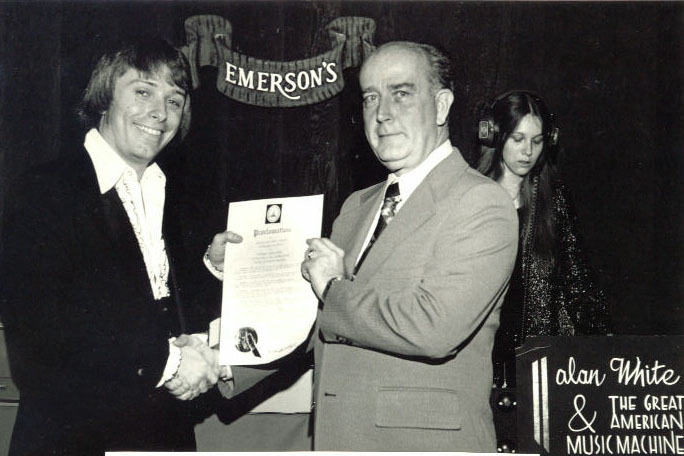
Think of this as a belated 100th birthday card to William Donald Schaefer, who would have hated it.
Some of the old Schaefer tribe gathered at Harborplace on his birthday, Nov. 2, to mark the old man’s centennial, and to celebrate his accomplishments as mayor of Baltimore, mainly, and as governor of Maryland, though mainly as an afterthought.
Schaefer, who died in 2011 at age 89, would have hated the ceremony, or at least pretended to hate it.
He’d have asked why so many smart people, who’d devoted their lives to public service, were standing around chattering when there was actual work to be done.
Such as fixing the shameful mess Harborplace has become, and starting all over again.
That was Schaefer, wasn’t it? Do it now, he hollered so often that it became a municipal mantra.
Take Harborplace. Remember when it used to make us proud?
On the day Harborplace opened four decades ago, the happy crowd enjoyed what became the city’s proud symbol of life after municipal decay, and Schaefer quickly dispensed with all the glittery opening ceremony requirements.
Then, when nobody was looking, he slipped back to his City Hall office. His aide Lainy LeBow-Sachs found him at his desk, poring over some official papers, head down, looking a little sullen.
“What are you doing?” LeBow-Sachs asked. “You should be down there with all those people at the harbor, enjoying the moment.”
“That’s old business,” Schaefer snapped, pounding at the stack of his papers on his desk. “We’ve got new business to handle.”
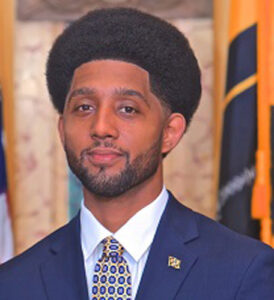
Among those attending the 100th birthday celebration was Mayor Brandon Scott. As reported by Edward Gunts on the Baltimore Fishbowl website, Scott met Schaefer years ago on the campus at St. Mary’s College of Maryland.
Scott was a student there, and Schaefer served on the school’s board of directors. Somehow, Scott said, Schaefer knew he was from Baltimore.
“He said, ‘You gotta come home to help,’” Scott said. “That was the only thing he said. I took it very seriously, because he pointed that finger at me.”
Leaving aside which finger the short-tempered Schaefer may have pointed, it’s nice to hear Scott felt enough inspiration to remember the moment years later.
It’s clear Scott has some of the same passion for his hometown that Schaefer had. Here’s something else they have in common: Each inherited a city whose best days were believed to be behind it.

With Schaefer, it was the lingering post-riot era from 1968; with Scott, it’s the post-Freddie Gray era.
The popular history of the ensuing 15 years is that Schaefer turned things around, with a mix of canny cheerleading (“Baltimore Is Best”) and attention to the tiniest problems, and the kind of insights that come only with years of experience.
That’s only part of it. Schaefer had terrific people all around him. Many of them were there to celebrate his 100th birthday the other day. But they could have taken bows for their own efforts.
And that’s where the book is still open on Scott. He came into office with the merest fraction of Schaefer’s experience. He’s still facing a steep learning curve. And he’s surrounded by people who haven’t even begun to make a mark on the life of this city, or the perception — correct or not — that things in Baltimore are pretty dismal.
A former Baltimore Sun columnist and WJZ-TV commentator, Michael Olesker is the author of six books. His most recent, “Front Stoops in the Fifties: Baltimore Legends Come of Age,” was reissued in paperback by the Johns Hopkins University Press.
A new biography on the creator of "Doonesbury" misses the mark, writes Michael Olesker.
What does it mean to be fully present with each other and the sacred, asks Maryland-born cultural anthropologist Alanna E. Cooper.
As millions mourn the passing of Stephen Colbert from the airwaves, Michael Olesker looks back on the "institution" of late-night TV.
The BCO, founded in 1984, will perform the works of Frank Zappa, Beethoven, Mason Bates and Karena Ingram.