
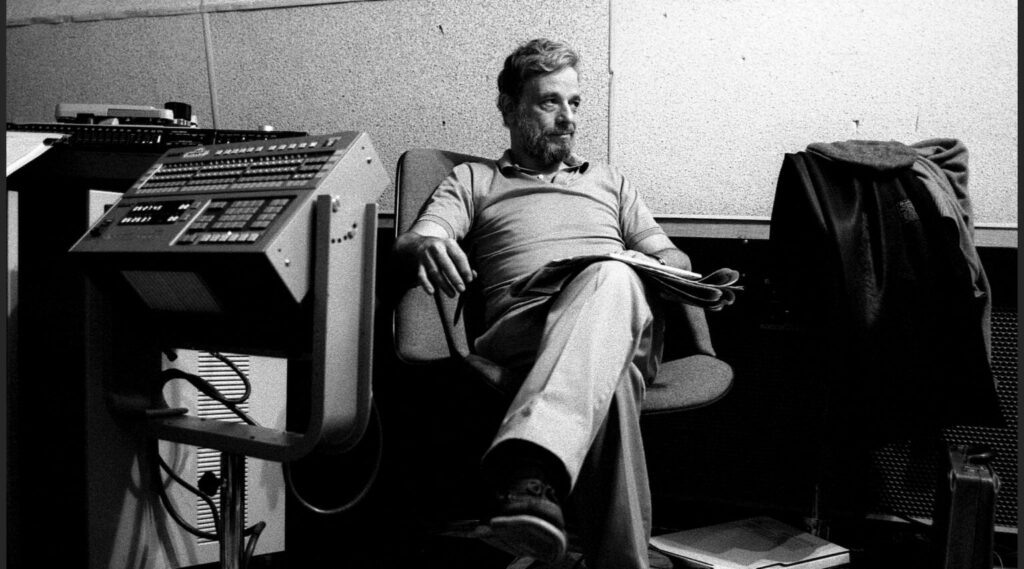
Stephen Sondheim was 25 years old when he wrote the lyrics to “West Side Story,” a Broadway score that felt something like a religious experience to a whole generation. But Sondheim was just getting started. He was 91 when he took his final bow the other day.
Go ahead, try finding somebody else who spent two-thirds of a century shaking loose the cobwebs of music and theater and pop culture.
In a way, “West Side Story” was the least of it. All he had to do was write words to Leonard Bernstein’s music, update Shakespeare’s “Romeo and Juliet” to the 20th century’s street corners, and tie the whole story to America’s poignant efforts to heal our festering ethnic antagonisms.
In his restlessness, Sondheim always wanted more: not just the opportunity to write his own music as well as lyrics, but to dig into the zeitgeist of the moment and explore places neither Broadway nor Hollywood had ever gone before.
He was a descendant of the illustrious 20th century Jewish composers who created the Great American Songbook — the Gershwins, Jerome Kern, Irving Berlin, Frank Loesser, Rodgers and Hart and Hammerstein, Harold Arlen — and yet he wasn’t.
As John Lahr wrote 40 years ago in Harper’s Magazine, those composers’ songs “created a climate of confidence and promise (and) played a dramatic part in molding the myths of modern America … refurbishing with new words and rhythms the well-worn clichés of the middle class.”
But in Sondheim’s time, Lahr wrote, musical theater’s “comforting faith in the nation’s goodness has been betrayed by public events” — assassinations, wars, riots, a tearing away of the social fabric. We were now “a nation obsessed with its despair,” and Sondheim was now our “laureate of disillusion.”
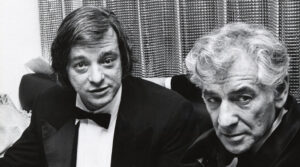
His “Sweeney Todd” sets murder to music. “Assassins” contemplates the minds of the most reviled figures in U.S. history. “Pacific Overtures” shows the destruction of Japanese culture through the intrusion of the west.
But Sondheim gave us more than political images. He delved into loneliness and alienation and the inability of one human being to connect with another.
In the musical comedy “Company,” he wrote:
“Somebody hold me too close/Somebody hurt me too deep/Somebody sit in my chair/And ruin my sleep/And make me aware/Of being alive.”
In “A Little Night Music,” he asked if we could make love and romance last, and answered with “Send in the Clowns.”
Thirty years ago, in The New Yorker, Stephen Schiff wrote, “Sondheim has always said that he never set out to revolutionize an art form, but that is precisely what he did. He and his collaborators grabbed the musical by the scruff and hauled it from the dreamy classicism of Rodgers and Hammerstein into the jittery, anomic, modernist era — and beyond.”
He did it for two-thirds of a century. Go ahead, find somebody else who kept breathing fresh air into a culture for so long, and so marvelously well.
A former Baltimore Sun columnist and WJZ-TV commentator, Michael Olesker is the author of six books. His most recent, “Front Stoops in the Fifties: Baltimore Legends Come of Age,” was reissued in paperback by the Johns Hopkins University Press.

The Jerusalem Orchestra East & West, which arranged the program for young musicians, blends Western orchestral music with Middle Eastern traditions.

Pikesville resident and entrepreneur Luna Rosendorff discusses what she's seeing these days in the world of contemporary interior design.

What does it mean to be fully present with each other and the sacred, asks Maryland-born cultural anthropologist Alanna E. Cooper.

Jewish Community Services' upcoming "Future-Ready Workplace" event will feature a keynote address from workplace expert and bestselling author Liz Fosslien.