
As I sit down to write this piece, Baltimore City inches closer to a seventh straight year in which there were more than 300 murders. My own neighborhood of Reservoir Hill has seen a substantial decrease in violent crime in recent decades but is not fully spared the effects of the slaughter. For example, two days ago, 46-year-old Anthony Rollins was shot in his car two blocks from my home.
But murders aren’t the only crimes affecting Baltimoreans. Petty theft continues to be a problem as well.
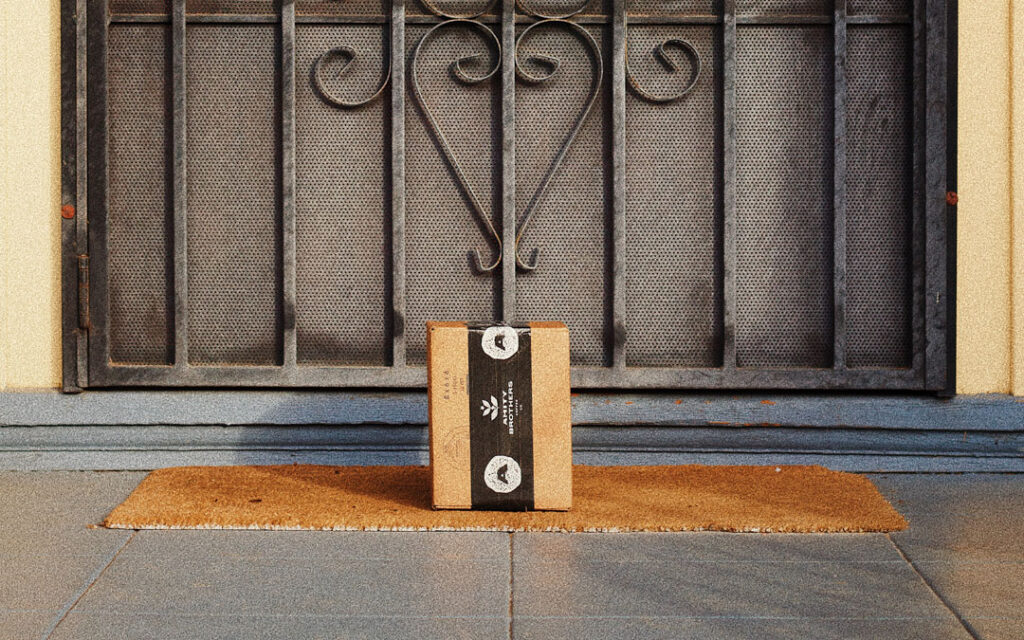
I recently had $400 worth of contact lenses stolen from my front porch. The UPS truck dropped my mail-order prescription while we were out. Ten minutes later, long before we had the opportunity to collect the package, a man surreptitiously approached our front door, grabbed the small package, placed it in a plastic bag and walked away.
This was a real problem for me considering I wear mono-vision lenses and need my contacts both for distance and reading.
Weeks passed. Then, I got a text from a neighbor sent to me and someone whose number I didn’t recognize. “The other person on this text has your contacts,” it read. I quickly replied, “Really? That’s amazing!” The stranger, replied immediately, “I found your contacts along with an invoice that had your name and address. They looked expensive, so I thought you might want them back.” “Yes!” I replied.
I arranged to swing by her place the next morning. She lived a mile-and-a-half from my home, on North Avenue near the headquarters of Baltimore City Public Schools. She explained she found the contact lenses in a plastic bag discarded in one of the planters near her home.
I was amazed. It was one thing to find the lenses. It was quite another to somehow track down my neighbor and ask if he could put us in touch. It was yet another level of generosity and trust to invite a stranger to your home address to recover his possession.
Deuteronomy 22:1-3 teaches: “You shall not see your fellow’s ox or his sheep scattered and hide yourself from him; you shall surely bring them back to your fellow. And if your fellow is not near you or you do not know them, then you shall bring it home to your house, and it shall be with you until your fellow seeks it. … So shall you do with every lost object of your fellow which they have lost and you have found; you may not remain indifferent.”
It’s clear that Jewish tradition holds us responsible for returning lost objects, even to strangers. A later rabbinic source (Pirkei Avot 5:10) explains there are four moral orientations among people. The first of these says, “What’s mine is mine, and what’s yours in yours.” One sage suggests this is an “average” orientation. Others, however, argue this is “the way of Sodom.” Sodom was, of course, that infamous city whose inhabitants were wholly dismissive and cruel to one another.
How can one set of behaviors be seen in such radically different ways? One perspective is that each person’s claim on their own property is normal, average and unremarkable. Another is that such behavior is corrosive and destructive. This text seems to suggest that the roots of injustice can be found as much with inaction as with the wrong action.
When we remain isolated from one another’s life experiences, when we insist there’s no reason to get involved in someone else’s business, we perpetuate indifference. A community of bystanders makes for a morally impoverished citizenry where every person is left to fend for themselves. In such a society, basic social cohesion and trust are sacrificed on the altar of independence and self-reliance.
I’m sure the woman who found my contacts had other things to do, obligations to people she knew and loved that required her time and attention, obligations to herself. Nevertheless, she felt obliged to a stranger and empathy for my loss. There are so many reasons to be cynical about people these days; we’re beaten down by crime statistics and the constant barrage of bad news.
But as I was reminded, there are plenty of good people who look for opportunities to do right. These are the people whose moral compass points away from Sodom, a city so morally detestable it had to be destroyed, and toward cities of accountability and even holiness.

Rabbi Daniel Cotzin Burg is spiritual leader of Beth Am Synagogue in Reservoir Hill, where he lives with his wife, Rabbi Miriam Cotzin Burg, and their children, Eliyah and Shamir. This column and others also can be found on The Urban Rabbi. Each month in Jmore, Rabbi Burg explores a different facet of The New Jewish Neighborhood, a place where Jewish community is reclaimed and Jewish values reimagined in Baltimore.

The Orioles' weak defense plays a major role in the nightly carnage, writes Michael Olesker.

Jmore Publisher Scott Rifkin, M.D., reacts to President Donald Trump's latest poll numbers and the real force behind the growing decline of the Trump movement.

Last weekend's Flower Mart once again demonstrated that there's nothing to fear about downtown Baltimore, writes Michael Olesker.

A junior at Roland Park Country School, Katie Grossman writes about a recent experience that spurred her to take action to fight antisemitism.